“After my marriage, I only kissed two men; my husband and the man that murdered my family”
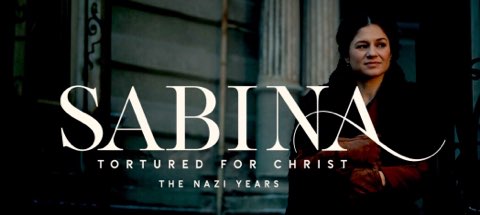
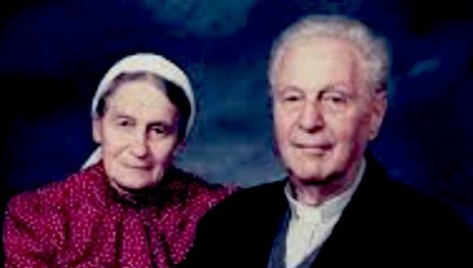
Christ, the embodiment of God, commanded that the redeemed are to love their enemies. Sabina and her husband Richard Wurmbrand, founders of ‘VOICE OF THE MARTYRS’, take this command to its extreme. As Romanian Jews during WW2, they are persecuted by the Fascist NAZI’s and when the Russians took over, they were persecuted for being Christians.
Romania was under NAZI rule for 4 years (1940-1944) and then under the Communists for 18 years (1947-1965). Under both administrations, Sabina and Richard were targeted for prosecution. They survived by loving their neighbour, and their enemies.
Richard converted to Christianity amid a mortal battle with TB. In his preparation for death, he hoped there was a God, and found HIM.
“GOD, I know you don’t exist, but if you do, it’s up to you to reveal yourself to me!”
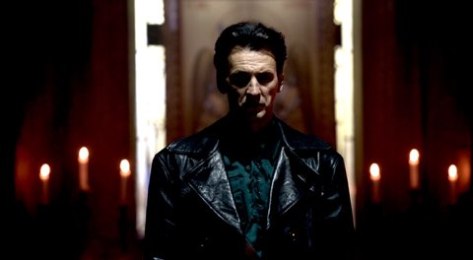
‘Sabina’,the movie, covers the ‘NAZI years; when they met and married. They had been secular intellectuals with financial success, both reckless party people. The movie follows, their conversion and their commitment to a higher will. Richard changes his career from stock broker to pastor. From reckless to fearless they navigate the treacherous rule of the Iron Guard and the NAZI’s.
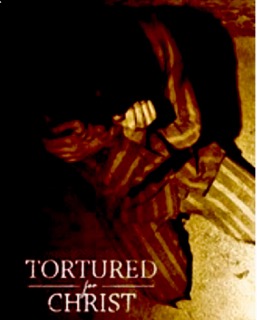
A follow up movie that documents the Communist era is ‘Tortured for Christ’ where Richard is tortured and imprisoned for 14 years. Both the Fascists and the Communists made a common enemy of God.
“I am not afraid for those Jews (the murdered), God will surely compensate them for what they suffered. I am anguished when I think, what will happen to their murderers when they stand before God.”
Snatching souls from the eternal torment of Hell is paramount in their minds and both are willing to suffer to save a soul. Sabina and Richard face their persecutors with two fundamental foundations of their faith.
‘If your enemy is hungry give him something to eat, if he is thirsty give him some water.’
and
‘Whoever will save his life shall lose it and whoever will lose his life for my sake, will save it.’
Sabina was an unwilling convert initially, but as Richards commitment persisted, her resolve submits after a party where she is confronted by the immorality of her peers.
Whist a third of Romanian Jews were murdered, including 11,000 in one day, Sabina and Richard survive the NAZI years, by loving their neighbours. Her family does not, they are taken to the camps to meet their end, including her young 14 year old brother.
The path of Christianity is marred by demonic institutions, at every turn, but the Wurnbrand’s rise to the occasion, not only to confront their enemies but also to comfort them. Both knew that death was not a fearful transition for them; they had the golden ticket to Heaven, and no-one could snatch away their prize.
In ‘Tortured for Christ’, (the Communist era); a guard that had been torturing Richard see’s him praying, in frustration he yells..
“Your wife (Sabina) is in prison and your son is an orphan, who are you praying for?”
Ken Ham an Australian science teacher that rebuked the evolution theory due to lack of reasonable evidence, wrote ‘The Lie: Evolution/ millions of years‘, in 1987 and was re edited in 2024. He has written over 20 books and been awarded 6 honorary doctorates. He founded the Creation museum ; Answers in Genesis and his most remarkable achievement the Arc Encounter which re-built Noah’s Ark, to scale in Kentucky USA.
The evolution theory that created some humans superior to others, some ‘primitive’ and others ‘evolved’ was founded in the 1800’s, in the wake of the Industrial Revolution. Genesis disputes this claim in its 4000 year old bible, that links us to one family; a premise that DNA supports.
Actual Title of Darwins book
Ham wrote in his book titled ‘A Flood of Evidence’ 2016, that it doesn’t take millions of years to create rock, gemstones or fuel.
“Scientifically, we can prove that it doesn’t take millions of years to form rock”
FLOOD OF EVIDENCE
He lists the examples:
ROCK
concrete
clock found embedded in rock (Washington)
Spark plug found embedded in rock
Ship bell in marine concretion (Vic, AUST)
The petrifying wall of Knarsborough, that turns teddy bears into stone.
PRECIOUS STONES
Apollo Diamonds makes diamonds in days; Lifegems & Petgems turns cremated remains into diamonds and Flame Fusion creates rubies in days.
FUEL
Argonne National Laboratory forms coal in months; Gippsland, Victoria can generate crude oil and natural gas. Crude oil can also be made from sewerage.
The evolution theory of random process, mutations and nothing creating complex life forms that include sophisticated DNA structures is not plausible. Creation came from a creator. A designer of incomprehensible intelligence, functioning outside of time, observing His creation and deciding on its future.
Evidence points to a short Earth time-frame of thousands of years, not millions. Population growth can be historically mapped and its size is relatively small in regard to the vast open spaces through out the Earth. Most major populations are in cities.
Secular scientists deny the flood in favour of the millions of years theory based on their interpretation of fossil records. There are many flaws to their reasoning such as; some records are of animals in the state of eating each other, proving they died instantly and trees extending through layers of the fossil records.
‘Trees make great examples, even though there are others… the tree just sat there for millions of years?’
pg 110, FlOOD OF EVIDENCE
There are over 300 world flood legends in a variety of cultures and the Creation Museum focuses on the Aztecs, the Hawaiians, Chinese, Miao and Tanzania accounts. The Bible links all the populations on the Earth to Noahs family of 8 people, that we are all related to. In Gods estimation, this was the only family that would obtain salvation. DNA supports this claim.
The Arc re-creation was built in 2016, a barge designed to weather the storm and rescue remnants of animal life for future populations. According to the the biblical dimensions it is 510 feet long (approx. 1.5 football fields), 85 feet wide and 51 feet high. It is a 100 million dollar tourist attraction with the largest timber structure in the world.
Gospel ; Matthew account of next Earth transformation.
The Bible explains that God created everything, and that the complex designs of the Earth were created by a the excellence of a Creator.
Science claims there was a big bang (and a puff of smoke) ..like magic.
It takes a lot of faith to believe the scientific version and rationality to understand that someone created something.
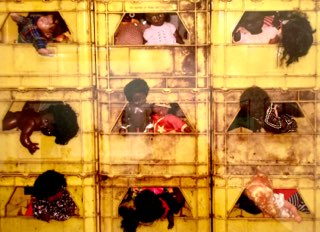
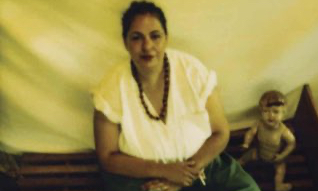
Her urban pilgrimage from Port Melbourne housing commission confinement to an exclusive education at ‘Mac Rob’ and Melbourne Uni and then landing the dream job of working with Charlie Perkins, famous Aboriginal activist and later to be honoured by a retrospective exhibition at the Ian Potter NGV Gallery , for her major role in the Australian Arts. Intelligence, wit and a ‘way of seeing’, enabled Destiny Deacon social mobility and success.
In writing is reads like a Cinderella tale, and yet the ugly sisters racism and sexism left their mark on her perception of self and fuelled her political and artistic roles. Born into a large family with both parents engaged in Aboriginal rights, would have bred a restless spirit in Destiny. Able to throw off the shackles of the housing commission stigma and pass the entrance exam of Mac Robertson high school, would open doors for her future academic role at Melbourne University.
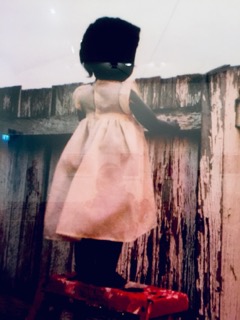
OVER THE FENCE 2000
Despite her intellectual achievements Deacon would be ‘looking over the fence’, not fully assimilated. She had access to the very best of what ‘white society’ offered, but being ‘Blak’, she also shared the inner trauma of a ‘mob’, a community that had been denied, deprived, daunted and desecrated. Working with Charle Perkins would have sharpened her political position, it also introduced her to Perkins daughter Hetti, a NSW Art Gallery Curator. Destiny and Hetti would form a friendship and a working relationship where Deacon was represented by the NSW Gallery collection.
ADOPTION 2000
Her art work is thoughtful and provocative, she coined the term ‘Blak’ and used doll avatars to carry her observations and statements. The dolls are a profound choice, to illustrate the innocence and manipulation of Aboriginal communities and their children. Her work strikes the core nerve of the ‘stolen children’ cruelty, where the emotional damage was ignored, as they were treated as pawns.
The Darwinian experiment of taking children to make them white, was sparked by Darwins visit to Australia in 1836. His theories led to social prejudice, with terms such as ‘primitive’ being used to create a social divide that carved Aboriginal policy. The evolution fantasy, perverted the perception of Aboriginal people to the point that they were regarded as ‘fauna’.
BORDER PATROL 2006
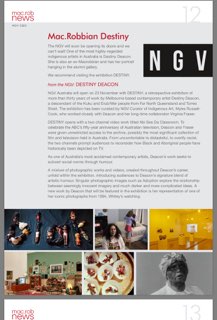
Deacon found her niche in Koorie Kitch and Australiana, as a form of story telling. The exhibition at the NGV Ian Potter Gallery honours her life and her story as an International Artist raised in the streets of Melbourne.
I love hanging out with JC (Lord Yeshua) as I like to mix with creative people, He is an amazing artist, creating creatures and installations that live.
It’s exquisite to be entertained by the wealthy, where no comfort is over- looked. JC’s wealth is beyond limits and his generosity is lavished without measure on His friends.
I love hanging out with comedians because they are so funny, but the insider jokes Jesus tells, crack me up!
I love hanging out with brave people, they will risk their lives to save another. JC is a fierce enemy to those that hurt the vulnerable or His friends.
I love hanging out with musicians, they throw the best parties but the party awaiting Gods faithful has been planned since the birth of the Earth.
I love hanging out with adventurous people, they explore amazing places. I love hanging out with JC because even if your in the middle of no-where, He knows the way home.
It’s interesting hanging out with world leaders as their plans may effect my future, however JC has been inaugurated the KING of HEAVEN & EARTH and their plans will be over-turned.
Sometimes I just need to be home with my family and JC is waiting for me there.
Frank Hurley may have been hired to document historic events, but this limitation would not constrain his desire for interpretation. For Hurley, the photographer, not the camera was the image maker. The camera was his art brush, a mere apparatus.
His haunting images were both spontaneous and constructed. Hurley was accused of manipulating his images to create a reality that was not. His work was both fact and art which blurred his role as documentary maker and story teller.
His major commissions included an Antarctic expedition in 1911 and again in 1914-16 and war photographer for WW1 and WW2. He’s personal adventures took him to Papua New Guinea and as a photo journalist of the Australian landscape. He was also an early film maker for movies.
During the wars, Hurley was assigned as a cameraman to record the dark period in human history, where mutilated bodies littered the landscape. Hurley used black and white, and new colour technology to capture the mayhem.He found that the images didn’t capture the intensity of the drama , therefore he re-created many of the images with composite constructions to emote the event, to a greater height.
No longer documents of the event in reality, he is an expresionist, a borderline surrealist, verging in the realm of romantic horror. The question is, how much enhancement blurs the lines between drama and fiction?
‘To convey the grandeur of the experience, Hurley employed a series of artistic strategies including dramatic re-enactments, the addition of dramatic lighting effects and most contentiously composite photographs, where several negatives were montaged together to convey a more dramatic narrative than that captured in a simple exposure’
Sasha Grishin
Hurley used weather effects to enhance his images, in a way that film employs music to raise the emotional tempo. What his critics labeled as fake within the context of time, may be considered normal practices today. Many Earth images are frequently accused of being composites.
When it came to photographing his own country, his lens was used to idealise the Australian experience, as a place of hope and optimism.
Australian Art, A History Sasha Grishin 2013 / Frank Hurley, The man who made history ABC 2004
“Why were there so many good women artists working in Australia in the 1920’s and 30s, involved more with inventive, rather than imitative art?”
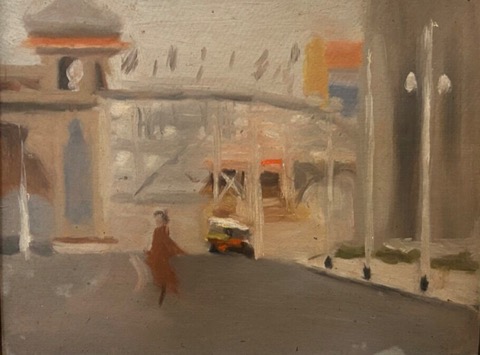
Wet Evening 1927 C Beckett
(Australian Art A History, Sasha Grishin, p219)
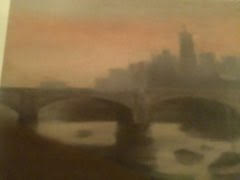
It takes a Melbourian to spot another; we feel comfortable with each other, despairing under the heavy grey roof of clouds, moody and cold; sharing the melancholy, the dullness and the empty vacuum of being alone within a cultural and landscape scene, of exciting monotony. Becketts urban scenes may have been painted 100 years ago, but the tone remains the same. We recognise ‘those days’ and ‘those streets’; the sound of wet rain on the road.
Beckett studied under Australian Master Artist, Fredrick McCubbin (1855-1917) in 1914, at the NGV art school when it was housed in the State Library. McCubbin is renown for his idealistic bush scenes of muted realism, although known as an Impressionist, his scenes were uniquely his own interpretation. He didn’t travel to Europe until later in his life and his art grew within the Heilderberg scene. He had studied under Eugene Von Guerard, and was influenced by his romantic storytelling, that made McCubbin a household name.
Shelling Peas 1913 F McCubbin
When Beckett studied under the older artist, he had returned from Europe and had launched into his lesser known period, where detail was abandoned for a blunter European Impressionism. McCubbin’s new focus was less colonial and more urban and this would have enabled Beckett a more local focus for her themes.
Walking Home 1931 C Beckett
Beckett however broke away from the safe confines of her masters instruction and into the edgy new scene of modern Tonists that was led by McCubbin’s rival Max Meldrum (1875-1955), known as an ‘art upstart’. Beckett was Meldrum’s star pupil and member of the exclusive Twenty Melbourne Painters Society, that broke away from the Victorian Art Society, which is an art society limited to 20, that still runs today.
October morning 1927 C Beckett
“Meldrum was in many respects an outsider, rather than an accepted member of the art establishment”
(Australian Art A History, Sasha Grishin)
Meldrum taught his students to use limited palettes, hazy outlines and attention to the breakdown of tones. He regarded he’s study of tone to be scientific and aimed to create compositions that explored light, atmosphere, space and distance. Simplified forms and how they contrasted tensions, created a structure of order, when the artist approached their canvas.
Wet day Brighton 1928 C Beckett
Melbourne’s moody skys and the strong contrast of seasons is the perfect homeland for an artist who lived and focused her work on the eastern bayside villages. Beckett’s work never received the fame she deserved in her lifetime and although she was a prolific artist, most of her work was destroyed in poor storage. A longer life may have solved the issue but harsh Melbourne winters took their toll, on a woman, her trolley and the outdoors.
Princes Bridge, Flinders Street Station and clock tower 1930 C Beckett
This typical Melbourne scene has never been captured so well, a mood many morning commuters are familiar with. Her work evokes an emotional response like a shared memory of an event. She takes us on a urban tour through her art. Her work stikes a deeply personal tone within the viewer, it’s not a story, it’s home.
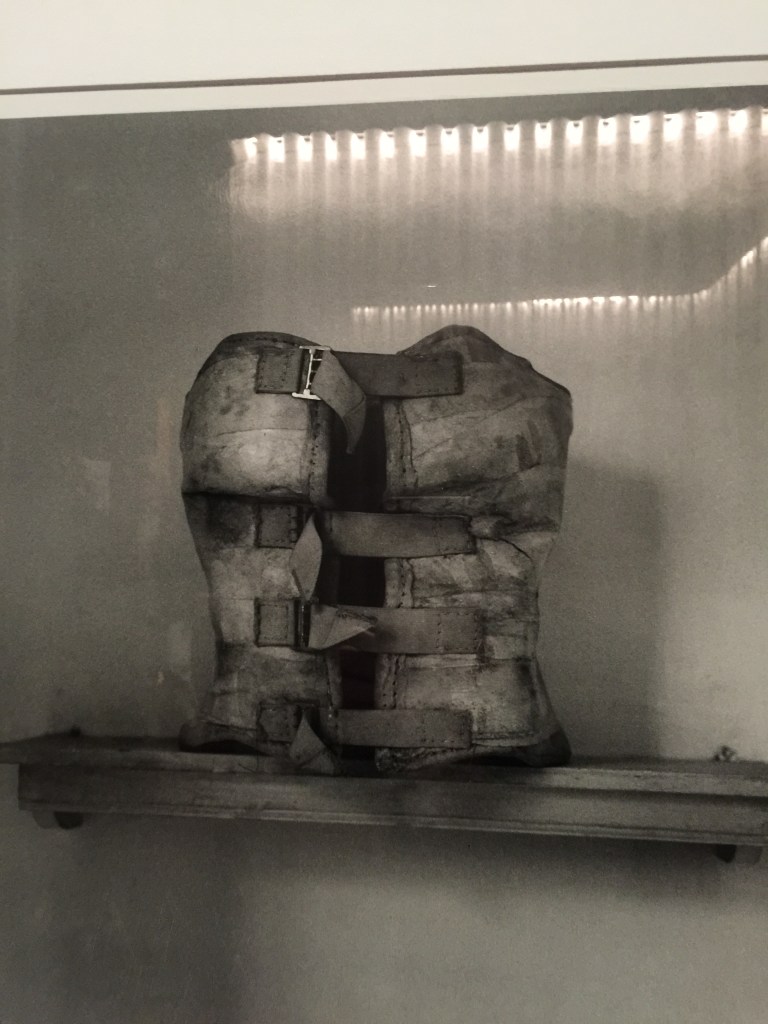
Frida Kahlo was shackled in a body, and rooted to an artist, that life had chosen for her. She may have aspired to be a doctor, and marry a young man, to have a car load of children; but this was not for her.
“There have been two great accidents my life, one was the trolly, and the other was Diego.”
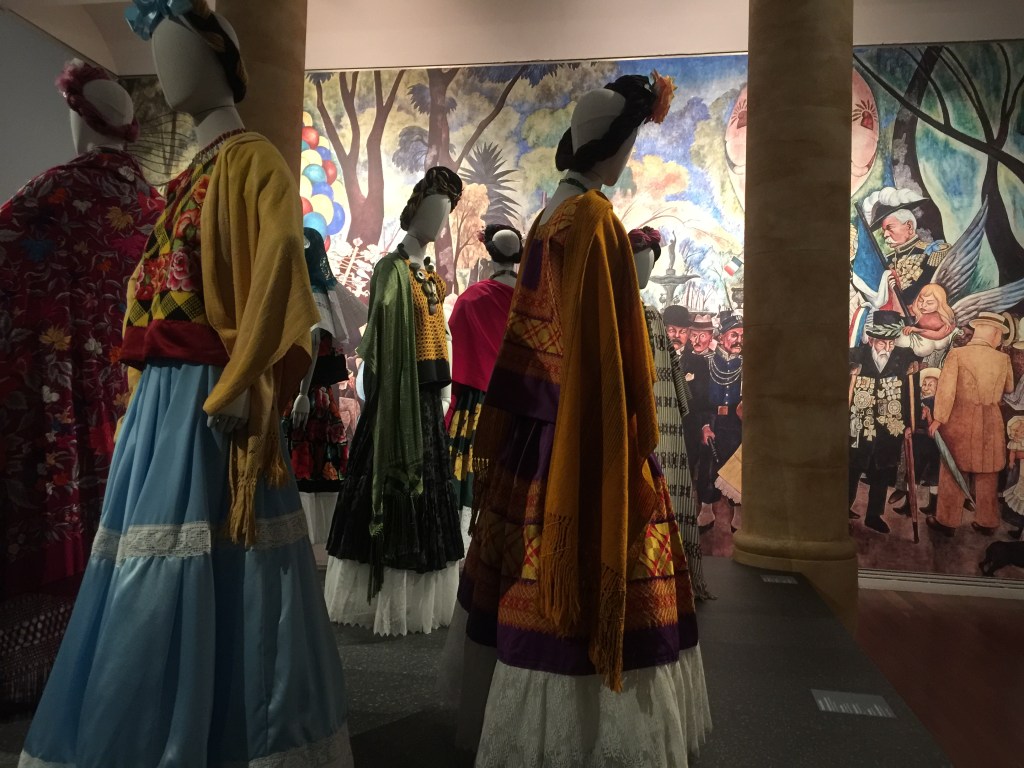
Her flowing garments distracted the viewer of the restrictions within.
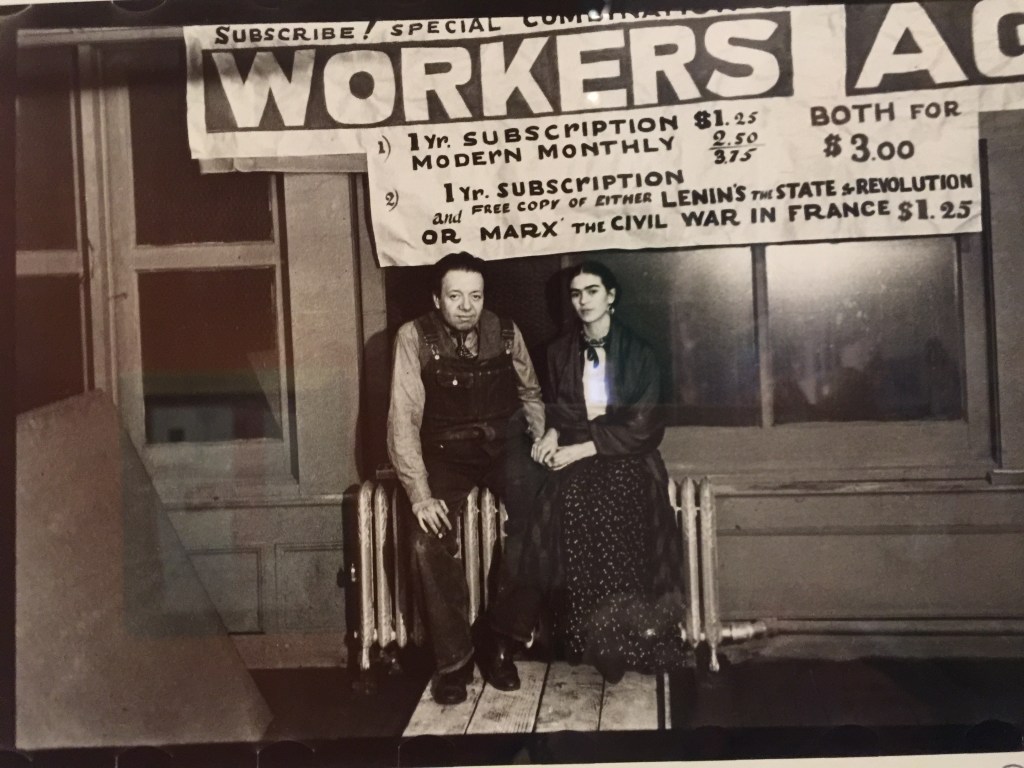
The exhibition celebrates the marriage of a Mexican couple that played definitive roles in the Modern Art movement, that of Frida Kahlo and Diego Rivera. Rivera was an artist employed by the communist party to promote the working class and Kahlo became an icon for the feminist movements.
Their marriage was not a happy one due to Diego’ affairs and Frida’s health issues. They divorced after Diego slept with Frida’s sister and reunited after many years of difficulty.
Within the deep loneliness of betrayal, she made a friend of self portrayal, documenting her stoic response to a body was held together, and coming apart, like her marriage; she was on shaky ground. The unsmiling cool demure, and films of Diego shuffling around her like a creative volcano, that was ready to explode, depict the tension.
Despite Frida bravado and staunch feminist tendencies, she was vulnerable to the whims of her husband. Somewhere within this mistress of disguise, was a frail heart, that revolved around her Rivera.
Diago on my Mind 1943 KAHLO
Diego, an accomplished artist, was 20 years her senior, who studied fresco painting in Italy and a was a Mexican art star. As a communist he was interested in the condition of the worker.
Fresco wall art 1932
In his portraits and paintings, we see the ‘lover of persons’, that Frida would have basked in. His sensitive attention to the the subject and ‘eye’ for subtle beauty is enriched in his depictions.
Calla Lily Vendor 1943 RIVERA
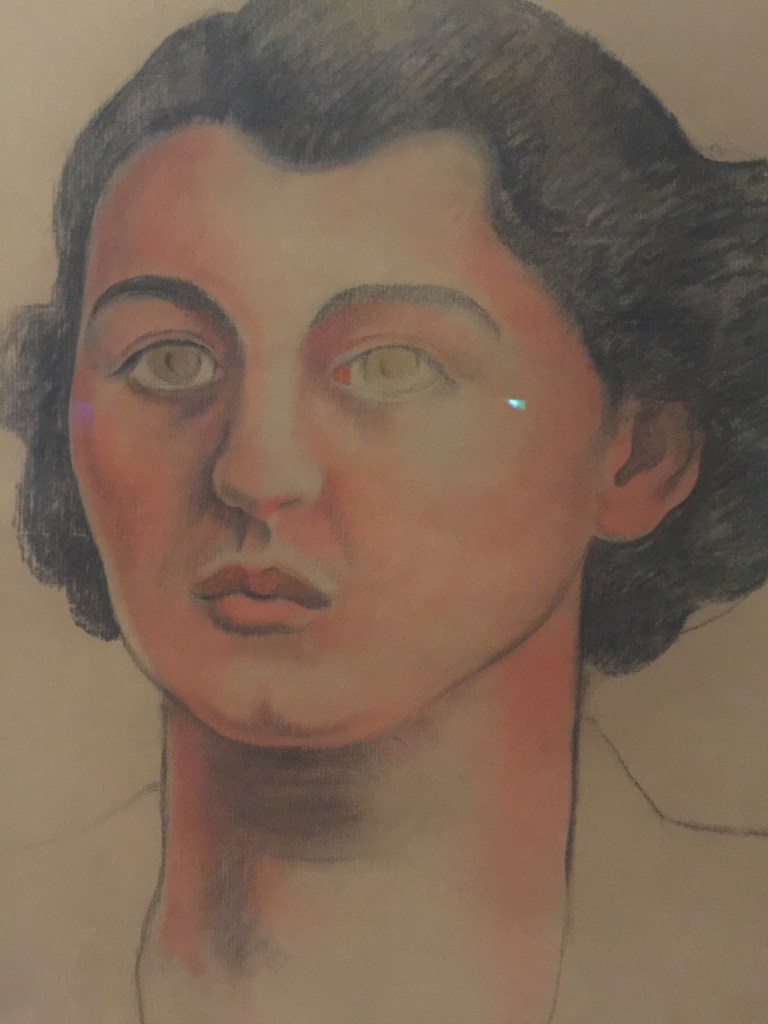
It is disappointing that there is no portrait of Frida by Diago, in the exhibition . There is, however a portrait Cristina Kahlo, who betrayed her sister.
Portrait of Cristina 1934 RIVERA
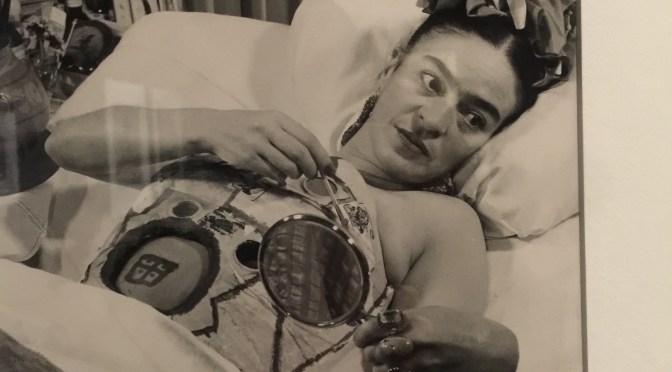
Why should Frida care, she can paint herself. Years of watching her face develop in the mirror over her bed, made her a authority of her image.
Self portrait with necklace 1933 KAHLO
Art, science and a husband could not heal Frida, they just added to her pain. The catholic and communist doctrines could not dress her wounds. Death like a skeleton hovered over her bed, like other South Americans, the dead haunted the living.
The tender call from Heaven, to heal it’s daughter was unheard, her idols were Lenin and Diego. A life without God, as we know it. However as injured as she was, she forgave. She forgave the trolly and she forgave her husband, they married twice.
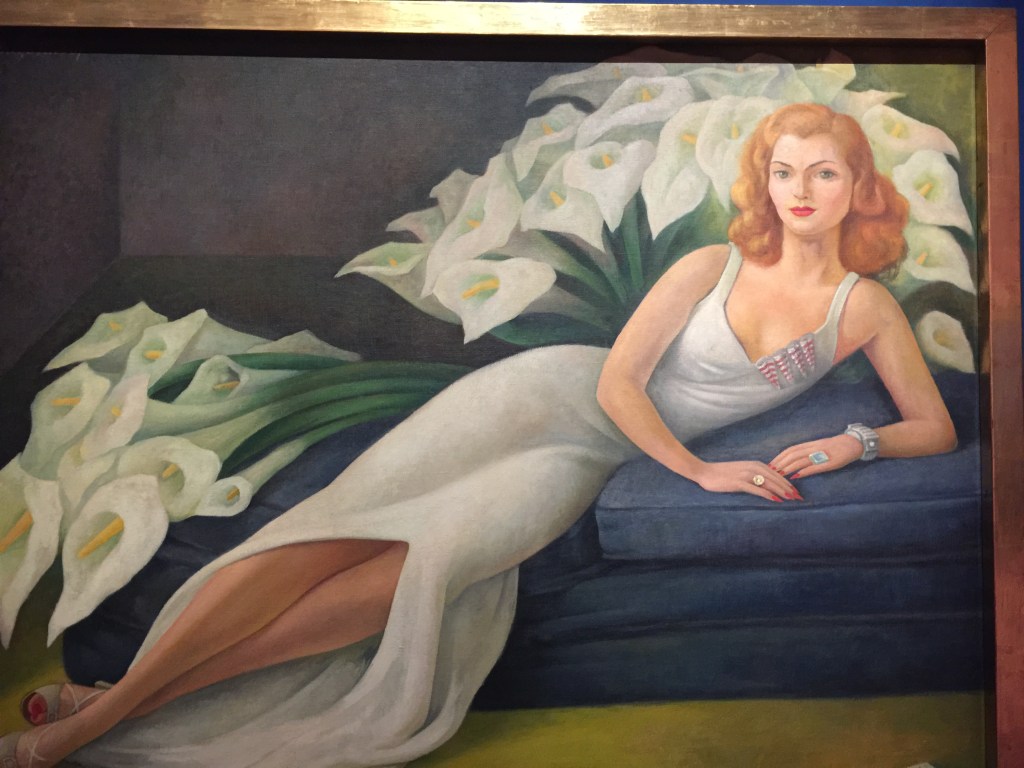
Both Diego and Frida painted portraits of their Art Patron, Natasha Gelman.
by Frida
Friedas depiction has the intimacy of a woman painting another, with curls that echo the shape of the curlers, as though they are invisible and present. Her face paint, earrings and fur coat are fashionable, without personality and the cold gaze of her eyes, reveals very little of her character. The clothes , like Frida’s costumes, distract us from the truth within. Frida does not depict a content person, the eyes seem to linger on an unhappy memory.
Portrait of Natasha Gelman 1943 RIVERA
In contrast, Rivera’s portrait of Natasha is a much more dramatic and sensual with a statement of glamorous fashion. Frieda painted her with eyes glazed over, but Diego captures a bold and defiant stare. The lily theme re-appears, (refer to the vendors) however when he painted them with the flower traders they were vibrant and dramatic, now they have lost their power, and fade in the customers abode. To Diego, she is a woman of sexual appeal.
The flowers are designed to ornament the patron, she is the principle Lily. her money can buy her a place in a Diego composition, and in return he gets a commission and a champion for his artistic inheritance.
Ironically the capitalist exchange of Art Patron and Client, harnesses Frida and Diego, despite their ideology .The Gelman’s even framed a letter written by Frida begging for money,.. a rather shallow thing to do.
Acclaimed New Zealand Documentary Director, Annie Goldson is a strong formidable countenance and she needs it, as many of her subjects are capable of murder or the victims of the culpable hand. She needs to know when to back off.
Goldson began her career as a Journalist and has ‘inched her way’ into filmmaking. She tackles the hard facts behind the news stream and goes into the bog, looking for the truth. As a political observer she finds her stories ‘everywhere’, she is curious and like Alice in a complex Wonderland, has to adapt quickly. We may wonder why the terrorists are so irate, she takes her team and her camera and asks them. She is a historians torch into the unknown.
He Toki Huna: New Zealand in Afghanistan
Brother Number One, a challenging work, presents from past events of the Cambodian Genocide under Pol Pot.
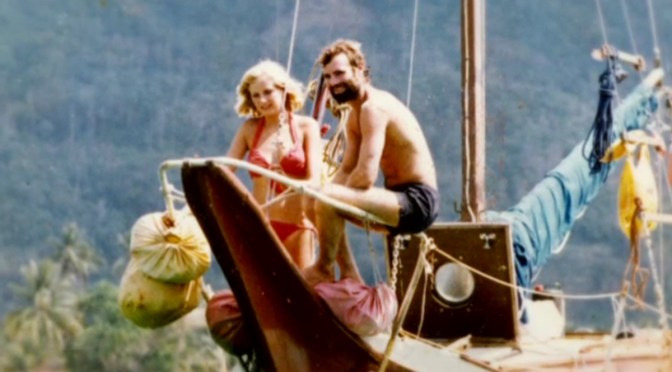
New Zealander Ron Hamill, the films source, explains how his carefree adventurous brother Kerry ,sailed into a nightmare.
“An innocent man brought to his knees and killed in the prime of his life”Ron Hamill
Goldson records Hamill’s emotional pain as he addresses the torture and death of his sibling at the War Crimes Tribunal.
The mass Genocide that murdered 2,000,000 ( a 1/4 of the population) was led by a ‘charismatic and smiling’ leader Pol Pot who was indifferent to the torture of babies. In 1975. He led the Kamor Rouge into Nu Pen and in 72 hours he had cleared the city of its inhabitants and sent them to work in labour camps, to grow rice that he would export as the population died of hunger, overwork or beating.
“Documentaries are always a challenge.” Goldson
Her films are intense political dramas that set the stage and cast its light into the ‘heart of darkness.’ Her other well-known films that she Directed are; Punitive Damage and An Island Calling
All photo’s courtesy of Annie Goldson film extracts.
They took all the treesPut 'em in a tree museumAnd they charged the peopleA dollar and a half just to see 'emDon't it always seem to goThat you don't know what you've gotTill it's goneThey paved paradiseAnd put up a parking lot
Surrealism was born during the lunch break between the wars, a century ago. What had become of the precious Earth, of life. Nothing made sense anymore. The bombing catastrophes of crushed homes and disfigured people. Normal life was a nightmare and people couldn’t talk openly anymore, so surrealism became a language also; a visual code.
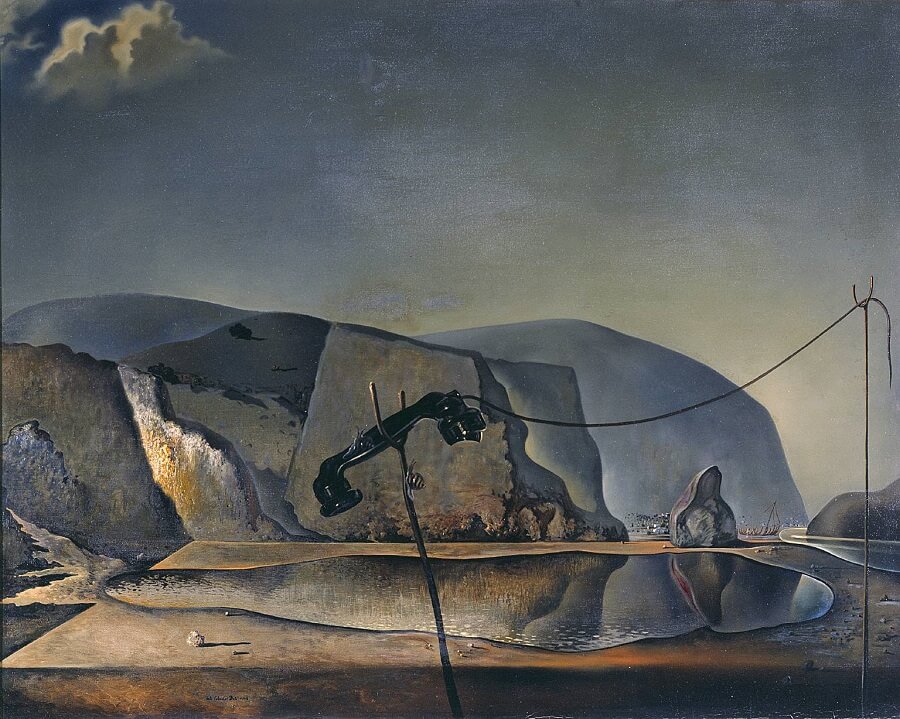
In 2009 the NGV hosted the Dali exhibition ‘Liquid Desire’ and the most haunting and disturbing painting was Mountain Lake (1938). The painting captured the helplessness of what was coming.
The backstory was that the communications between Neville Chamberlain, the British prime minister; and Adolf Hitler were cut, leading into the horrific 2nd War. Dali’s works are full of crutches, just as Melbourne artist John Brack’s shop windows, are of artificial limbs, for the war veterans that came home.
The war broke out in 1914, but before the turn of the Century the Pre-Rapaelites were encouraging people to return to nature.
What will the artists say now. Apartments have become prison cells. We need to think in our isolation, where Australia will be in the future. Not just for us, but for all of us.
With International travel becoming compromised by health and safety travesties, it’s time for a road trip. The last days of Summer, Adelaide Fringe, is an ideal destination. If you have time, take the scenic ocean route, otherwise head inland via the flat farmlands, it may be a rather dull journey but there are a couple of gems on the way, including the regional Art Galleries, a pink lake and a puppet shop.
Ballarat
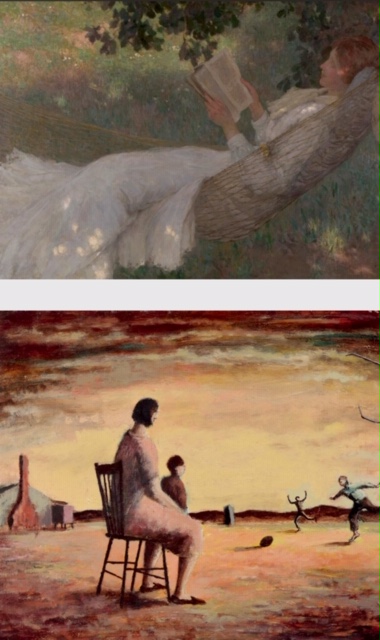
Ballarat’s Art Gallery hosts 11,000 works exploring themes such as Country, Place, Home & Disruption.
Top: ‘A Love Story’ by Emanuel Phillips Fox 1903 & ‘A Football Game’ Russell Drysdale 1945
Bendigo
Established Australian Artist, a Gunditjmara /Yorta man, Josh Muir explores the inner navigation of being an original people within a post Colonial culture. He is an insider and a spectator from both perspectives that would create a quandary, unique to the artists role. It also allows him to quantify insightful concepts.
Salt Lake
The naturally pink lake is a stella stop on the way and a great place for a walk and picnic. The calm rose lake and it’s white shores create a surreal environment and a nice place to unwind and contemplate.
Puppet shop
Expect the unexpected. After a series of townships that offer the traveller mere basics; bad coffee, fried food and petrol we stumble across the Kaniva Puppet shop! Creative entrepreneurs, find niches and see beyond limitations. The shop and its mini theatre has enhanced the local schools creative agenda.
Fringe Festival
Arriving at ‘The Garden of Unearthly Delights’, in Adelaide for the final week of Fringe Festival.
The village of semi permanent structures creates a small comic world where audience and actor share the space. Reminiscent of pre-industrial fairs with contemporary flair the buildings are as fascinating as the shows. Cafe/Bars populate under the trees as we sit with a glass of wine and enjoy the last days of summer.
COVID-19’s sinister destruction awaits, like a show in the wings; ending such festivals for a time and half a time.
The 1980s New York Art scene gave rise to emerging young talent, such as the artists Jean-Michel Basquiat and Keith Haring and introduced musicians Debra Harry (Blondie) and Madonna. Andy Warhol had created a niche that they were destined to populate. The concept of the artist as a brand and a superstar seduced the young and transported them from Graffiti Artists to Legends. The middle classes had left the town for a comfortable suburban life and the urban alleys and apartments became a playground for the creativily misunderstood. The video clip of Blondies ‘Rapture’ introduced the new players.
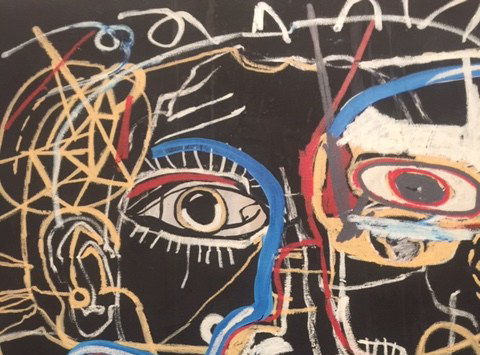
Basquiat’s work reveals a tapestry of lines that go into the development of the image whereas Haring’s art, is the stripped back result. The NGV exhibition is currently showcasing both artists under the banner of ‘Crossing Lines’. It’s a journey back into our recent past.
Untitled 1982
In the early 80’s, Basquiat was surviving without an income and sourced materials from his environment. He took doors and whatever boards he could from condemned properties, to be his canvas. The palette is made up of house paint and oil pastels, this makes the work more intimate as the artists circumstance is apparent. The roughly stretched canvas suggest an artist more interested in the work than the presentation.
Yellow Door 1985
Pork 1981 (door)
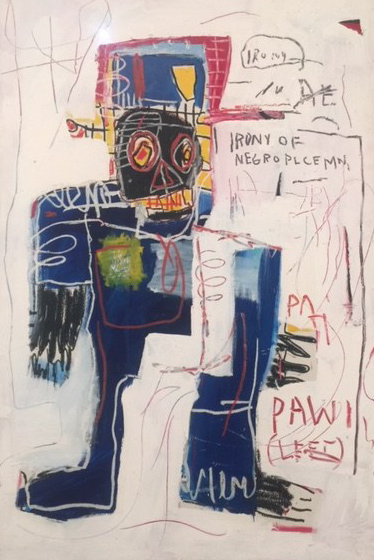
Both artists were acute to the prejudices hidden within the social fabric of the time. Haring and Basquiat were presented in the 1981 ‘Public Address’ exhibition hosted by Annina Nosei Gallery. The work ‘Irony of a Negro Policeman’ addressed the issues Basquiat struggled with; that police hurt Black Americans. The figure with anxious eyes and a clenched mouth highlights the inner turmoil. Using the word PAWN; he spells out his conviction.
Irony of a Negro Policeman 1981
Haring once said;
Basquiat 'wielded his brush as a weapon, struggling against exploitation, consumer society. repression, racism and genocide'
In Haring’s ‘Malcom X’ 1988; he visually records the activists death within a red noose, likening it to a trophy killing.
Malcom X 1988
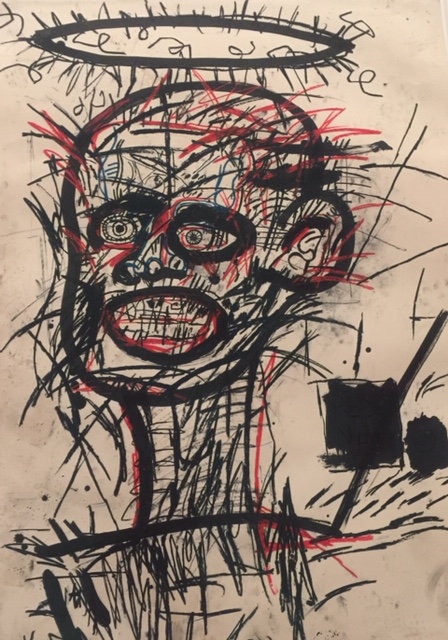
Jean-Paul Basquiat rode in limousines because taxis wouldn’t stop for him. He lived the Art Star lifestyle within the dangerous backdrop of racial realities. Many of Basquaits works are untitled, allowing the imagery to speak volumes, like the artist. A man of few words, using Art, to describe his large emotions. He often used halo’s above his anatomic skulls as a reference to the deaths of martyrs.
Untitled 1984
Both Basquiat and Haring considered themselves ‘Radiant Children’ entitled and indulgent. They crossed the line in decadence that would ultimately lead to their early demise. Basquiat threw parties serving caviar and cocaine and at 27 died from an overdose. Haring lived an unrestrained party-life and eventually fell victim to Aids. They rose out of the tar of the City, like flowers in the cracked sidewalk and as the era faded away, the value of their work became currency.
The power of the word is omnipresent, we can all view it in unique perspectives, and although many witness it , at the same time; our moment is personal. The word ‘universe’ translates as ‘one-short phrase’. One Word, in a biblical sense created life. Words are used daily to encourage, to hurt , to build prejudice, and so forth. Advertisers use words with the motive to sell; Evangelists use words to save souls and graffiti artists use the word to engage.
PETER DREW
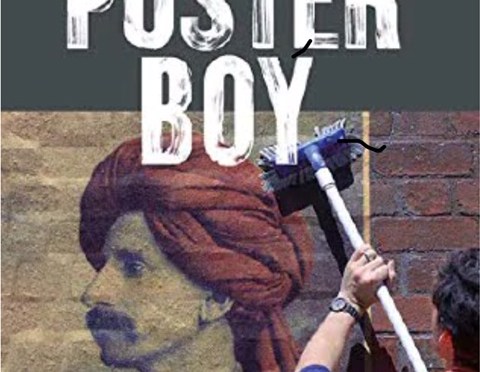
Peter Drew; Adelaide born artist has plastered the country with elegant portraits of Aussie’s that enable us to question the meaning of being Australian; a concept beyond a backyard BBQ.
“When your sneaking around the City at night you feel like a kid again.”
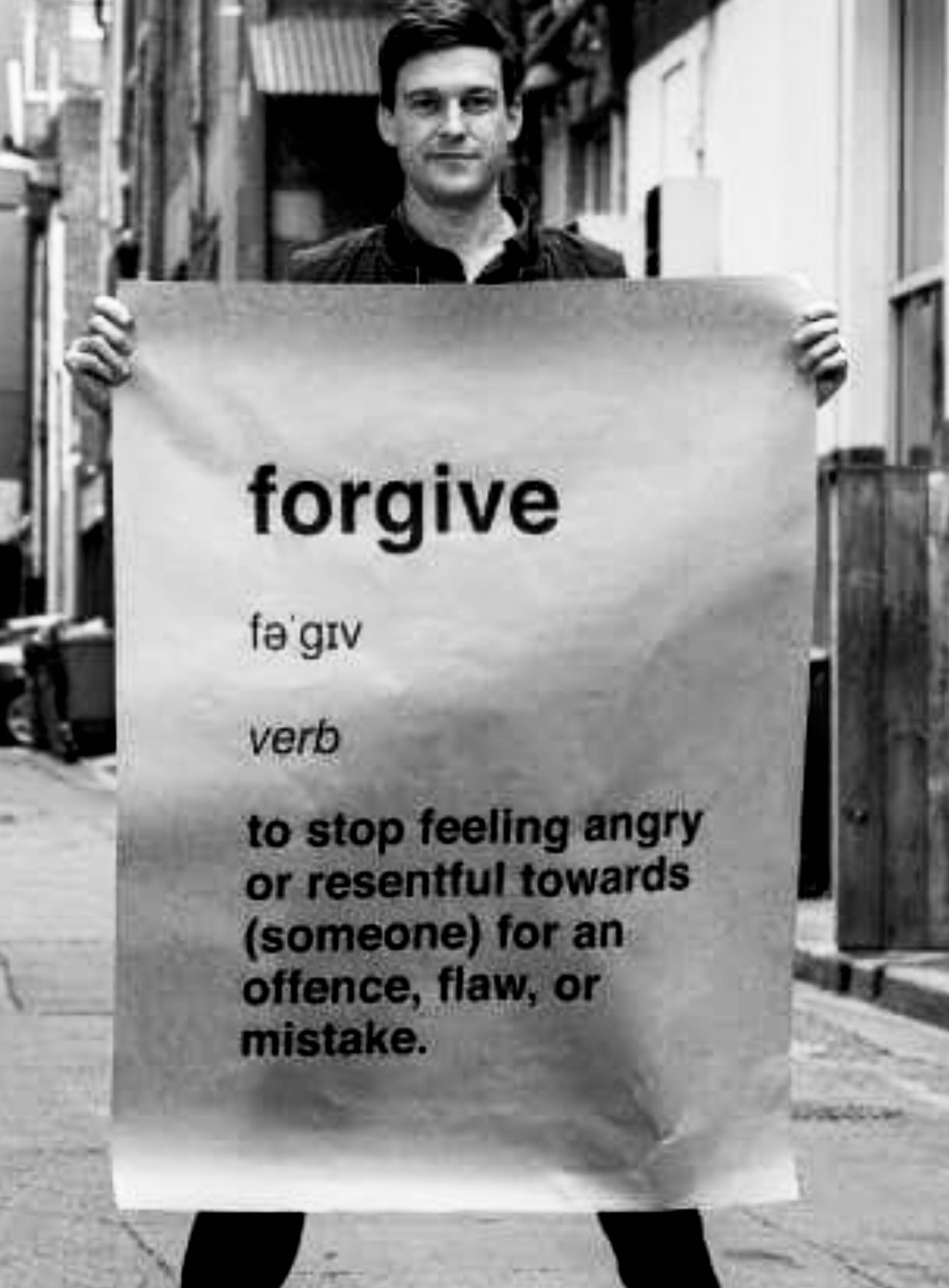
Drew is a peace activist that pastes a sense of reason into the hearts of the commuter. A casual glance at his picture-word statements is a thought provoking experience. He recognises that the street is an equaliser and draws the spectator into a dialogue of connection. Drew questions identity and inclusion. In a hi-vis vest, the artist has plastered up to 4000 artworks with a glue bucket and a broom.
What began as local phenomena, has boomed into an International experience; his reaction has become a political dialogue. He is an Artist with a message.
JEAN-MICHEL BASQUIAT
The NGV is currently hosting an exhibition that highlights the rise of New York Artist Jean-Michel Basquiat whose career began with writing simple and convoluted statements on city walls, under the identity of SAMO. Influenced by Andy Warhol, the artist leapt from advertiser to agitator, using the concepts of ownership and branding in a broader concept.
Basquiat entered the art scene as an urban nomad notorious for couch-surfing and graffitiing the homes within which he stayed. With word and form the artist took ownership of the material, ownership was translucent, a tender shift from theirs to mine, with a simple C within a circle around it and it was copyright; it was his.
Within the Warhol tradition the ‘Radiant Child’ used graffiti to promote his brand and identity, the ME generation was born, already bored with life. Basquiat however, possessed a passion that his mentor lacked; a statement involving the treatment of the ‘Black People’ in American.
History of the Black People 1983
ARTHUR STACE
Mr Eternity was a media title endowed upon a graffiti artist that wrote the word ETERNITY in perfect copper plate using chalk and crayon around the streets of Sydney for over 20 years. He kept his identity secret, until he was caught in the act. On the New Years Eve of 2000, the Harbour Bridge blazed with the word ETERNITY in honour of its humble artist.
Arthur Stace was a broken man when he walked into a Church for some tea and rock cake. He was an alcoholic born into domestic violence and palmed off to foster care, he fought in WW1 and lost the mental battle. Waiting for his cake and tea he was subject to a sermon that resonated within him and he became transfixed with the concept of eternity. He left the Church in the dark and broke down into tears, beneath an urban fig tree. This was his turning point, he never drank again.
“You’ll soon be back in the gutter again.”
Local police scoffed at the ‘new man’. He was back in the gutter but this time , not to lay in it, but to save souls and feed the homeless; he was on a mission. His practice was to rise at 4am, help the homeless and graffiti the word ETERNITY though-out the City.
Australian Artist, Ben Quilty explores the depth of death, particularly murder, and the brutal assault of hastening it’s arrival. He is on tour through the desolate heartland of emptiness, an intrepid explorer, however climbing Everest is not his goal, his road leads into the deepest darkest terrains of the human experience.
“I am interested in humans”
Quilty was engaged as a War Artist for Afghanistan. The experience brought him face to face with Australians that are endlessly jeopardising their own mortality and live within a violence that has been raging for 18 years. Many have lost their lives and limbs, whist Post Traumatic Stress Disorder has gorged trenches, within the soldiers minds.
Afghanistan
and
After
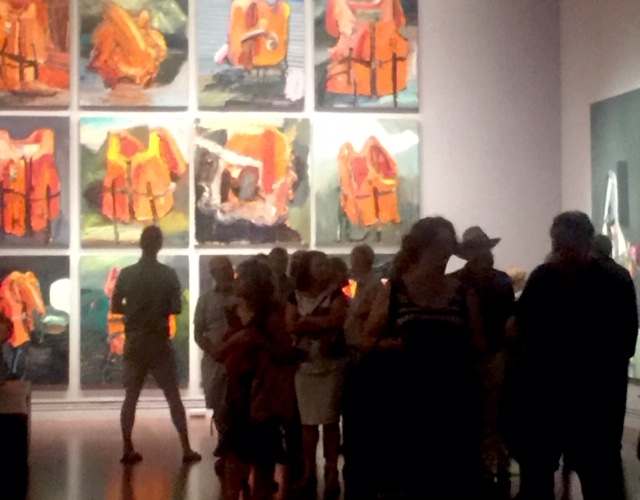
The Gallery visitor that has just had a glass of wine over lunch is taken into a war torn Earth, of shores littered with abandoned life-jackets from a fleeing population, naked soldiers shivering with PTSD and picnic spots that robbed Aboriginals of their life, dignity and history.
The crisis of war washes up on the Grecian shores, as refugees flee their homeland to find safety abroad. The refugees have left all of their belongings and donned lifejackets to cross, freezing sea’s in the black of the night. The reality of the Syrian crisis has not infiltrated the ‘connected world’ and the lack of response, drew the artist in. He intends to make the public aware of the trauma these young children are experiencing, by publishing a book of artwork by young Syrian victims.
“My work is about how to live in this world”
In his homeland, Quigley explores landscapes of the Australian Genocide against its Aboriginal population. In his Rorschach landscapes of Fairy Bower and Amata, the artist documents a howling dark presence in place of a tribal home where children would have ran happily through the trees and bathed in the waterfall and its streams.
Quilty explores humans wrecking havoc on other humans, because they can, or are obliged to, within the social framework of the current systems. Environment’s may appear inviting and innocent but Quigley examines that which is lurking beneath. There is an anger in Quiltys work, he is hurting and you must too.
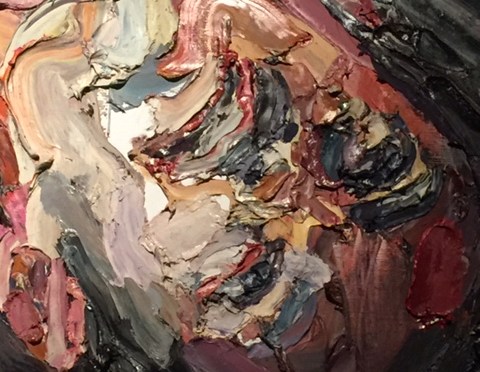
Quilty is a proficient landscape and figurative artist that can morph into a nightmarish surrealism. Quilty is battling a demon much larger and more connected than he. He wants justice, the paintings are the evidence and the gallery space is the court room. Quilty has managed to captured the attention of the art public with his profound statements in thickly plastered paint.
Like Van Gogh, he uses sculptural paint and his tortured metamorphosis are in keeping with Brett Whitely and Francis Bacon.
Quilty’s has witnessed war and it has taken its toll on him, as an artist and a human he has walked amongst the disenfranchised and documents their experience. Where journalists have dropped off , the social issues, like leaves, Quilty has become Australias fourth estate, placing the news, no longer in the paper, but on the walls. Quilty challenges us to look into our own backyard.
With the St Kilda Festival scheduled on a Sunny Sunday, I set off in the opposite direction of the beach and into town to the Art Gallery, hoping that the festival would draw crowds away from the Escher exhibition. What I wasn’t expecting was a Metro meltdown.
No buses, no trains and no trams! The 246 bus decided to by-pass my area, in an effort to avoid picking up or dropping people off to the bayside shuffle. The trains were off, due to track work and the trams had a ‘disruption’. The lone carrier was the notorious ‘Replacement Bus’ that answers to no schedule.
Boarding the bus required tactful manoeuvring as the commuters jostled for a seat and standing room, the less skilful were left behind. Just as the ‘Replacement Bus’ has no timetable it also has no set route and maundered it’s way through the inner suburban neighbourhood, like a scenic tour.
I passed places where I used to live and Cafes I once frequented and what began as a commute had become a journey, instead of taking 45 minutes to reach my destination, I arrived at the Gallery, after 2 hours. The girl at the ticket desk, attempted to talk me out of buying a ticket, as only an hour of viewing remained. My restraint was thinning.
Despite being rushed through the exhibition by enthusiastic guards saying;
“30 minutes to go and 6 more rooms!”
“20 minutes to go and 4 more rooms!”
“10 minutes to go and 2 more rooms!!”
The one prediction in my favour was that it was not crowded.
The exhibition soothed my fatigue and quickened the light of inspiration that thrives beneath the surface of mediocacy. Escher is a Master printmaker, designer, artist and architect; it is of no surprise that his father was an engineer. The exhibition weaves through the development of his style and skill, which is illustrated within landscapes and town streets, that journal his travels through Europe
The exhibition combines the Art Star with the works Nendo that compliment the show, with ambient structures and light shows. Like an Escher’s design; the art patron is led through props and floor space that dupes the eye and challenges those that are prone to vertigo. The layout of the show combines the physical and visual journey, it incorporates the optical illusion within the simple building blocks of drama. Beautiful work and a brilliantly curated.
Waking up on the Summer morning ,sipping coffee as the birds dart in and out of the garden, is bliss, even if the rest of the day will be spent in an office.
For warm weather the best time to come to Melbourne is between November and April. Australia is not built for cold weather, it is a beach culture, we endure July in houses that are poorly insulated. During Winter, the southerly winds off the South Pole shred through thin walls and coats, but in Summer it’s a cool change that swings a scorching heat into an icy gail. Melbournians wear layers because random weather changes are expected.
Summer, long weekends and Easter
When the sun is out the locals are basking. There is a mass exodus to the coast in January, Easter and Public Holidays, if your planning an Ocean Road tour during these times book early. Bayside beaches fill up and most Tourists head for St Kilda but South Melbourne and Brighton Beaches are more relaxing.
Inner city Melbournians, get up early on Saturdays and have breakfast together in Cafes, the best places fill up quickly. On a hot afternoon, the South Melbourne market has great outdoor seating under a large golden canopy, enjoy Mediterranean cuisine and a glass of wine. Expect to eat dishes from all over the world, each new flood of settlers has brought their food culture with them and each gets its day in the spotlight. Currently everything is ‘infused’ with something Asian.
Market morning
Sth Melb Market
fresh produce
If the weather turns foul, which means the ‘cool’ (freezing) change came early, head to the NGV Gallery at Federation Square and take in some Australian Art. The City is proud of its Artists but Sport is given most sponsorship. The Art is world-class but under promoted.
NGV Australia ; FedSq
Sandra Hill’s; Beyond The Pale 2010 (currently on show at NGV Fed Squ.
John Olsen
The Docklands is a relatively new development with ‘state of the art’ architecture, just behind the Southern Cross Station on Spencer St. It has a futuristic opulence , a skating rink and the Southern Star.
Trains and trams are the main form of transport and very well mapped, it’s easy to follow.The MYKI card works for locals but is not visitor friendly as you have to buy it to get around. Transport inspectors can be a bit intimidating so it’s important to get one. Currently the City has all night transport on Friday and Saturday nights.
Great places for dinner are Smith, Gertrude and Brunswick Streets in Fitzroy. It’s a fabulous block of ambitious ambiance. A historical area where hustlers and artists have had ‘their day’. but currently it is urban cool.
Melbourne has great theatre but if you want to catch a local act for under $30, after dinner there are some quaint venues; The Butterfly Club, La Mama, The Owl and Cat and The Meatworks, (just to name a few) are close to town and have their own character.
Butterfly Club City
Owl & Cat Richmond
Raglan St. Nth Melb
Mechanics Sydney Rd
Bars are numerous and many are tucked into the lane network that are the life beat of the town, most often decorated with great Street Art. Roof top bars are great on hot nights but most places have outdoor heating when it’s not great.
The highlight of Summer is the Australian Open and the best place to watch it is at Federation Square in a sun-chair. Despite Australian pride of designer beer and class wine most public places are dry. On New Years Eve drinking is banned on public Bayside beaches so cancel the beach party.
Melbourne was once called the ‘Garden State’ as we like our trees. When its too hot for the beach there are great Botanical gardens and the Ripponlea Estate offers shade and a cafe. The changeable weather has created a fashion consious culture and there are plenty of shopping strips and malls to cater for discerning tastes or a bargin.
Bridge Road
Menz Club
Mirka Mora @ Gorman
Summer essentials are thongs and light coat. We all talk about the weather; we complain when it’s hot and when it’s cold.
Dictionary meaning:

Involved with others in an activity that is unlawful or morally wrong.'the careers of those complicit in the cover up were blighted'
Complicit, a documentary by Heather White and Lynne Zhang, has completed a 2 year journey around the globe. Opening night began in London on March 11 2017 and it screened at the Melbourne Documentary Film Festival on July 14 that year; since then, it has completed its epic run at the Friday Harbor Film Festival, Washington this month. It took 3 years to make and has earned 16 prestiges awards. The story is told by the victims.
‘We heard about a young man suffering from occupational leukemia who had decided to assist others also suffering from occupational diseases. We first met Yi Yeting—COMPLICIT’S main protagonist—when he invited us to join him on a visit to Ming Kunpeng, a 26 year-old former worker with late-stage occupational leukemia.
Kunpeng had developed cancer linked to a cleaning solvent containing benzene, a known carcinogen. He entered the factory when he was 19 years old and—by age 22—was diagnosed with leukemia. During our many interviews with electronics workers as well as those from other industries, we discovered that the incubation period for occupational leukemia in China’s electronics factories typically occurred after 2-3 years of exposure in the workplace.
For 18 months, Kunpeng’s family had unsuccessfully tried to get his medical expenses paid for by his employer, Dutch semiconductor manufacturer—one of Holland’s largest producers of components and semiconductor equipment for the electronics industry. The family and the company were at a stalemate when we arrived in 2013.
Yi was helping Kunpeng’s family petition for an acceptable settlement . They weren’t able to pay for chemo or surgeries without the company’s support, which eventually they received. Ultimately, Yi’s help led to a much higher settlement agreement (US $100,000) than the industry average. However, early treatment is critical, and doctors said Kunpeng had no chance of survival. Not wanting to be a burden on his family he committed suicide in 2015.’ H.White
Kunpeng is only one of the young men and women whose life is cut down. The gadget they were making will be upgraded for newer version in the same time that they receive their diagnoses. One persons smart purchase is another death sentence, how can this quandary be understood within a moral and economical context.
Is moral responsibility a luxury we can’t afford
In a world rich in technology have we become so poor in Spirit that we are scrimping to find time for each other, are we slaves to money and has money made us so poor that we can’t see the suffering anymore, or even care. What does it matter if we can park a car in front of a big house if the water and air is toxic. Chinas problems today are our problems tomorrow, it is the investing countries that have set the standard that our children will inherit.
‘Because you say, ‘I’m rich; I have become wealthy and need nothing,’ and you don’t know that you are wretched, pitiful, poor, blind, and naked,I advise you to buy from Me gold refined in the fire so that you may be rich, white clothes so that you may be dressed and your shameful nakedness not be exposed, and ointment to spread on your eyes so that you may see’Revelation 3
How can someone believe they are wealthy, when they can’t afford morality; to think they are free when money has bound them to silence.
‘COMPLICIT was filmed in several provinces in China— something we cannot imagine trying to do under today’s Chinese government crackdown on civil society. We also filmed in the U.S. and Netherlands. I decided the public interest would be better served by a film which powerfully conveyed all that we discovered, and put the book on hold to make a feature length documentary.
I hope that after watching COMPLICIT viewers will feel a sense of increased connection to the workers that make the devices we as consumers can’t live without, and understand the risks associated with chemicals used during their production.’ H White
As I complete this article and read todays news, the headline reads:
‘Teenage girl left with a screw lodged in her cheek after blow dart attack …narrowly avoided losing her eye.’ 9News
We have lowered our standards for economic wealth and our social environment is in tatters. It’s never to late to turn back and amend our wrongs. We have to boycott companies and banks that don’t merit our business.
WATCH NOW
Prizes:
*Grand Jury Prize, Best Documentary Paris Alliance Cine – Human Rights Film Festival; Best Documentary Life After Oil, Sardinia, Italy;Best Documentary Workers Unite Film Festival NYC * “DOXA” Documentary Film Festival Finalist, Best Female – Directed/ *”Best Social Media Award”
Raw Science Film Festival/ * International Labor Film Festival Sao Paolo Brazil, Luis Espinal Prize/ award* semi-finalist: Hollywood International Independent Documentary Film Festival
OFFICIAL SELECTIONS:
Human Rights Watch Film Festival – London, New York, TIFF/ Toronto, San Diego, Amsterdam / Geneva Switzerland Human Rights Film Festival / Melbourne Australia Documentary Film Festival//Solidarity Tel Aviv Human Rights Film Festival/ ACT Human Rights Film Festival, Colorado/ Sedona International Film Festival/ Belgian Millennial Film Festival/ Addis International Film Festival, Ethiopia/ New York Workers Unite Film Festival /
SF-DOCFest San Francisco / Human Rights Nights, Bologna, Italy/ DocuDays – Documentary Film Festival, Kiev/Friday Harbor Film Festival/Galway Film Fleadh, Galway and Belfast Cinemagic – Ireland
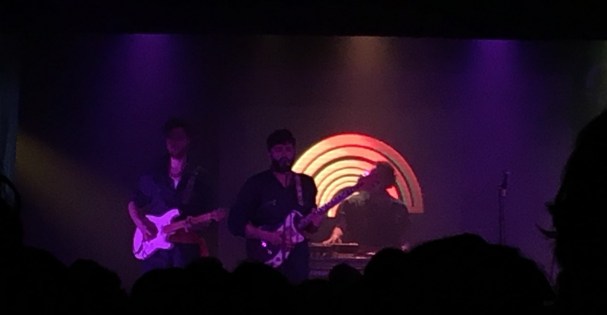
Total Giovanni honed in on the restless feet of the patrons in the packed Croxton Bandroom on a balmy Thursday night in Melbourne. Arriving to the thumping selections of DJ Sarah and Kovacs, the room was packed wall to wall, and elevated in the bleachers, to move their bodies to Total Giovanni’s latest offering.
Euphoria, album name and apt description of the evening, proved a memorable display of dance music at it’s convergence with songwriting.
Giving the sound engineer for the evening an absolute work out. All levels were set for the hit-hat, kicks and snare drums to snap the crowd into action. The line at the bar was enough to reroute people back to the dance floor so everyone was aware of where their attention should sit.
Moving through songs in quick succession – enough time was able to land the refrain of Falling Away on the crowd. As the crowd bellowed “ You know that I did wrong”, hands were thrown in the air and shoulders made excellent vantage points to catch a glimpse of the chemistry that forged the bands presence in all directions.
The album’s translation on stage is flawless. Having only been released weeks prior – I could only imagine how much time the crowd may have given to digest the album before embracing it’s washes of psychedelia and echoing vocals in the pit of the Croxton. Melbourne’s fondness for nurturing home grown talent was met with appreciation.
Total Giovanni began their gigging careers embracing the stage as much the studio, blurring the experience you’d have in your headphones with what you would get with a night out. Letting the crowd know they used to frequent the area around Northcote and Thornbury, and the state of the Croxton from the years gone by, the marriage between music and community seemed as apparent as the bright lights in front of us.
Melbourne’s continuing appetite for the fruits of dance music production enable it to produce some of the best and widely influenced sounds on the market. The balearic melodies and soaring choruses are grounded by the tribalism of kick drums keeping everyone in time to be taken through the journey.
The band finished on the uncompromising deep house jam Akila, taking everyone through the jungle that they created over their hour holding down the bandroom – everyone receiving the signal to create the stampede under their feet. Two encores later and the familiar ringing of ears and wide smiles across faces – Total Giovanni left a considerable impression and a fine tracklist for the upcoming summer.
“We played your song to John Lee Hooker, and he liked it”Matt Taylor remembers being told.
Chain performing in Melbourne at the Sidney Myer Music Bowl in the 80’s
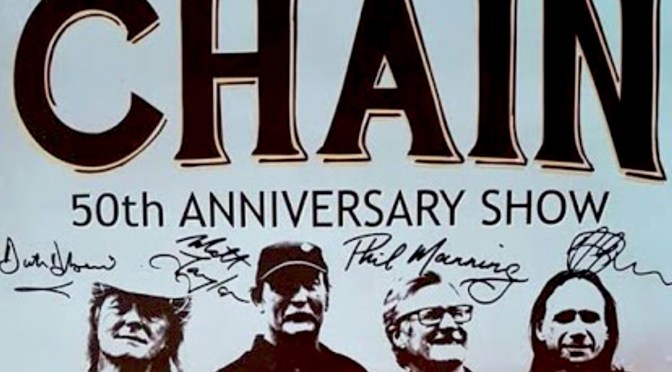
In 1971 Sunbury, tried to deliver a concert like Woodstock, but apart from being an outdoor concert, the two had little in common and most sources will confer that theirs was a ‘Love-in’ and ours was a ‘Drink-on’; yet for $1 you could enjoy Chain and Phil Manning blowing the breeze with cool blues and sweet guitar. Decades later they are together in Chain, playing in St Kilda at MEMO, just doing their stuff…living music.
Chain is like a Classic Harley Davidson, it doesn’t grow old but rather more impressive. I don’t doubt that the crowd on Friday night were just as alive to the music as they could ever have been. The artists ability hadn’t dimmed nor had their creativity faded, they were effortless, clean sound welded together with musical precision . They are not an old band regurgitating one hit wonders, this is a band of genuine artists perfecting their craft.
There was a mixed crowd of those that grew up with the music and younger folk that were new to it.
“It’s not an age thing man, you love them for their music and like them because they are good at their music”Josh (20something)
Matt Taylors relaxed and inviting stage presence between songs gave the night an unexpected charm. The session closed with ‘I remember when I was young’ and it set the crowd alight.
“What it is to be human ……..Art really did matter, not to escape, but fundamentally to reflect and improve society.”S. Grishin
Sydney heavy-weight, art star Brett Whitely is ‘put in the ring’ with an obscure Melbourne, printmaker and sculptor George Baldessin at the Ian Potter, Federation Square Gallery. The shared show is ‘Parallel Visions’, however apart from sharing a generation and meeting Francis Bacon, there is very little to link them. A fairer state rival for the brash Sydney-sider, may have been the dark and menacing Peter Booth. It is an excellent exhibition and for Whitely fans, the collection of his work spanning his wanderings with line and continents, is intriguing and includes the English Christie series; the American Dream and hometown Bondi and the Harbour.
The exhibition remembers the career of Baldessin that was cut short when the artist died young in a car accident. The prints are the highlight of his work and invite the viewer to linger over the subtle details. The NGV reminds locals of an artist that could have fallen into obscurity, his work remains relevant in our generation embracing the inward, awkward Melbournian disposition. The subtle compositions have a haunting beauty.
Whiteley’ bold and confident work reads like a visual autobiography, tracing the influences and mood of the time. The Christie murders reek of Bacon’s violet influence and remains as some of his strongest work in form and colour. The American Dream that creates a (hotel) room within a room, is scarred with a haphazard spray of lipstick red, not typical of his earlier paintings. Although the area is cluttered with detail, there is a startling emptiness in the work, that may have been why the Americans rejected it; maybe it struck to close into the New York bone.
When Whitely returns to Australia he is crushed, dispirited and convicted and in need of a BEX to sooth his aching head. Lazing on the beach and staring out into the harbour restores the man and the artist, bringing forth some of his most recognisable work such as ‘Evening coming in on Sydney Harbour’ 1975. Whitely travelled far and wide, to come home with fresh eyes.
‘Summing them up as morbid or deathly, but their very primitiveness, their sledge hammer effects, reinforce this mentally; naked extreme art’
Profoundly Art-Critic G.R.Lansell is describing Peter Booths early ‘Field’ work, a slate of black and grey on a minimalist canvas however he could have been describing his later dramatic figurative art.
Although the artist’s work morphed into an entirely different style, the essence of the artist’s style was conceived.
The Field exhibition launched Melbourne’s art scene in 1968 however it was not fully embraced by the locals.
The battle between Figurative Art that was the flagship of the Melbourne art tribes such as the Reed’s at Hiede and the Boyd’s at Murumbeena, had rallied against the American influence of the exhibition. At the time the exhibition was not organically Melbourne, nor was it entirely ‘International’.
The New York art critic Clement Greenberg criticised the first NGV Contemporary exhibition as ‘ second-rate.’
The exhibition aimed at awakening a sleepy town, after the failure of the 1956 Gallery of Contemporary Art. The new NGV curator John Stringer thrust his ideas forward and imposed his stipulations on the artists; they were happy to comply as careers and reputations were being made.
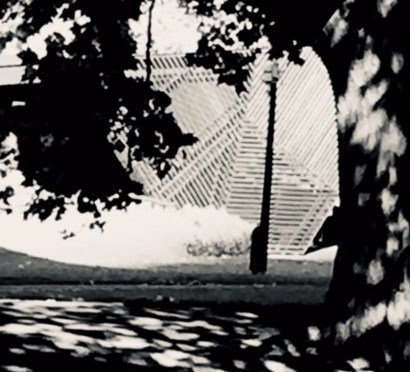
In today’s climate the work stands the test of time but to mark the journey of the Abstract Movement there is no greater example than Ron Robertson’s ‘Vault’.
The Vault 1978
The Vault was placed in the City Square in 1980, twelve years after the exhibition but the local reaction marks the cultural journey of Melbourne. The sculpture received such disfavour that it was nicknamed the ‘Yellow Peril’ by journalists and removed from its place due to public demand. It was a displaced work and was thrown into the shadows until 2002 when it found its home outside the Australian Centre for Contemporary Art.
Dale Hickey Malvern 67
Dale Hickey 1967
The art of The Field exhibition sits comfortably within our minimalist technological community . The ideas that may have seemed cold, isolated and sterile during the ‘flower power’ period have a greater relevance in 2018, within a world disconnecting with nature and embracing the virtual.
The Field Exhibition was the first piece of the NGV journey that began in 1968 and was 50 years before its time.
Era’s pass but genuine Artist’s don’t. Russell Morris’s Music career took off in the 70’s, a politically volatile time of change and youth culture that was spurned on by the Vietnam War. A heartfelt era funnelled through substandard audio; AM radios, record players and cassettes stuffed into dashboards of Holden station-wagons. Pub gigs offered the opportunity for audiences to hear the complete sound and this has not changed. A live gig can make or break a band and Morris hasn’t lost it, in fact he continues to perfect his craft.
On Saturday night at the MEMO music hall, in St Kilda, that was at capacity. A great venue but beware of the nocturnal parking inspectors. Morris was backed by a very funky blues band, the Three Kings that kicked off a the show with a flawless performance that engaged the crowd.
Morris and his band performed their latest work with the Classics. Presently Morris is digging into the roots of our nation whist his earlier work transcended the earthly bonds. Both are distinctively Morris but predictively it was the Sweet, Sweet Love; Wings of an Eagle and The Real Thing that got the crowd to their feet.
Originally it was ‘The Real Thing’ that morphed Morris from Blues Man to Soul Man with the lyrics from Johnny Young and the vision of Molly Meldrum, an Aussie trilogy that blended into a huge hit and became the sound track of the 70’s.
The hit extended beyond our shores to New York and inspired a generation. Young may not have reached his potential heights, but his work soared through Morris to become a classic. Morris found his way and wrote into the hearts of his audience with the Bloodstone Album that included; ‘Wings of an Eagle’ and ‘Sweet, Sweet Love’ and led him into Australia’s ‘Hall of Fame’; archived and ready to be picked up for generations to come.
As a historical twist Russell had offered ‘Sweet , Sweet Love’ to Johnny Farnham but he knocked it back due to the chorus delay, it seems that fate had smiled on Morris and he made it his own. Hits rained on Morris, the type that can stand the test of time. Authenticity and passion distinguished the language of his art, it was unique and distinctive then and remains so today.
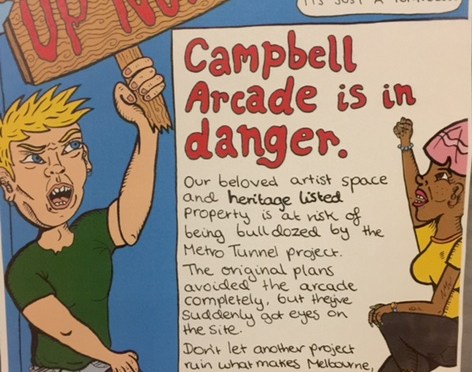
As developers mow down the remnant of urban culture and bring the suburbs into the urban heartland, the locals are a tad P.O. Uprooting cottages for flats that look like offices, speeding down narrow streets where children play and destroying a treasured a metro arcade is ultimately changing Melbourne.
Easing through the morning at the DeGraves underpass starts the day off on a ‘good foot’, a coffee, a bit of art and a relaxed vibe. Removing this space from the Urban Art Culture would be like removing the goal posts from the MCG.
The Art Deco architecture of Campbell Arcade embraces Melbourne in1955, the salmon pink tiles, black granite columns capture a by-gone period where few examples remain. The display cabinets along the subway wall host local artists and most often a busker, serenades the office troops, as they pass.
Every morning commuters submerge under the station through Campbell Arcade and surface into DeGraves. What a great way to start the day.
Life looking back is a vista, a remarkable journey, encumbered,encrusted and inspired; the good,the bad ,the ugly and the beautiful, the footprints the young look upon with indifference, unless it weeps from the tree of integrity.That nectar that inspires trust.
Natasha Moszenin has over 25 years of musical experience that mixes the palette of life and art and delivers a performance at the quaint Butterfly Club that made Friday night fatigue, a soothing recharge.
Moszenin stares unflinching at the drama and terrors of life that hide in the shadows, she has faced them all and knows them by name. With maturity, resilience and defiance, she acknowledges and creates a wonderful score about her life. Ironically the Butterfly Club’s eclectic pictures on the wall illustrate the transformative passage of hope, love,trauma and …triumph.
The Artists Lara Vocisano, Claie Nicholis and Jai Luke present a narrative through song that washes over the audience. The beautiful voice of Nicholas is of a song-bird but not to take away from the solid vocal presence of Vocisano and Luke, as Moszenin plays the beautiful score on an old piano.
Moszenin dives into the depths and finishes off on a light comment on todays less emotional world.
Nightsongs is performing at the Butterfly Club this weekend
The show stopping art storm is fixated on capturing the Melbourne imagination with no expense spared, and this year it is free.
The journey starts and ends in the Moroccan coffee house but our focus is on the second floor, up the Reko Rennie elevator, an elevator that is part of the Galleries structure; not imported. From the Australian Aboriginal world, without excess to the post-communist decadance, up the spine into the heart and soul of the human mind.We arrive at the GOU PEI exhibit, a Chinese Fabric Artist that engineers her Masterpieces, stitch by stitch, bead upon bead, golden thread and a mantle of dreams. Inspired by an ancient past with dresses that would inspire the Pope. Her exhibit arrived in Melbourne, as precious as the Emperors Palace treasures and is located in the eye of the TRIENNIAL storm at the NGV.
Pei claims her work denies what it succumbs to, human vanity. Heart, soul and creativity, with a barrage of craftsmen on the floor, and this has happened before, in Dynasties past, a royal glass slipper for the ball. Rhianna , contemporary Diva, herald in the Artist at the Met Gala, formally the Costume Institute Gala, in New York.
The NGV hive, houses the Queen in an exhibition that begins in a blaze of glory.
Like Michelangelo, one can imagine that she is ripe for Vatican success.
The NGV has gone wild, Curated by Simon Maidment’s team, a wonderland passing from one installation to another, a mind altering experience of Art.
As art-life drifts out of the fringe into the mainstream an unholy alliance bridges the gap between today and tomorrow. The current stream sedating, a war brewing.
Guo Pei couture
Mueck’s sculptures
It’s an epic bombardment, a Cultural revolution in it’s full thrust of life bordering on the ruin of decadance. Ron Mueck explores the human condition and its vulnerability in the wake of God-like delusions.
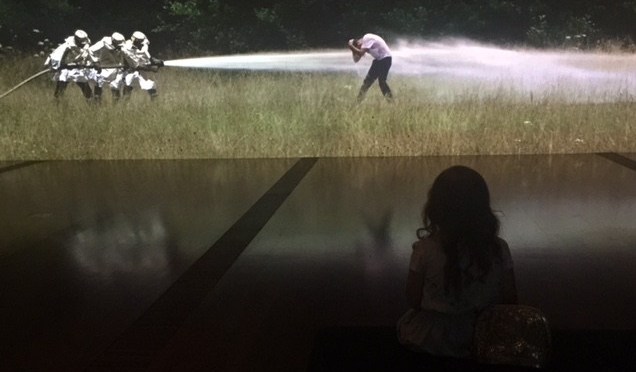
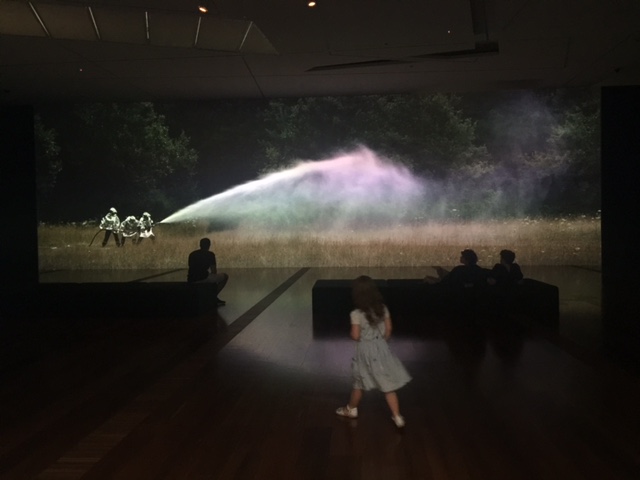
Artist, Mel O’Callaghan explores these questions through her dramatic Video Art currently on display at NGV Australia. Resistance and endurance is a rite of passage each of us will pass through eventually, a relative condition at every age.
Ensemble within the NGV space is cinematic, with life-size actors in a war-like water-battle. O’Callaghan uses the violence of the force to explore existence. It is when we let go , that life spirals and the body is swept away.
‘What a single body is capable of when enduring a voluntarily experience of duress is a powerful thing to behold’ Callaghan
Australian O’Callaghan lives in Paris and gave a live performance at the Serralves, taking it out of the dark theatre space and into the light of day.
O’Callaghan considers the body as a vehicle of ‘imposed labour’. The resistance of a ballet dancer perhaps or an underpaid worker forcing him/herself out of bed? Consider the Soldier preparing for death, or worse. Each day we battle, not to win, just to remain standing.
‘To fall, to begin again which is where the virtuous aspect comes into violence. It’s not being purely negative but rather a creative force’ O’Callaghan
Her work also relates to the Political and Economic climax point that is coming into focus.
‘…. those mounting feelings of deep despair that force acts of extremism’
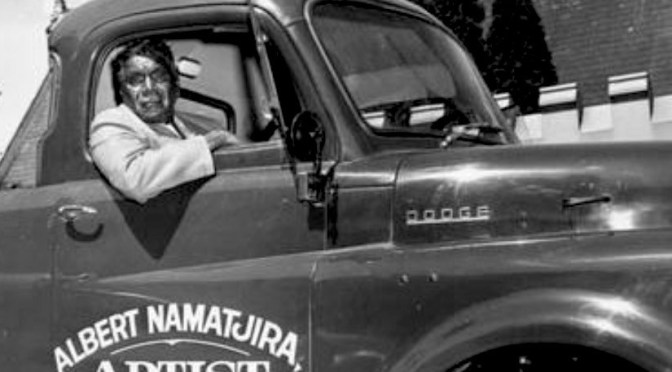
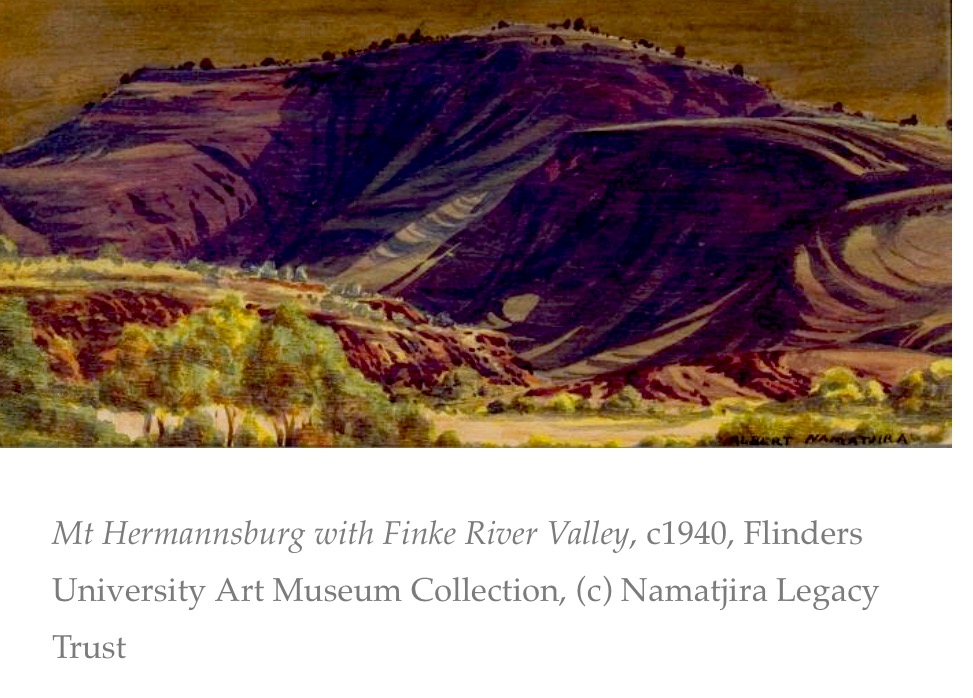
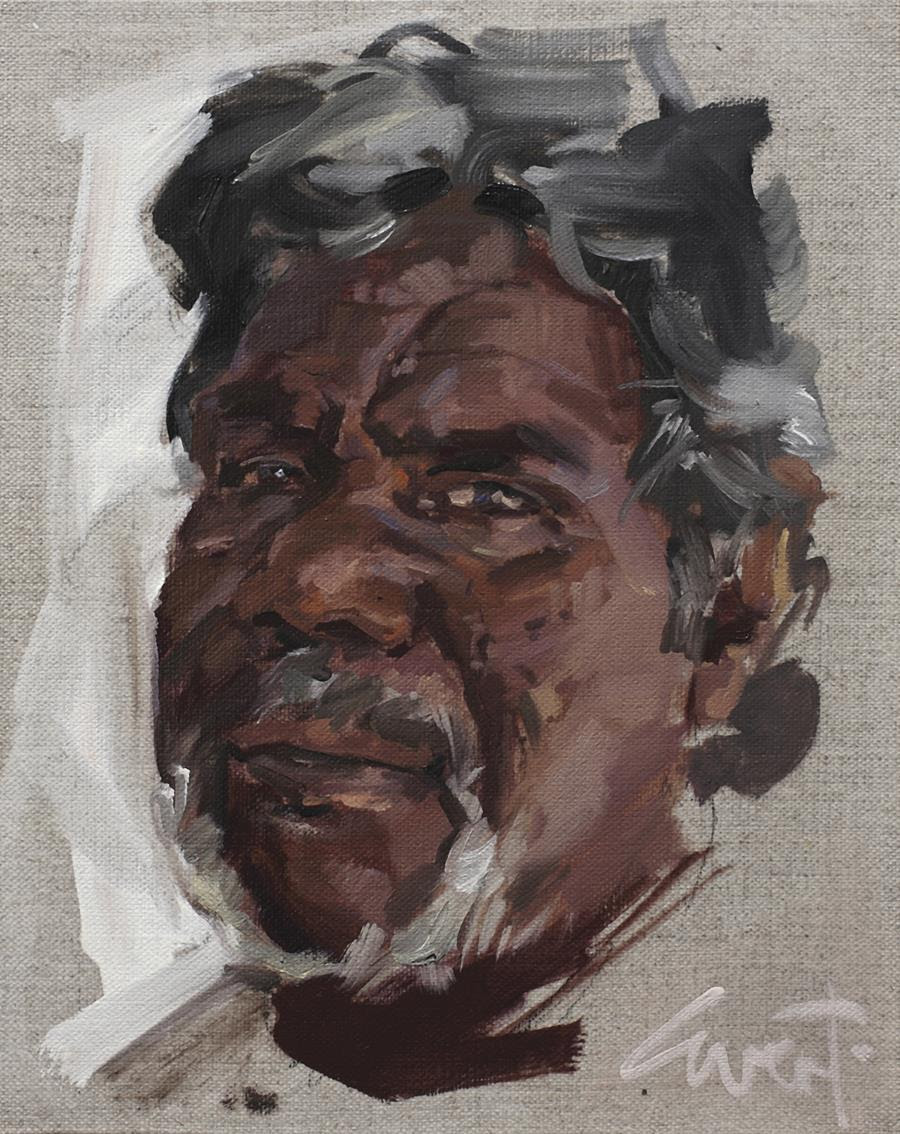
The tale of Aboriginal plunder is a never-ending ballad that sings in the winds of this great country, a land that Elea (Albert) Namatjira painted so lovingly in watercolour. Namatjira’s world-renowned artistic status may have provided him with a thin shield against racism but it was easily shattered, even his greatness, wealth and innocence could not protect him from incarceration.
Namatjira surrounded by family as he painted
The legend begins when Artist , Rex Battarbee took a painting trip into the Outback, after returning from the devastation of War in the 1930’s. He met Namatjira and it was through their collaboration that the 30-year-old Aranda man learnt to paint and exhibit. They went on to become lifetime friends, able to see pass the bigotry of the day.
International success took this humble man to great worldly heights, he was awarded the Coronation Medal and was the toast of the town. His exhibitions sold out shortly after they opened and most kitchens had one of his reproductions on a calendar or tea towel.
Before the 1967 Referendum, Australian Aboriginals where denied Human Constitutional Rights and were categorised as part of the wildlife or wards of the state. They were denied most basic human rights and in an insipid twist of irony could not own their land as it had been acquired by the Commonwealth.
Namatjira’s unprecedented rise on the world stage would require him to have a passport and his growing wealth attracted taxes, thus him and his wife Robina were given Australian citizenship in 1957, enabling him to buy a house in Morris Soak .
Unfortunately his children were not granted citizenship and were regarded as ‘Wards of the State’ as all Aboriginal people were. They did not have the right to choose their marriage partner, be legally responsible for their own children,to change location or socialise with non-aboriginals. It also meant that when the Great Artist and his wife died the Legal Will that aimed to financially protect their children was made void as his children belonged to the state. Their financial copyright royalties were ‘acquired’ by the state and sold on.
The Namatjira Project began as an objective to buy back the royalties (which will expire shortly) but has become a legal investigation.
The most moving part of the film is when Namatjira’s homeless grandson gives his artwork to the Queen in her palace and walks away empty-handed. The documentary is a thoughtful journey, full of beautiful archives and an artistic vision, they tip toe over a mine field but I think they have let off a bomb.
*Due to the humane efforts of The Namatjira Project, the Royalties have been returned.
Another victory in justice for the family
The Namatjira Family continue the water-colour tradition as their cultural inheritance.
A Message from the Family
It is a with a heavy heart that we write to let you know that our dear friend and watercolour artist of true talent, Kumantjai K Namatjira has passed away. On Saturday afternoon 3rd November in Alice Springs Hospital, he bid farewell, surrounded by family. One year after his cousin, Kumantjai L Namatjira, and 5 years after meeting The Queen at Buckingham Palace.
THE NAMATJIRA PROJECT

DIRECTOR & CINEMATOGRAPHER Sera Davies

PRODUCER

Sophia Marinos

EXECUTIVE PRODUCER

Julia Overton

EXECUTIVE PRODUCERS (CULTURAL)
Lenie Namatjira
Gloria Pannka
Josh, one of our new music reviewer’s arrived to a full house at the Tote in Collingwood on the weekend, for the launch of Ferla’s new album Guilt Pop / Stay Posi.
‘It was packed, nearly overflowing, an Indie rock sound, a bit electronic; in the genre of Sticky Fingers. The crowd was ‘very alive’ and tuned in; mostly hipsters. ‘
Giuliano Ferla. hit the high notes easily whist being supported by a band that infused his mood, the synthesiser player engaged the audience with a complex construct of layered chords, one on a keyboard and synth on the other. Ocean Party, and dewy garage Girlatones. were the supporting bands and Loose Tooth DJs spun the tunes for the night.
Ferla engaged with the audience and explained the development of the lyrics with personal insights.
“Imagine your life as if you wanted nothing at all.”
It was a great evening, showcasing a talent that has arrived after a many performances, a terrific line-up and an evening that engaged the respect of the audience.
“There was a great vibe.” Josh
Audience Response:
“If its on spotify its definitely going in my collection.”
1. Breakups Are Hard For Everybody
2. I’m Nobody’s Baby Now
3. In The Night
4. You’re There
5. I Can’t Let You Down
6. Wasted On You
7. Children Are Our Future
8. Limited Time
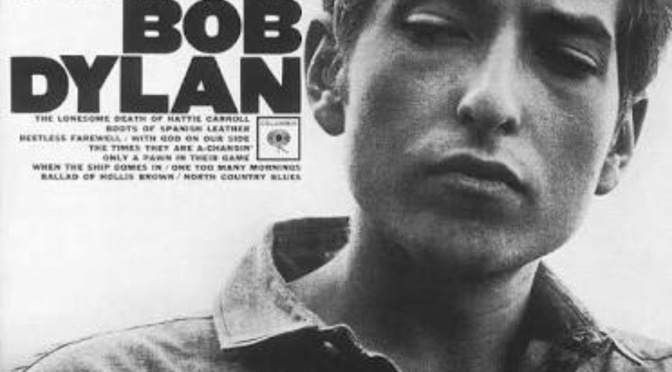
On a mild Winter weekend, Melbourne’s Music elite came together to honour the songs of Bob Dylan before a full house at the Memo in St Kilda. Friday night was dedicated to acoustic Bob and on Saturday night, it was electric Bob.
The ‘All-Star’ back up band, consisting of Benny Franz, Stephen Hadley, Ben Wiesner , and Shane O’Mara , melted seamlessly into each other, but it was guitar legend O’Mara that stole the night with his stella performance. It was a group of musicians fit for the honoured legend himself.
Who is Bob Dylan? Songwriter, Poet or Prophet; Jew or Christian? His lyrics resonated with the crowd that held resolute with dignified appreciation of the words and the artists. Loud talkers were quickly hushed.
Come gather ’round people Wherever you roam And admit that the waters Around you have grown And accept it that soon You’ll be drenched to the bone. If your time to you Is worth savin’ Then you better start swimmin’ Or you’ll sink like a stone For the times they are a-changin’. Come writers and critics Who prophesize with your pen And keep your eyes wide The chance won’t come again And don’t speak too soon For the wheel’s still in spin And there’s no tellin’ who That it’s namin’. For the loser now Will be later to win For the times they are a-changin’. Come senators, congressmen Please heed the call Don’t stand in the doorway Don’t block up the hall For he that gets hurt Will be he who has stalled There’s a battle outside And it is ragin’. It’ll soon shake your windows And rattle your walls For the times they are a-changin’. Come mothers and fathers Throughout the land And don’t criticize What you can’t understand Your sons and your daughters Are beyond your command Your old road is Rapidly agin’. Please get out of the new one If you can’t lend your hand For the times they are a-changin’. The line it is drawn The curse it is cast The slow one now Will later be fast As the present now Will later be past The order is Rapidly fadin’. And the first one now Will later be last For the times they are a-changin’.
Each vocalist made his songs their own and each captivated the audience. Liz Stringer was haunting, almost gothic as her lone figure shone in the darkness etching the words and reaching into the void. Song-bird Lisa Miller was mesmerizing and thrust the show forward, her talent is palpable. Chris Wilson’s scratchy soul voice penetrated into the mind of the listener, like a dark cry and ‘Raised by Eagles’ duo Luke and Nick raised the tempo with a bit of rockabilly. All of the vocalists on the night where exceptional.
A memorable evening.
Audience response.
“Shane O’Mara is a Melbourne music legend and of Liz Stringer, you need to get her last two albums.
As the MICF circus wraps up, 2 clowns sent it off with a bang.
The afternoon show at ACMI was the icing on the Festival, after a series of ‘Stand up’ wit and profound observations we discover a new territory. These Guys have nothing to say, it’s what they do that suspends reality and slaps you in the face. Throughout the performance the unexpected continued to surface from beneath the banal.
Confused? Good , that’s a great start.
You will be bewitched within a Dadaists performance of an office mundane that imploded into the wild and creative instinct of lifes little dramas. Bit by bit they shatter through reality to reveal a seething internal existence with comic twists.
Intrigued? I hope so, it is an intriguing experience.
No matter how sober you think you are, they will pick up your solid piece of reality and twist it until you feel entirely happy. Like an animal can become a chair, a thing can become an animal. They are very clever Consultation Specialists.
Welcome to Ruck’s Leather Interiors starring Gareth Grubb (Trygve Wakenshaw) and Dennis Chang (Bernie Duncan) as Performance Artists.
Bernie Duncan
Where did you Guys train? MP
“I didn’t do training but Ttygve went to Gaulier, a French Clown School in Paris.”
How did you get into this? MP
“I always made theatre, we started a Company (Theatre Beating) about 14 years ago, and we made stuff we liked”
Audience Responce
“I never dreamed that I would ever see two people entertain me from the time they started right up until the very end. Everything that happened was totally unexpected , it shocked me, it was so funny and you never knew what was coming and everything that came was brilliant.”



















































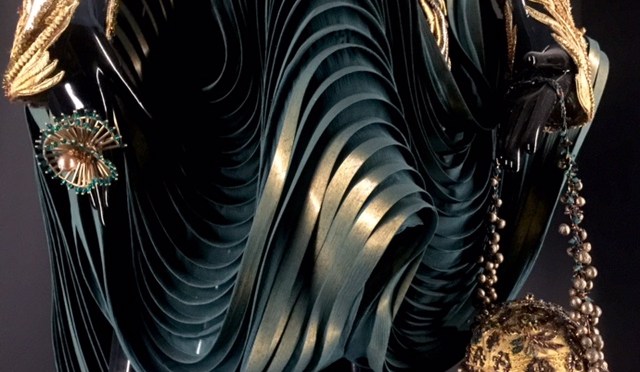


 We arrive at the GOU PEI exhibit, a Chinese Fabric Artist that engineers her Masterpieces, stitch by stitch, bead upon bead, golden thread and a mantle of dreams. Inspired by an ancient past with dresses that would inspire the Pope. Her exhibit arrived in Melbourne, as precious as the Emperors Palace treasures and is located in the eye of the TRIENNIAL storm at the NGV.













 Where did you Guys train? MP
 melbourne press