Tag Archives: art

The play that created a storm

‘It’s foul weather in us all, good soul’

img_7407
Melbourne Sky

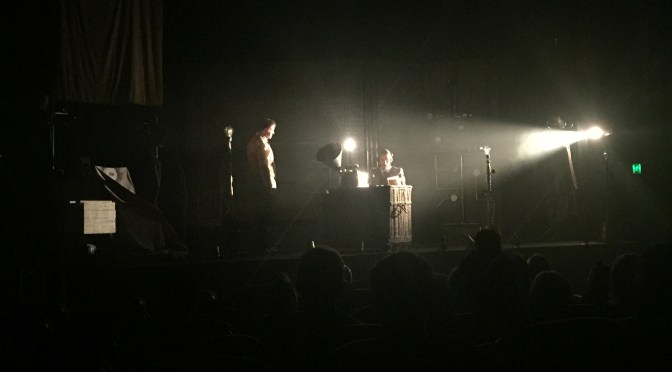
Ironically, it is a storm that opens the tale of The Tempest, but here on the banks of the Maribyrnong River it is a brewing storm that ends it. Melbourne’s fickle weather has once again cast its cold spell on an outdoor event. It has ‘undid’, subverted and prevented the ambition of this ‘goodly’ play. The stunning performance that was on Friday and Saturday was ‘naught’ on Sunday.

What could have been is; Prospero, performed by Brendon Ewing, dark with revenge and drawing his past into the currents of his macabre island home, seeking familiar company with unkindly aims, that give way to kindness sway. This tale untold, due to weather, it had to fold, so the cast did the next best thing, they sang.

Sly Rat Theatre Co.’s artistic directors Alan Chambers and Andy Harmsen have created a unique vision for The Tempest, inspired by science-fiction classics. The Pipework’s Natural Museum is a beautiful outdoor space, rich in atmosphere and a perfect setting for a summer picnic, weather permitting.

img_7369

“It’s a Rock and Roll version of Shakespeare, it’s very loud and very big” Director Andy Harmsen

Within the warm hub of the group, a buzz with laughter, singing and the smell of burnt sausage, it is easy to forget that the cancellation of a show could be disappointing, they are taking it so well. It’s a chance to catch up with some of the actors and chat about their role’s, the few that aren’t belting out a tune.

First up is Todd Levi

img_7427

“We like to push the boundaries but still tell a great story.. it’s Shakespeare, how he would like it done today…Its bawdy, its real and it is entertainment first and foremost. Prospero has been marooned on a magical island, betrayed by his sister and he’s been there for 12 years. He spies the evildoers sailing by and raises a tempest, a storm that shipwrecks them on the island where he prepares to take his revenge. It’s the search for redemption the final words of the play are; ‘As you from crimes would pardon’d be, let you indulgence set me free’

What made you choose this venue? MP

 “It’s a magical place, it’s a place where the community comes and we played here last year to over 2000 people … most of them had not seen live theatre before, let alone Shakespeare, and playing to an audience like that and seeing them fall in love with it”

Did you factor in the weather? MP

“You don’t expect to have nine shows of good weather every-time, hopefully this is our one and only cancellation.”

Next up is Tara Hauton 

img_7399

“Steph and I play the clowns, technically it’s the Court Jester but Andy and Alan have re-invented it to be two women who have been to the races all day long and have arrived at the play. We exist outside the world of the play and that’s where the comedy of the role happens…we are very drunk.

and Ty Holdsworth

It’s a play about weather, most Melbournians can relate to that.

Pipework’s Natural Museum Park on the banks of the Maribrynong River


Beyond the Pale

Australia Day tribute:

“It’s always been about sharing stories, identity loss and grief, determination , imagination , self belief, cultural integrity, hope and justice, reliance , cultural pride, and more than anything it’s about my people’s survival of spirit.” Hill

Noongar woman, Sandra Hill was a stolen Aboriginal child that was forced into foster care at the age of seven by the Australian Government due to the Assimilation Policy that was still active in 1958. Four children were removed from their mother’s house, they included her self , her two sisters and a brother. They were the 3rd generation of children removed from this family line.

‘In 1994 Hill  was employed as the Aboriginal Community Cultural Officer. During this period she applied for, and was awarded, a Creative Development Fellowship from the Aboriginal and Torres Strait Islander Arts Board of the Australia Council for the Arts. This afforded her the time to carry out research relating to her life experiences as a member of the Stolen Generations’ (extract from Design & Art Australia on-line)

Hill’s work is held in many private collections and is also represented in Major Art Galleries throughout Australia, currently her mixed media work “Beyond the Pale’ is on display at the NGV Ian Potter Gallery at Federation Square in the Australian Art Exhibition. She explores domestic labor as part of the ‘Assimilation Project’.

In the past, Domestic colleges were set up to train poor white girls and ‘half-caste’ Aboriginal children to attend to the needs of the wealthy.

‘In the early issues of Home Beautiful there was a feeling of nostalgia for the passing of an age in which almost everyone in the middle and upper classes could afford to keep a live-in maid. Even at the turn of the century , architects and designers were discussing the ‘servant problem’ and trying to come up with ways to help women face a future without servants’ The Australian Home Beautiful, from Hills Hoist to High Rise.

img_6957
NGV


ref: page 73, Household Help: The Servant Problem. The Australian Home Beautiful  from Hills Hoist to High Rise  Hardie Grant Books Oliver J.

The seasons of David Hockney

Current

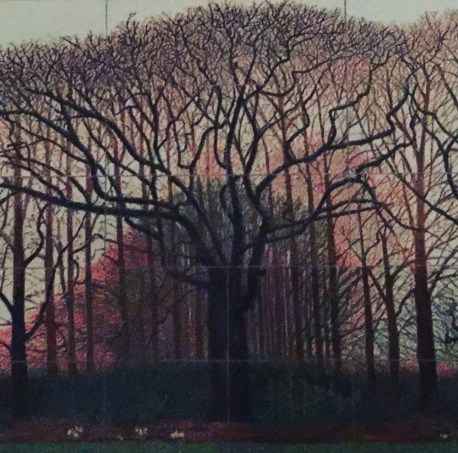
Hockney is both artist and philosopher and does not leave ‘Art for Arts-sake’,. He has a dilemma and a relationship with the camera. It’s an interesting journey. Hockney wants to break free from the ‘window to the world’ and look upon life with fresh eyes but memory draws him back into the abyss of ‘what if’. It’s this challenge that makes his work exciting and current.

img_5318

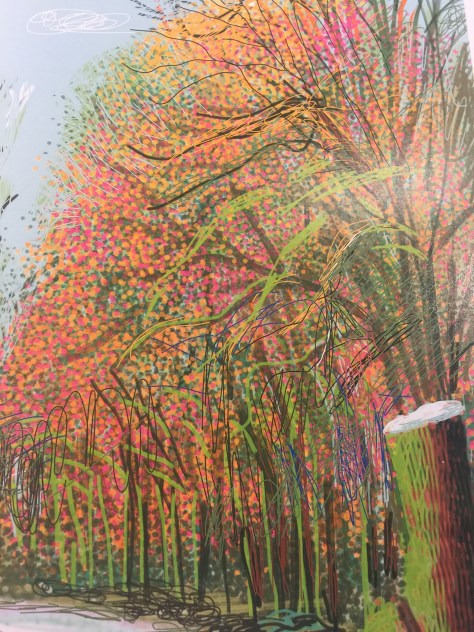
Hockney was an early explorer of new technology when others were still reckoning with it. The perplex of the eye informing Art or the camera has etched itself into his work. The inner debate of Hockney is explored in his art and educates the viewer. He is an intellectual and art is his vehicle

“The camera can’t get the beauty of this ……it can’t compete with painting” Hockney

img_5251

Hockney challenges the limitations of the camera but continues to return to it. He has a union to technology that he cannot divorce himself from and that’s fine. As Hockney searches for the truth and is willing to film it; we benefit.

Hockney knew that 14th Century artists were using the ancient Camera Obscure,  a technique that reproduced a slide show via light and darkness onto a canvas. He devoted a few years documenting it and producing evidence.

Maybe in the early years, Hockney was criticised for letting the camera inform him and he aimed to provide its legitimate history within the Renaissance . He ended up proving and providing something more important, it works either way.

The pool and boys journey in LA begins as an eye and brush experience.

‘Though there was no photography used in the swimming pool paintings, because the camera “freezes” the water, which was not the effect he was after, he did continue to use it as n aide-memoire’ Christopher Simon Skykes

Hockney could capture the movement and effect of pool water with his eye but needed the camera for the Splash!

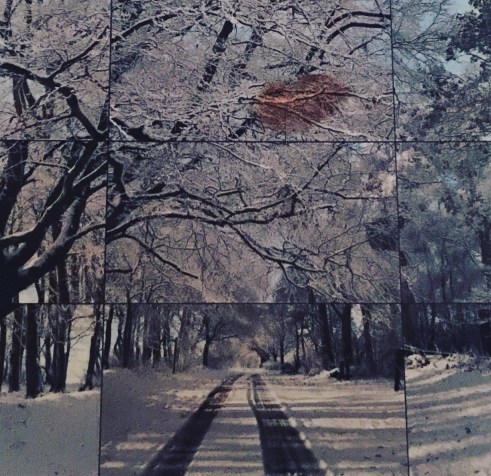
When Hockney returns to the English countryside to capture the seasons, he faces extreme weather and does not photograph the landscape. He forsakes a cosy studio for art of plein-air. Back indoors however he views the photographs of his work and aims to create a cinematic version within a jigsaw. The camera is back. The final twist is that the weather weathered work informs the photograph.
img_5319

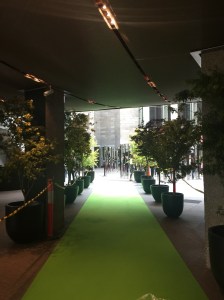
Take the journey and roll out the green carpet for David Hockney at NGV International.

img_5278
NGV International  welcomed the Artist on a green carpet.


The Woman in Black

The Woman in Black is a psychological thriller with a mystery at the heart of it. It takes the audience on an imaginative tour, where their own thoughts interplay with the drama before them.

“they saw things that didn’t happen in the show” Justin Stephens, Director.

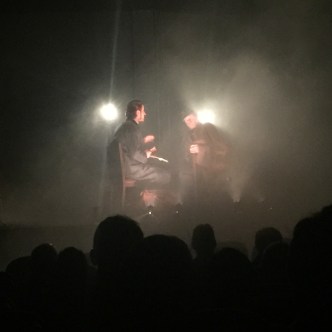
Stephens is drawing upon 25 years of theatre experience to present this production with two key actors, Chris McLean and Kieran Tracey, that are ‘on top of their game.’The Woman in Black” is a horror novella written in 1983 by Susan Hill. The play has startled audiences around the world.

Don’t expect to be spoon-fed, its a subtle work with confounding possibilities. Flawless acting, clever direction and trick lighting; engage the minds of the playgoer. The ‘not seeing’ creates the atmospheric conditions of strangeness.

“Creating a vision of actors on a journey” Stephens.

img_4942

Ironically, Stephen’s acting career began in an effort to combat an early speech problem. Many successful artists have grown from adversity into major success stories;such as Warhol,Beethoven, Einstein and Dali, just to name a few.

“The power of theatre and how it can transform” Stephens

The drama explores tragedy, the coping and non-coping elements, of the human experience. All those memories that haunt and prevent us from a full recovery, are confronted in a dire straits situation, where he/we must face our fears.

“Even the most rational minds can play tricks in the dark” from James Watkins 2012 film version.

The Review

img_4929

A menacing and sinister fog welcomes the audience into a Gothic drama that explores the space between life and death.  It’s a well written play,  beautifully executed by the actors with atmospheric effects that conjure an unsettling mood. There is a lavish opulence of poetry and theatrics in thick layers. It is theatre at its best, it is a work of Art.

Australia’s patchy history

1800-1950

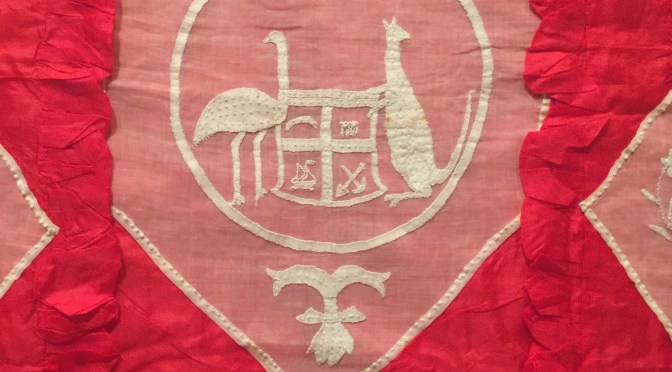
It’s fascinating to imagine that female convicts on ships to Australia, were sewing beautiful quilts. They were leaving heavily populated cobble streets and embarking on a tour into the wild unknown.It was a place where currency was rum, women were few and some unthinkable dark terrors took place.The unfree made free and the free made unfree.

img_4140
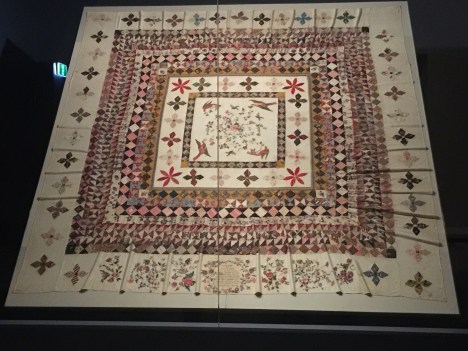
The Rajah Quilt

This quilt was created by the women on board the Rajah in 1841, they were taught by  Elizabeth Fry, a Quaker reformer.

‘The Australian quilting tradition developed in response to a unique set of factors that sets it apart from other quilting traditions internationally.’ NGV

There was the odd sailor that picked up a needle and thread and made his own quilt.

img_4609
unknown artist

This example is a work of Art, an intricate geometric design, with a contemporary feel. The beauty of the quilt is that it is also functional. The time poured over the work creates a meditative element that transfers an emotional or spiritual quality to the work.

img_4226
Enter a caption

During WW1 and WW2, ‘quilts were a means of rallying support’.

To this day, some churches still create quilts to place over the unwell. The quilt can also serve as an historical piece, recording the members of a congregation, club or school.

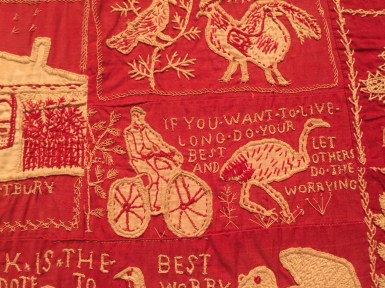
Some stitched a bit of wisdom to guide the next generation.

img_4169
The Westbury Quilt  1900-03

The charming Westbury quilt was created by a Tasmanian family, it was intended to be a raffle prize. Its a mix of British domestic influence and Australiana.

img_4199
Mariann Gibson Crazy Quilt 1891

Others competed to be the ‘craziest’ of the ‘crazy quilt’ fashion, that was the sewing movement at a time, when European Art was shaking off the shackles of the past. The British settlers had no cultural roots in Australia, they could push the boundaries of traditional Arts.

img_4249
The Goodnight Quilt by Mary Jane Hannaford

Some caught the eye of the galleries to be immortalised. Mothers often sewed quilts for their children or were given to them by a loving friend or family member. Mary Jane Hannford’s ‘Goodnight Quilt’ was made for her 11 year old grandson.

‘The subject matter of Hannafords quilt includes patriotism, religious faith, the love of Australian wildlife and the marking of key family events’

img_4247
Nursery Quilt Artist unknown

Some works were sewed roughly, not for beauty or art but for warmth. The gathering of discarded clothes, recycled into a rug. The perfect art for Depression and War when materials are few and patience is limited.

img_4239
Wagga

‘real rag bag waggas, hessian bags or patchwork-covered army blankets, but still rich in the memories embedded in their cloth.’ Annette Gero

It’s a pictoral exploration into our past, through fabric. Mostly, but not exclusively a womens history. Sewing groups were also social and community acts. It’s an engaging exhibition.

img_4695

Contrasts

Rapid urban development cast’s new shadows on the streets of old St Kilda, yet shreds of its artistic culture remain.

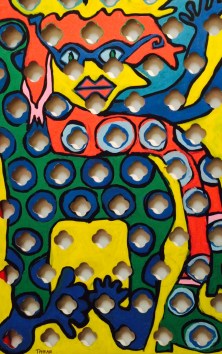
106 Barkley Street has been Tamar Dolev’s studio for 8 years, she uses ‘found’ objects to create. Each surface and shape is carefully considered before being morphed into the voice of the quietly spoken Artist.

The works are bursting with wild vitality, shes uses colour like an electric force, there is a vibrant sense of movement and emotion similar to that of Aboriginal Artist HU Wedge.

Dolev also enjoys the effects of shadows.

“Whatever wall it goes on, the piece changes. if it’s a blue or black wall, it adds and evolves by the shadows it makes.”

image
Self Portrait 2015

Self Portrait 2015 is full of holes, it is a chameleon blending into its environment. It is partly her and partly the surroundings, that dictate its nature.

‘Billy’s Adventure’ 2015, is a long narrow work that invites the eye to travel through the composition as a narrative. The concept of an art piece outside the ‘eye of a camera’ explores our natural visage, a technique familiar to Chinese scrolls.

Dolev’s journeys are captured in her haunting silent photography of the place outside.

image

Both of her parents are Architects and her fascination with buildings seeps into her art. She is currently pre-occupied with her sculptures of dwellings made from bay-side spillage.

Paperless Office

“The whole of life is an artwork, we are just going through the stages of it.”  Coleman  

image

Xan Coleman is the Director of a Durational Action Artwork that is currently being held at the Meat Market in North Melbourne.

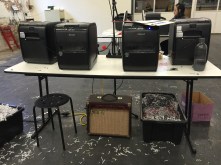
“We are digitizing and destroying the entire company archives of A is for Atlas, as it turns 10 at the end of this week. We are reflecting..” Coleman

When MP arrived Coleman was shredding the play ‘No Exit’ that was staged in 2012.It is a 1944 existentialist French play by Jean-Paul Sartre. It consists of three characters that bring out the worse in each other and are doomed to spend eternity together, this is their hell. Ironically, the play was held in an underground space, next to the Vic Market that has since been entombed under concrete, hindering it without an exit.

Theatre chairs are in place, if you want to grab a coffee and view the work of Yuhui Ng-Rodriguez as she scans, or Coleman as he shreds. Toni Main’s sewing machine creates a ‘musical’ background as Julie Renton creates soft furniture on the floor. The public are invited to participate in the making of soft office toys that will be given away at the end of the week.

image

The mundane in this Happening, becomes the intersection of destruction and transformation,  public are generally invited to such rites of passage. For ‘A is for Atlas’ the cultural past has been kept in storage for a decade. In this installation the past is physically destroyed and sent into a cloud.

Ritual, regardless of its simplicity, marks change and unity. A marriage is more than a couple ‘hooking up’; eating fish on Good Friday or kissing strangers on New Years Eve, marks a profound event or change. The shredding of the emotional and creative achievement’s of this company, is significant.

image
Childs drawing saved from the shredder

Each of the players have rewarding discoveries in the sorting; Coleman saved some children’s drawings and mounted them on the wall, Ng-Rodriguez connected with some architectural drawings of the Powerhouse; Main found it exhilarating to cut into an old animal print costume and Renton, left only with the shreds, creates soft furniture.

image

On Friday night the bar is open, the musicians arrive and the ‘post-it’ party begins to cap off the week.

We cross over Smith Street to the end of the Line

Gertrude Street Projection Festival

One doesn’t need an excuse to head to Fitzroy. Melbourne’s old bohemia and the new swank of money have morphed the district into the cutting edge of style and art. Even Charcoal Lane has had a makeover and looks like a cool Club.

I’m heading up Smith Street to the Gertrude Street Projection Festival. The cafes, restaurants, barbers and bars are a light show, each establishment competing to win ‘the most ambient award’. It’s a feast of visual splendour and I haven’t yet arrived at ‘Gertrude’.

image
Gertrude Hotel

The Builders Arms hotel, on the corner, is awash with Kate Geck’s gay colours and crisp designs of her composition Apeiron, exploring decay’s victory over the force of materialism.It’s the gateway into the creative heartland, flanked over the road is the Gertrude Hotel also vividly lit, with the design Imaginary Atlas by Sean Capone. Within the festival there are a diverse display of styles; the bright, subtle,intriguing and the sublime.

Luzon Adams sensual work Reverie, was utterly captivating, in a liquid dance by underwater videographer Peter Bucknell, she explores the mystery and epic power of the red-haired character. For the viewer it appears as though a woman is emerging, like new life out of the building exterior.

The most charming display was the neon light on the Housing Commission building that read ‘HOME’. In its simplicity it encourages a non threatening view of the estate and reminds us of the sacred spaces where we all live. Its is no longer a block.

Banner Photo: Gloss by Petrina Hicks

Title from the Lyric’s of Charcoal Lane by Archie Roach

Psychosis, the lonely poet

image

Sarah Kane wrote the play 4:48 Psychosis as she plummeted deeper into her despair. This is her final curtain fall, the finale of her creative life. Ironically she digs her lonely days of dirt with words that are crafted with epic beauty.

‘Love keeps me a slave in a cage of tears’

Sylvia Plath’s Bell Jar or Shakespeare’s Othello are fitting comparisons to a raw but majestic construction of words. Kane is a natural poet capable of building a visual palace out off the darkest recesses of her mind.  Director Kendall-Jane Rundle chose a naked space to adorn the language.

Kane is terrified of banality.

‘Don’t shut off my mind’

‘Theres not a drug on Earth that can make this life meaningful’

The drug that Kane aches for is Hope.

‘I am charging toward my death.’

image

Despite the dark subject matter, it is a strong script, tailored direction and an absorbing performance.

image
Kendall-Jane Rundle

The Director and principle Actor Kendall-Jane Rundle responded to the tiredness of Kane by using furniture that was muted rather than white to create the worn-out feel that the writer expresses. She toned down the delivery to create a realistic feel to the drama. On Thursday night an audience that suffered the affliction viewed the performance and claimed that it was an accurate portrayal of the condition.

Jeff Wortman played the Doctor and love interest of Kane’s character. In the performance his professional position kept him aloof from the desperation of his patient, she tries to pull him in and he tries to pull away. As an actor it was just as difficult to ‘turn off’ to the confronting content.

image
Jeff Wortman

Without wanting to take her pain

image
Shane Grant

Shane Grant created the lighting for the episodic depiction of Kane; rather than being a light that shines from above his lights chase her through the darkness and allows the audience to fold into the deeper layers of the script.

Overall it was perfectly complete.

“At the end she was calm” Rundle

Flesh Eating Tiger

Flesh Eating Tiger by Amy Tofte

with brilliant performances by Amy Gubana and Marcus Molneux.

“I hate this f-king play”the actor roars; chaotic in self hate and desire. Its a vicious cycle, a play within a play.

image

“I love you” she pleads, imagining her only reflection is through his eyes.

The stench of sweat and loves final battle breaks out in front of the audience that stare like children, watching the horror of substance fueled passion. Despite the abstract fury of the torn lovers, the play is built on a tight structure and examines the cult of alcoholism.

It is a brutal contemporary play, with a brilliant script and prize acting, the direction has an expanding boundary, webbed together with invisible threads.

Its not serious.

Its just physical.

image

I can end it whenever I want.

WRONG!

“I want out!”

He is addicted to alcohol, and she is addicted to rejection.They want to be abused. They don’t want surface beauty, they want to wrestle the beast beneath.

“I heard about stupid people like this I didn’t know, I would be one.”

Love without a boundary, is life without rest.

This drama explores complex emotional themes that are part of the contemporary fabric of human life. It explores desire and it’s not pretty.

image

The Owl and the Pussycat is the go to place for  serious artistic exploration.

imageThe Director Gabrielle Savrone, explains her involvement with the production.

“Flesh eating tiger is a bit of a beast, it’s an abstract art piece. I’m an Abstract painter so I see the play like that. There’s the words,the actors and the design…the concept is how things bleed between life and art. You create what you live and its a part of who you are.

She’s addicted to him and he’s addicted to alcohol.Its a tangled mess. What we are watching is their relationship, the play that they are creating about their relationship within a play. It’s quite fun.Essentially it’s a love story, a tragedy.”

How did you get involved in the project? MP 

“I met Amy (Tofte)at a conference in Alaska three years ago,we were room buddies. I went to watch her play reading, it was this and I fell in love with it. When I took over the theatre, nearly two years ago,  this was the first play we put on.”Savrone

Actor Braydon Lewtas extends himself to assist in the Direction of the production.

image
Assistant Director Braydon Lewtas

“The Artistic Director, Thomas Doyle cast me in the two previous plays that were shown at the theatre; Paper and Boys Club. I always wanted to be a Director, so I expressed that to the owner of the theatre, Gabrielle”Lewtas

“I’d like to write and direct and put on my own play in the future.”

The small bohemian venue is a hub of creativity, the friendly barman is Doyle, the Artistic Director and struggling play writer. He wrote the script for Paper which took a stab at modern media and corrupt journalists. His play Riot went to The Last Frontier Conference in Alaska.

“I like provocative material, work that provokes people and is also entertaining. I wrote my first play when I was eight. I thought I wanted to be an actor but then I realised that playwriter’s have all the power. ” Doyle

image
Artistic Director Braydon Lewtas

 Amy Tofte Playwriter of Flesh Eating Tiger

Amy was recently recognized by the Academy of Motion Picture Arts and Sciences with a 2015 Nicholl Fellowship in screenwriting. Her plays have been semi-finalists for the nuVoices Festival (Actor’s Theatre of Charlotte), Kitchen Dog Theatre’s New Works Festival, The Source Festival and The Princess Grace Playwriting Fellowship. Flesh Eating Tiger premiered at the Edinburgh Fringe Festival and in Melbourne in 2015. Tiger was remounted at the Hollywood Fringe where it was named “Best of Fringe” and nominated for Best Play. Tofte is a founding member of the play development company Fierce Backbone in LA and is a proud member of The Dramatists Guild.

image

Contemporary plays at

The Owl and the Pussycat

Swan St.  Richmond

Brutal Architecture

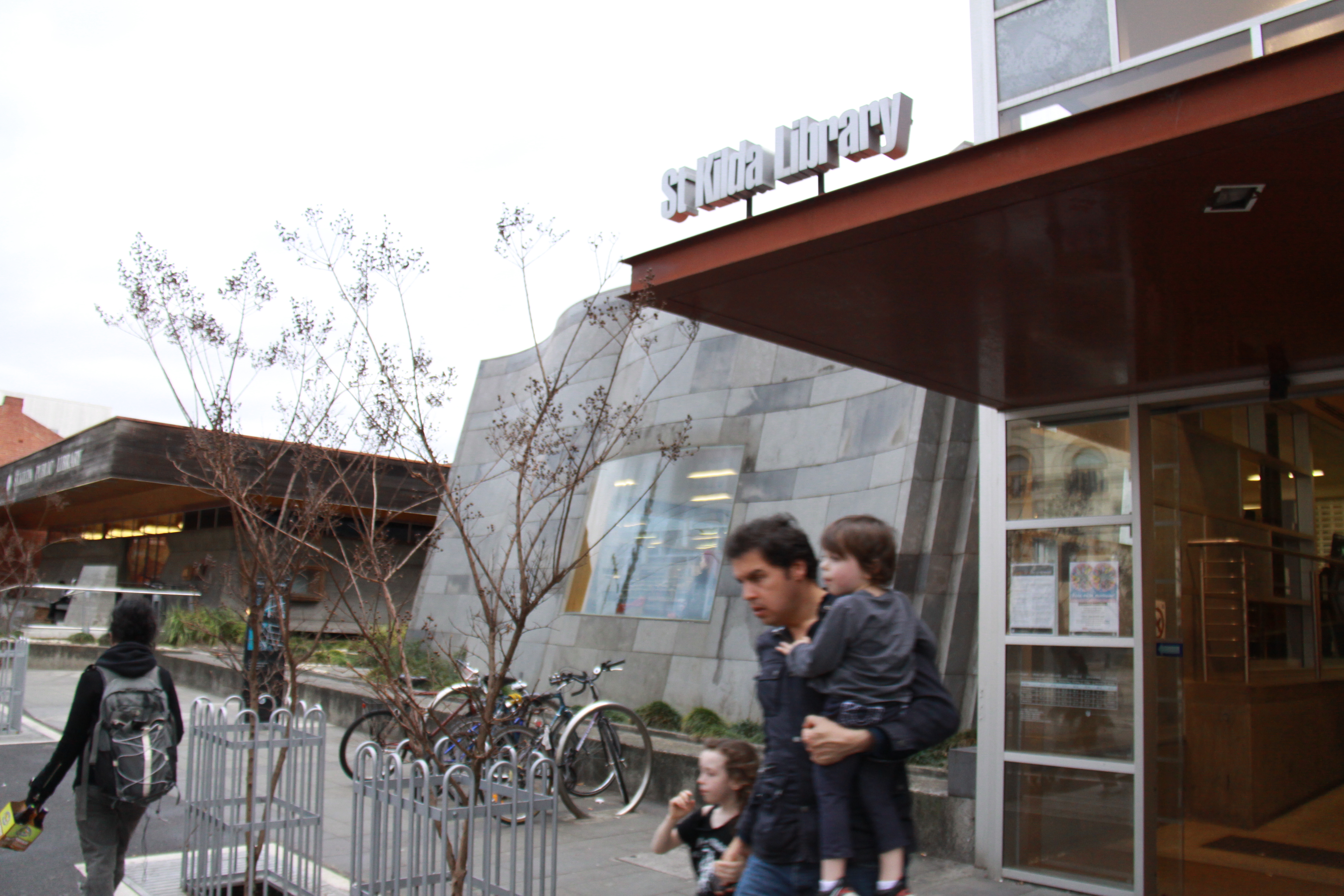
The award-winning Architect, Enrico Taglietti, created his Brutalist building for the St Kilda Library, with the aim of it to be

“a place where people feel more alive’.

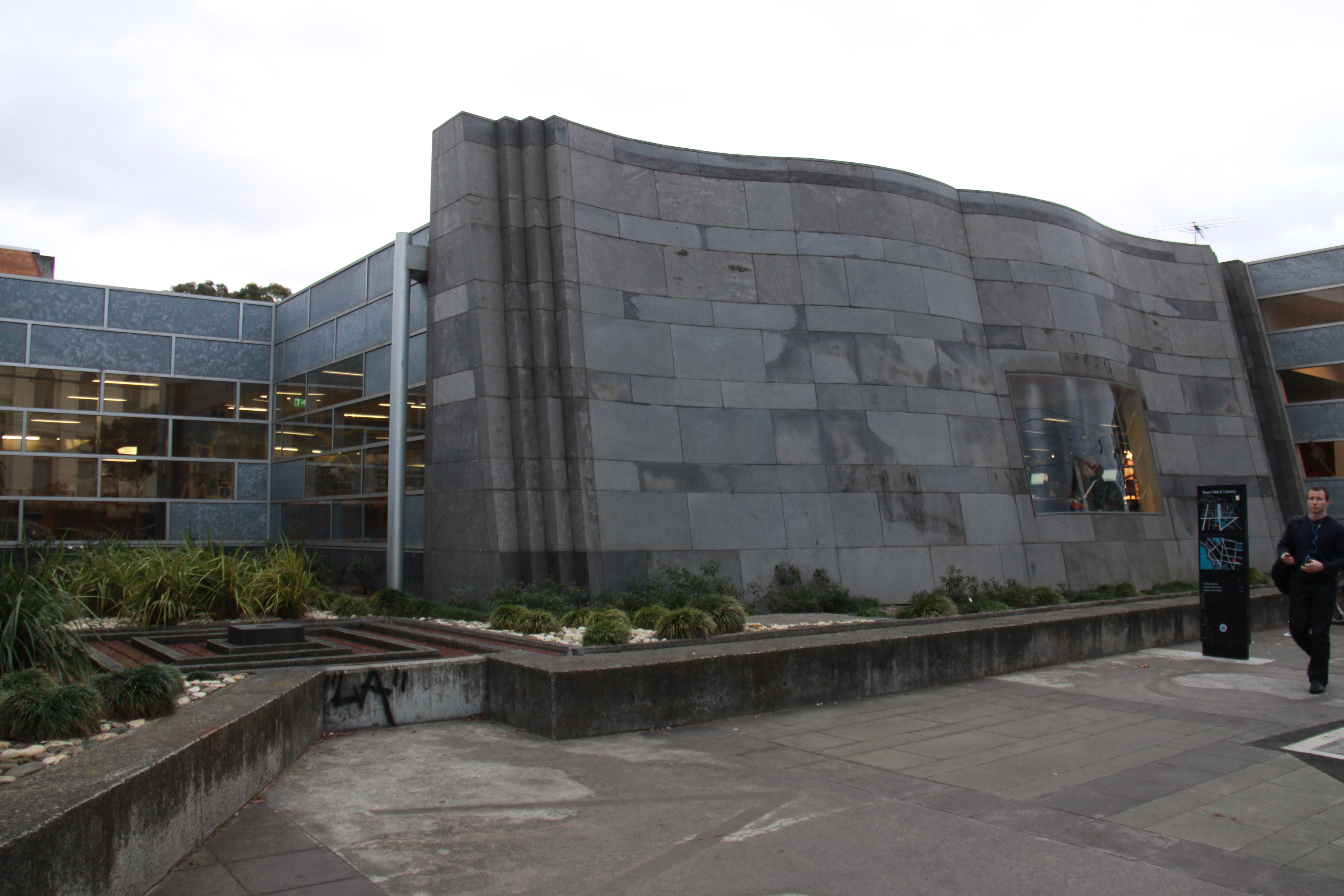
The St Kilda Library’s bold and embracing architecture is a place of respite within the busy clutter of Carlisle Street. The building invites its visitors to sit on the ledges, gather in its courtyards and participate in the experience of the creative word.

Italian born, Mr Taglietti is one of the country’s national treasures and winner of Australia’s most prestigious Architectural award, the RAIA Gold Medal in 2007. The St Kilda library is one of his earlier works and was officially opened May 14 1973. The St Kilda library promotion committee was established in 1951 to rally support for its erection. Sheer determination paved the way through episodes that could have derailed the project on several occasions.

In 1954, Twelve Councillors refused to give the city a free library.

‘I rely on you ladies to get the councillors wives on our side’ quoted The Angus in its December issue 1954.

As Mr Taglettis prominence as an important Australian Architect grows, examples of his work become highly valued. Builders, M. Notkin Construction of South Caulfield, were appointed to construct the building which cost $417,000 at the time, the current price of an apartment in the area. The Brutalist design is a contemporary period piece of 1960-70’s architecture and within the interior, a mural by Mirka Mora adds to the artistic collateral of the project.

“Visitors may then be able to relax around coffee tables, admiring or criticizing displays of paintings…Mr Taglietti wrote in his original proposal.

The architect planned for the building to be used as a refuge.The public are sheltered within its thick walls and can linger in its quiet Japanese courtyards. The outside world keeps its noisy distance. Warm timber ceilings contrast the cool grey concrete that is sculptured into a solid earthy structure. The lofty outdoor roof provide shade and shelter as people gather beneath it on the massive trapezoidal walls ledges to chat or access the Wi Fi.

The Australian Library Journal of 1973 claimed that the building was ‘handsome and visually exciting’

IMG_2036

The building has since been renovated to cater for the expanding community, without consultingTagletti, The changes to the building include a side entrance and a new front section. The original counter was situated under an elevated roof with a skylight, in what is now the middle of the building. The new front section is expansive and moulded into the shape of a book. The changes are admired and appreciated by some but not all.

Photo by Ian Paradine

Mr Taglietti was not impressed, he was baffled as to why he was not consulted or at least notified of alterations to the original building. The Architect claimed that the entry was a key aspect. Mr Taglietti was disappointed and hoped plans were being made to return it to its original state.

“They totally disregarded the original’ Mr Tagletti claimed in an exclusive interview.

The entrance courtyard was to be “the nucleus” of the design. This area has since been built over despite the council overlay that regards the building as significant and claimed that the front , including the original air conditioner tower was ‘ integral to the design’.

Mr Tagletti said that “it was a shame’

“There should be protection of my moral right in that building, it should have been recognised by another”. He claimed in a tone of sheer disappointment.

Mr. Tagletti came to Australia to break away from the confines of tradition in Europe and explore vivid modern constructions. He has designed the Dickson Library, the Italian Club, the Apostolic Nunciature, Giralang Primary School and the War Memorial Annexe, in Canberra where he resides.

Humanist Art (The Peace Project)

Nathalia

“To celebrate the works that neighbours have done.”

The evolution of Art is a process that requires, curiosity, appreciation, skill and patronage. Not every person that attempts art will be apt in its curly concepts, many will find that the creative pursuit is an end, in itself. The banal and the grand begin at the same place, which is the opportunity to access it. Many regional art centres throughout Victoria are seeking a cultural voice, the most well known are Castlemaine, the Yarra Valley, Ballarat, Daylesford and Bendigo.

Local artists in Nathalia (Nth Victoria) were working in isolation before the local art centre forged an artistic hub. William Kelly a local artist had suffered violent neighbourhoods in his past and sought to unite the township together through art. It’s a functional non-for profit Art Centre and it has become the focal point of creative energy in the region. They have tried to engage every person in the community and encouraged them to participate in the workshops.

‘I hope you realise what you have achieved

Because it’s fairly plain to me,

Your introducing culture! God forbid, have you no shame!

What was wrong with up the pub, getting full as a boot?

The beer, the blood, the spit on the walls….

…………….the gardens are full of sculpture!’ (Poet, Tammy Muir)

The G.R.A.I.N store gallery and workshop, opens its doors to all in the community who are willing to explore their creativity. They do not discriminate and in this melting pot of Art and Craft, originality can rise to the surface. They invite school children and the elderly to be involved. The early involvement of local children in cultural projects ensures future growth of the Arts in the region. Locals are offered a space to explore their ability in a non-threatening, appreciative environment.

The culture has changed from being sceptical of art and its artists, to becoming active in its progress. The Regional Arts Council claims it has become a model project. Patron of the Arts, Bernie Ryan (4th generation dairy farmer) supports local artists and provides a gallery space. He commissions work from his local art pool and has enhanced the creative strength of the area. He believes that most patrons in Australia over fund sport and neglect the Arts.

Original Artists that have been nourished by the community include Linden Lancaster and Bella Angyal. They have forged a path that leads back to future artists in the area.

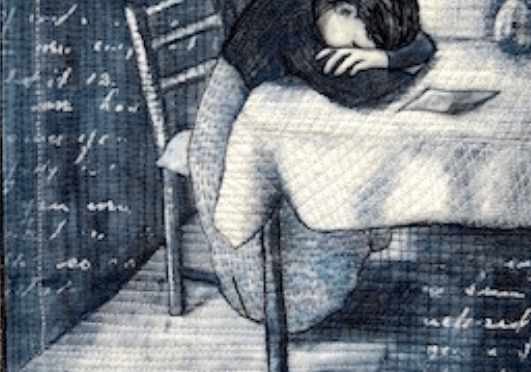
Linden Lancaster was applying Nathalia landscape into her quilts, creating visual pieces that few saw until she showed her work in the local G.R.A.I.N.store windows. She is now an international success. She applies 3 layers to produce multi-dimensional and textural work, through material collage. Her landscapes are reminiscent of Hockney’s later work but her palette is fabric and her brush is a needleIMG_3472

Bella Angyal, a self-taught artist, depicted stark realism through sculpture. His statues are erected in the town centre. His war sculpture ‘Mateship’ depicts the trauma of violence; his ‘heroes’ are local lads struggling through travesty. It’s the excessive detail that gives the work its haunting reality.

IMG_3480

All forms of Art, Craft, Music and Poetry, are supported by the Centre. They invite international talent into the town to give talks and workshops that provide a means of access through exposure. The art seed has germinated in Nathalia, it has all the support networks necessary to allow it to develop.

“You do what you think will make the world a better place” Artist Veronica Kelly claims.

Top image: from AQC 2015 Quilt Show/The Letter by Linden Lancaster

Sunday Reeds contribution to Melbourne Art

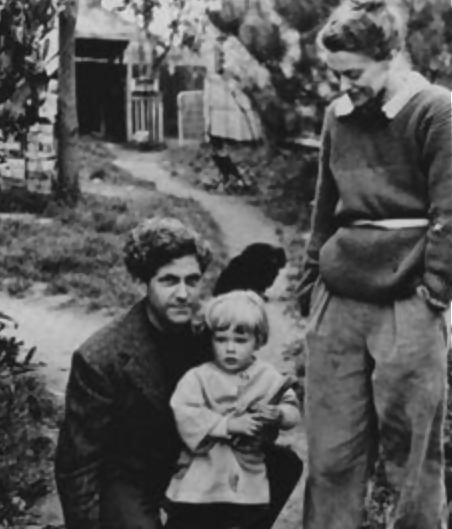
When Sunday Baillieu walked out of  Toorak and into the arms of emerging Australian Artists, she forsook society to dwell with bohemia. It’s not easy, to move from one class to another within a single generation. The artists may have regarded her as bourgeois but her old neighbours had labeled her a communist. She was an idealist, a task master, a romantic and art critic. Heide was her home and she welcomed artists to reside there. IMG_3335

Sunday and John Reed championed major artists such as Sidney Nolan, Charles Blackman, Mirka Mora, Joy Hester, John Perceval, Albert Tucker, Moya Dyring, Sam Atyeo and Mike Brown. They founded the Angry Penguins Literary magazine in an effort to evoke a response from the disinterested city.

The Reeds supported and bought emerging Melbourne and Australian art. They were overly possessive of the artists they supported but they took their task seriously. They flew the flag for Australian Art and they paid for it with Baillieu cash.

Today the twisted path Melbourne artists walk is barbed with opportunists and a sleepy audience.

Melbourne’s current Art culture is in crisis. Galleries charge artists to exhibit and the costs are high, few artists can afford to pay the weekly $1000 costs and then the 20-40% commission. For those that can afford to pay ,there is no guarantee of an effective marketing strategy. Most exhibitions draw other artists and few attract genuine patrons. At the end of a two-week exhibition the gallery stands to make profits  even if no purchases were made. The artist is broke.

Australian artists rely on the generous support of  philanthropist, collectors and galleys that do not charge their talent to exhibit.

Albert Tucker talks about his time with Sunday Reed at Hiede.

Ballet Dreaming

Alexei Ratmansky’s

Cinderella

When clothes do matter! Cinderella is the ‘It girl’ of the season. Even without a mother, there is the godmother to provide a night out on the town. The wicked sisters may lack the talent, taste and kindness of their rival sister but their comic timing is perfect.

Halaina Hills & Ingrid Gow. Photography by Jeff Busby

The costumes are a remarkable stroke of insight. They communicate a large hunk of the tale. Ballet has no voice; the palette is made up of dance, drama, costume, score and set. The show is catchy with a surrealistic bite, re-told with a modern edge.

No one has moves like the Prince (Ty King Wall). The magnetic duo are drawn together when Cinderella (Lana Jones) ‘steals the show’ and sets the tone at the ball. The twisted sisters are deliciously offbeat.

There is nothing like a dance story told by a dance company, frock them up and send them to a Ball. This is why you should go! The dancing and Alexei Ratmansky’s choreography  is a visual delight.

Cinderella is an interesting fairytale to re-visit; it carries life lessons in a purse of simple context. Jealousy is unable to suppress the hopeful soul. When humans fail, the stars align to aid her journey and her destiny.

The Dream

IMG_3333

As the full moon hangs heavy over Melbourne skies, another moon and another season, the ‘Midsummer Night’, takes flight in the deep chambers of the Art Centre, on the opening night of The Dream.

Enter into the enchanted forest where mischief casts spells on the unaware and leads them into late night folly, only to awake with a hangover of regret. Does it sound familiar? Of course it does. One can always rely on Shakespeare to understand the human heart.

“How can these things come to pass? O, how mine eyes do loathe his visage now!”

One does not need to read the play, to love The Dream. The magical blend of music and ballet lead the audience through the drama. The audience chuckled spontaneously through the performance, it’s bewitching and it’s funny. They cheered and applauded.

The visual beauty of the set and performance is unworldly; it’s easy for us to be tripped into its spell. The music and the dance are fused into one. The poetry of our slumber awakens to newer world, an alternative, and a deviation from the probable path into a fantastic alternative that leads us safely back, to our destination.

Ballet of this calibre is a sublime experience.

Puck, (Chengwu Guo) the mischievous fairy, is a tad liberal with his love potions, which leads to squabbles and confrontations. His dance is super-imposed with thrill and adventure whereas the ‘labourers’ trod a heavy step. It’s the unique combination of dance that binds multiple styles and creates a visual texture to the play that is echoed by the score. Kevin Jackson is mesmerising as Oberon.

Chief Conductor Nicolette Fraillon leads the orchestra gently into the play with the strings and piano opening the drama, she builds the momentum with the wind instruments that tantalise the audience into a heightened state of expectation.

David Walkers set is magnificent, enriched by the lighting techniques of John B Read. It’s a sensory feast. The evening begins with the abstract dance of Symphonic Variations and Monotones 11, which showcases the talent of Frederick Ashton and the skill and grace of the dancers. This clears the pallet to make way for the rich, full-bodied production of the Dream.

Perfection!

Shrigleys Definitive Deployment of Art

David Shrigley’s drawings, sculpture, happenings and films follow the anti-art traditions of Marcel Duchamp and Andy Warhol. ‘This is not art, this is not important’. Then why did the NGV host his work and float his head-less toy swans in the moat.

IMG_0991

The seduction of Art refusing to be Art is like a conquest behaving coy and disinterested. Its chic, its naughty but its mostly irreverent. It’s the cat and mouse game that the art world has been playing with itself since the 1880s when Modern Art decided to challenge the status quo of ‘what is Art?’

Shrigley has a mass appeal. Since 2005 he has produced a weekly cartoon for the UK’s Guardian newspaper. Michael Leunig cartoons, that have appeared weekly in The Age draw similar references, however Shrigleys message, is less emotive and more ‘slap stick’.

The exhibition came wallpapered, with roughly drawn cartoons and captions such as;

“I don’t have a head but still I must go to work”

The exhibition housed an interactive life drawing class where the live model was replaced by a naked cartoon sculpture, like a garden cupid fountain, it too, relieved itself. A motorized head entertained visitors and there were ‘boring’ films. The film of a cartoon figure sleeping ‘A Napping Station’, is a parody to the Andy Warhol film, Sleep.

The NGV website noted a remark by the English art critic Adrian Searle.

‘Shrigley’s work is very wrong and very bad in all sorts of ways. It is also ubiquitous and compelling. There are lots of artists who, furrowing their brows and trying to convince us of their seriousness, aren’t half as profound or compelling.’

The most important thing to have when examining his work is your sense of humor.IMG_0787

Less Fluff more Fun

IMG_1438

Milliners, Kim Fletcher and Kerrie Stanley claim that occasional dressing is part of the fun of going to events like the Melbourne Cup. This is their accessory forecast for racegoers this season. They want to see less fluff on the ends of combs; they want more substance and structure.

“We’ve grown up,” claims Ms. Fletcher

There are more materials available for them to develop their craft and to be more experimental. They are looking for non-traditional millinery items. They would like to see Melbournian women distinguish themselves by being more adventurous in head fashion. Their aim is for our Cup to be a unique fashion statement.

“Using stuff ‘outside the square’ and making them more modern.” Ms. Fletcher adds.

The women agree that Melbourne has some of the best milliners in the world and claims that the industry has stood the test of time due to the Melbourne Cup.

“We have a more casual lifestyle that’s why dressing up for the racers is such a big deal, even some weddings are quite casual in reference to their dress code.” Ms. Fletcher points out.

The primping and priming that Kim and Kerry agree on, is a major incentive for attending the event. The economic flow-on affects a myriad of other industries such as hairdressers, manicurists; make up artists and so forth. We are given a Public Holiday to attend and play our role in its success.

IMG_1431

Kim Fletchers headpiece that she dons sprouts red flowers that move whimsically in the breeze. In contrast Kerrie Stanley wears perky bud ariels reminiscing pixie ears.