All posts by www.melbournepress.com

Melbourne News, Arts and Entertainment. Contact for Articles, Reviews, Marketing and Editing. photographs can be purchased on request

The Other Art Fair

Get on your bike and head off to the other art fair.

FullSizeRender-25

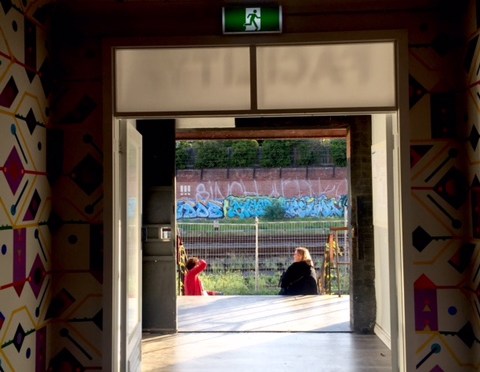
Before entering the building, graffiti artists have already marked the journey.

It’s a fabulous space, housing a catacomb of galleries and a cafe

FullSizeRender-26
JC

Upon immediate entry we are reassured that the art is going to be world class with the work of JC.

FullSizeRender-27
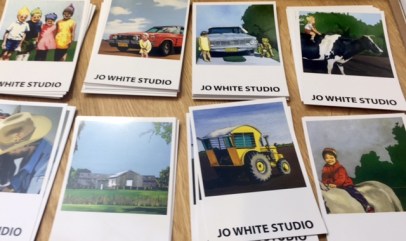
Jo White

The nostalgic work of Jo White is a delight.

FullSizeRender-36
Cynthia Ellis

and Cynthia Ellis lays it on thick.

FullSizeRender-35
Leah Emery at work

Leah Emery applies the cross-stitch of random pornographic spam as the new temptation

FullSizeRender-32
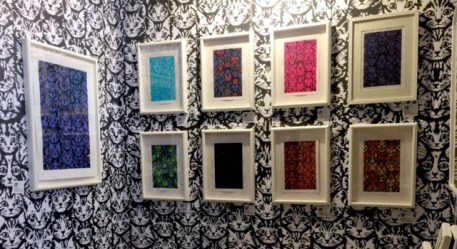
Time Jones, Kittens 

and Tim Jones brings it home.

Christina Popovici explains Action Art

This is just a slim slice of The Other Art Fair at Kensington. I could have stayed all day. Go and be stimulated. Adorn with Australian Art.

The Other Art Fair presented by Saatchi Art  

What pain women endure for shoes

I am taking a liberal guess, but I can confidently say that nearly all women have a pair of shoes that they endure with pain and will not throw out.

I went to the streets to test my theory. These are their stories.

Jess from Belgrave

Designer

“I have sitting shoes, I can’t walk anywhere without holding on to my partner’s hand. He props me up until I find a seat, then I can sit down, looking pretty.”

Other women call their un-walkable footware, their dinner shoes

Jan from Burwood

Hairdresser

Jan has 50 pairs of shoes and 12 Boots, which she rotates.

I asked her if she wore uncomfortable shoes.

“Absolutely that’s why I have sore feet. I just grin and bear it, anything for the look. I want to be tall and slim with long legs and when I get home I whinge”

Lizzi Ablmett from St Kilda

Sales Assistant

“I have 8 or 9 shoes that all hurt and I squeeze my feet into them, every night. I come home with blisters and bunyips. I do it because they look great. Even if they’re the wrong size I don’t care. The problem is my feet, not the shoes.”

Simone from Burwood

Sales Manager and Clothes Stylist

Simone has 41 pairs of shoes.

“I rotate my shoes, if I don’t wear them, I give them away. Since having a baby I no longer wear painful shoes, I need to run around and be able to pick up Alice.”

Bernie from Hallam

Sales Manager and Fashion Coordinator

Bernie leaves shoes at work that she changes periodically, during the day, to regulate the pain.

“I’ll wear painful shoes if they go with the outfit”

Sonia from Watirna

IT Specialist

Sonia has knee issues and is forced to wear sensible shoes however she holds onto her ‘unwearables’.

“I look too gorgeous in them, to throw them out.”

Sophie from Elwood

“I am drawn to the statement and collect them like feet ornaments, yet I wear the comfy one’s everyday. My collection waits for me.

IMG_1186

Gemma from Mont Albert

Journalist; L’Oreal

“ I was a ballet dancer for 18years, I’ve put my feet through so much pain, I can handle any shoe now.”

Dorota from Mt Waverley

Legal Intern

“I have an obsession, all of my friends come to borrow my shoes. People tell me I’m crazy. My uncle, who is a builder made me shelves, for half of my wall, for all my shoes.

Tell me about your favourite.

“ I bought a pair in Poland. If I wear them out at night, I can’t walk the next day.”

Vinita from St Kilda

Journalist

“I can’t wear heels or my foot will twist, I can’t balance but I always want them”

Do you buy them?

“Yes, a lot, I’ve got 13 pairs, but I only wear two.”

What does you partner say about your shoes?

“When I go shopping, my husband will say. ‘Why do you want them, you wont wear them? He thinks I’m just collecting the things”.

Kshipra from Hoppers Crossing

Manager

“I have really high heeled white shoes with pretty straps and I just wore them once. I didn’t take public transport, I got my husband to drive me to the door of the restaurant. When we wanted to walk around the city, I changed into other footwear.”

And do you still have them?

“Yes, its been three years since I bought them but I wont throw them out. I always dust them and put them back, I hope to wear them some day. The hope is there.”

What does your partner say about your shoes?

“ He says, why don’t you give off the ones you don’t’ wear, then buy the new ones? I say, no I’ll wear them some day.”

Kshipra adds;

“At Crown, after the party, I walked out and see these women,  the first thing they do is take off their shoes. And there was one girl, no matter what, she did not want to remove her heals. She was holding to her friend, because she couldn’t stand on her own, yet she refused to remove her shoes.

We were watching her from behind and we really thought she would fall.

Based on these stories, I conclude that Cinderella didn’t loose her shoe, she was kicking them off at the end of the Ball.

On the Clock

As the MICF circus wraps up, 2 clowns sent it off with a bang.

FullSizeRender-2

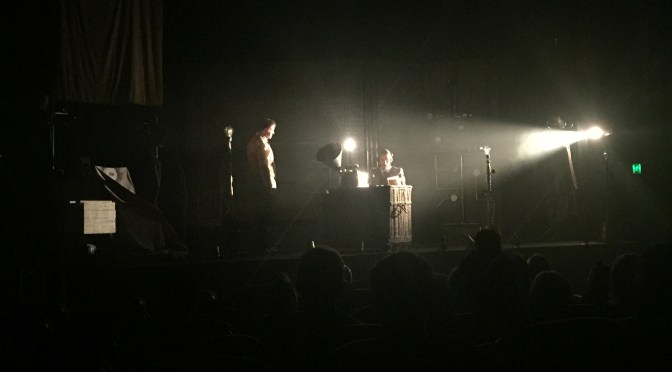
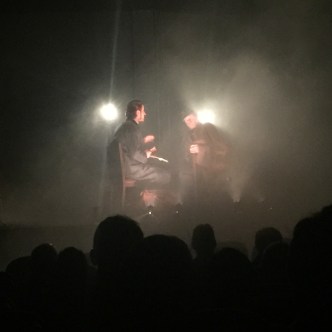
The afternoon show at ACMI was the icing on the Festival, after a series of ‘Stand up’ wit and profound observations we discover a new territory. These Guys have nothing to say, it’s what they do that suspends reality and slaps you in the face. Throughout  the performance the unexpected continued to surface from beneath the banal.

Confused? Good , that’s a great start.

You will be bewitched within a Dadaists performance of an office mundane that imploded into the wild and creative instinct of lifes little dramas. Bit by bit they shatter through reality to reveal a seething internal existence with comic twists.

Intrigued? I hope so, it is an intriguing experience.

No matter how sober you think you are, they will pick up your solid piece of reality and twist it until you feel entirely happy. Like an animal can become a chair, a thing can become an animal. They are very clever Consultation Specialists.

Welcome to Ruck’s Leather Interiors starring Gareth Grubb (Trygve Wakenshaw) and Dennis Chang (Bernie Duncan) as Performance Artists.

Bernie Duncan

FullSizeRender-20 Where did you Guys train? MP

“I didn’t do training but Ttygve went to Gaulier, a French Clown School in Paris.”

How did you get into this? MP
“I always made theatre, we started a Company (Theatre Beating) about 14 years ago, and we made stuff we liked”

Audience Responce

“I never dreamed that I would ever see two people entertain me from the time they started right up until the very end. Everything that happened was totally unexpected , it shocked me, it was so funny and you never knew what was coming and everything that came was brilliant.”

Comic Maverick and Ideas Man

This Charming Man, the very affable Matt Stewart draws in a full house as he gives a ‘Dry’ dose of ‘Very Dry’ at The Chinese Museum in Chinatown. He has taken his routine out of The Fringe and into the Melbourne International Comedy Festival, for a fresh round of laughs.

Getting to the venue is half the adventure, up the street hustle of Chinatown and into the historic site that sets the tone for the nights event. Stewart is unassuming, able to ‘break your guard’ whist never pouncing..

IMG_8442

The key to his art is his unflinching delivery as he stares into the bright lights that veil the audience. He promises to give ‘A pretty Good Show ‘ It’s most likely one of the top ‘Pretty Good Shows’ on the circuit.

Even though Matt’s not your mate, he could be. With comic cool he creates a friendly rapport as he spins absurd Aussie tales and butters it with wacky wisdom. He is edgy with a blunt delivery. ,

As a Caped Crusader, Stewarts superpower is to engage, indulge and transfix.

Shafar on fire in Jewish-ish

MELBOURNE INTERNATIONAL COMEDY FESTIVAL review

Michael Shafar held his own at the momentous Trades Hall, that scrubbed up nicely, awash in neon for the MICF 2017.

Shafar is an eclectic blend of cultural experiences that have shaped and unshaped him. He is sorta Jewish, sorta Aussie,sorta cool, sorta nerd, sorta serious but definitely funny. His shows are selling out because the word is out, Shafar ‘nailed it’ this year.

Shafar examines his Jew-ish-ness with perplexed wonder. His grandfather was a Holocaust survivor and its more the ‘religousness’ than the faith that is up for review. He has a wealth of material to draw from that keeps the audience in stiches through out the performance. The crowd loved him and there was a reluctance for the show to end

MICHAEL SHAFAR is Jewish-ish at TRADES HALL Mar 30-Apr 23 8.30pm (no Wed & 7.30 on Sun)

An interview with Michael Shafar

“I used to encounter a lot of anti-Semitism when I was playing football for my Jewish school. I played from the ages of 12-16 and it was interesting and sad to encounter kids making anti-Semitic comments. I’m interested in whether those kids actually understood what they were saying, or if they were just repeating taunts that they had heard from their surroundings.”

How do you feel about your performance this year?

So far I’ve been really happy with the shows. I’ve changed up a lot of the content since I last performed it in Perth and have also changed the overall structure to make the theme about being culturally Jewish a lot stronger. I think it’s definitely working better now.

What type of reaction have you experienced from Jewish-ish?

So far the reactions have been great. A lot of people have messaged me to let me know they enjoyed the show. It’s interesting to me how different people tweet different jokes to me from the show, so it’s nice that there are a lot of different jokes in there that people remember and relate to.

What has been your most profound experience? MP

“The Comedians I met in the US were young, emerging comics who taught me a lot about work ethic. In the US, comedians are often gigging 15 times per week, which is why their development is accelerated. I tried to absorb that work ethic as much as possible so I try to gig as much as possible around Melbourne.”

Do Comedians support each other?

“Whenever there is a controversy about something that a comedian has said or done, comedians tend to help each other through it.”

Is MICF different for you this year?

It’s different because it’s my first solo show, so it’s definitely a lot busier than any other year. I also need to manage my time a bit better than previous years, making sure I still get enough sleep, eat well and exercise (which I have failed to do for the first few nights, so hopefully I get more disciplined!)

Contemporary, Alive & Faster

The Australian Ballet presents new original work from current Choreographers that explore dance within our contemporary setting. The three acts are Faster,Squander and Glory and Infra.

This slideshow requires JavaScript.

There are no tutu’s , all are stripped down, very physical performances with strong male leads and a sense of urgency.

” I love the story telling and its ability for anyone to create their own interpretation and take away a unique experience.” Kevin Ho

INFRA

The richness and pain of life takes place behind closed doors in our most intimate spaces. The drama of being unfolds, between the gaps of daily life. The ‘must do’s’ have no time for the intimate condition. The ‘must do’, is the daily travel to the daily toil. The other stuff is the real us.

English Choreographer Wayne Mc Gregor of the The Royal Ballet, explores the intimate in contrast to the business of life. As rich and deep as our lives are or are not, we dwell within a larger context . Those that fall out of the ‘infra’-structure, fall alone.

The ballet explores social and political content in dance, yet it is deeply sensual. There is a tribal call away from the world  into the instinct. The male soloist that stands in for that call, is memorable in its power.

SQUANDER AND GLORY

Both Australia and Melbourne can be glad to boast of a choreographer as creative and insightful as Tim Harbour. Like INFRA, Harbour seems to be exploring the complexity of intimacy and power. Kevin Ho’s structure appears like a sculpture but looms as much more. The dancers sway to the cult of obedience as though the monument dominates them.

“The negative spaces that surround me…an instinct to carve out those shapes” Harbour

Visually every aspect of the work is sculptural, even the music seems to be in the act of carving. Every muscle of the dancers bodies cuts into a cubist texture, using light and shadow to enhance the effect.

FASTER

Faster opens the triple bill, created in 2012, the year of the London Olympic Games, choreographer David Bintley recreates the drama.The Games are the ultimate statement of giving up everything to be first. To place it last rewinds us to how we got there. Faster, Greater and Better? How much  personal ambition does it take to be a winner.

The dancers within Bintley’s work interchange into human and non-human parts. They may  be a spinning disc or an abstraction of an ego. It explores the outer and inner world of the athlete, the frustration and self-abasement to the harmony of the work coming together within a united self.

This Triple Bill offers contemporary Ballet lovers, a physical. emotional and creative journey. They are raw and sensual Ballet’s that allow the dancers to explore new physical boundaries of space and movement.

Arts Centre Melbourne,

IMG_8082
Ballet Coaching

The play that created a storm

‘It’s foul weather in us all, good soul’

img_7407
Melbourne Sky

Ironically, it is a storm that opens the tale of The Tempest, but here on the banks of the Maribyrnong River it is a brewing storm that ends it. Melbourne’s fickle weather has once again cast its cold spell on an outdoor event. It has ‘undid’, subverted and prevented the ambition of this ‘goodly’ play. The stunning performance that was on Friday and Saturday was ‘naught’ on Sunday.

What could have been is; Prospero, performed by Brendon Ewing, dark with revenge and drawing his past into the currents of his macabre island home, seeking familiar company with unkindly aims, that give way to kindness sway. This tale untold, due to weather, it had to fold, so the cast did the next best thing, they sang.

Sly Rat Theatre Co.’s artistic directors Alan Chambers and Andy Harmsen have created a unique vision for The Tempest, inspired by science-fiction classics. The Pipework’s Natural Museum is a beautiful outdoor space, rich in atmosphere and a perfect setting for a summer picnic, weather permitting.

img_7369

“It’s a Rock and Roll version of Shakespeare, it’s very loud and very big” Director Andy Harmsen

Within the warm hub of the group, a buzz with laughter, singing and the smell of burnt sausage, it is easy to forget that the cancellation of a show could be disappointing, they are taking it so well. It’s a chance to catch up with some of the actors and chat about their role’s, the few that aren’t belting out a tune.

First up is Todd Levi

img_7427

“We like to push the boundaries but still tell a great story.. it’s Shakespeare, how he would like it done today…Its bawdy, its real and it is entertainment first and foremost. Prospero has been marooned on a magical island, betrayed by his sister and he’s been there for 12 years. He spies the evildoers sailing by and raises a tempest, a storm that shipwrecks them on the island where he prepares to take his revenge. It’s the search for redemption the final words of the play are; ‘As you from crimes would pardon’d be, let you indulgence set me free’

What made you choose this venue? MP

 “It’s a magical place, it’s a place where the community comes and we played here last year to over 2000 people … most of them had not seen live theatre before, let alone Shakespeare, and playing to an audience like that and seeing them fall in love with it”

Did you factor in the weather? MP
“You don’t expect to have nine shows of good weather every-time, hopefully this is our one and only cancellation.”

Next up is Tara Hauton 

img_7399

“Steph and I play the clowns, technically it’s the Court Jester but Andy and Alan have re-invented it to be two women who have been to the races all day long and have arrived at the play. We exist outside the world of the play and that’s where the comedy of the role happens…we are very drunk.

and Ty Holdsworth

It’s a play about weather, most Melbournians can relate to that.

Pipework’s Natural Museum Park on the banks of the Maribrynong River


Beyond the Pale

Australia Day tribute:

“It’s always been about sharing stories, identity loss and grief, determination , imagination , self belief, cultural integrity, hope and justice, reliance , cultural pride, and more than anything it’s about my people’s survival of spirit.” Hill

Noongar woman, Sandra Hill was a stolen Aboriginal child that was forced into foster care at the age of seven by the Australian Government due to the Assimilation Policy that was still active in 1958. Four children were removed from their mother’s house, they included her self , her two sisters and a brother. They were the 3rd generation of children removed from this family line.

‘In 1994 Hill  was employed as the Aboriginal Community Cultural Officer. During this period she applied for, and was awarded, a Creative Development Fellowship from the Aboriginal and Torres Strait Islander Arts Board of the Australia Council for the Arts. This afforded her the time to carry out research relating to her life experiences as a member of the Stolen Generations’ (extract from Design & Art Australia on-line)

Hill’s work is held in many private collections and is also represented in Major Art Galleries throughout Australia, currently her mixed media work “Beyond the Pale’ is on display at the NGV Ian Potter Gallery at Federation Square in the Australian Art Exhibition. She explores domestic labor as part of the ‘Assimilation Project’.

In the past, Domestic colleges were set up to train poor white girls and ‘half-caste’ Aboriginal children to attend to the needs of the wealthy.

‘In the early issues of Home Beautiful there was a feeling of nostalgia for the passing of an age in which almost everyone in the middle and upper classes could afford to keep a live-in maid. Even at the turn of the century , architects and designers were discussing the ‘servant problem’ and trying to come up with ways to help women face a future without servants’ The Australian Home Beautiful, from Hills Hoist to High Rise.

img_6957
NGV


ref: page 73, Household Help: The Servant Problem. The Australian Home Beautiful  from Hills Hoist to High Rise  Hardie Grant Books Oliver J.

The seasons of David Hockney

Current

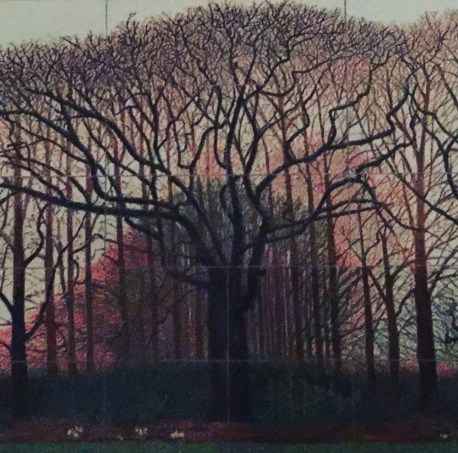
Hockney is both artist and philosopher and does not leave ‘Art for Arts-sake’,. He has a dilemma and a relationship with the camera. It’s an interesting journey. Hockney wants to break free from the ‘window to the world’ and look upon life with fresh eyes but memory draws him back into the abyss of ‘what if’. It’s this challenge that makes his work exciting and current.

img_5318

Hockney was an early explorer of new technology when others were still reckoning with it. The perplex of the eye informing Art or the camera has etched itself into his work. The inner debate of Hockney is explored in his art and educates the viewer. He is an intellectual and art is his vehicle

“The camera can’t get the beauty of this ……it can’t compete with painting” Hockney

img_5251

Hockney challenges the limitations of the camera but continues to return to it. He has a union to technology that he cannot divorce himself from and that’s fine. As Hockney searches for the truth and is willing to film it; we benefit.

Hockney knew that 14th Century artists were using the ancient Camera Obscure,  a technique that reproduced a slide show via light and darkness onto a canvas. He devoted a few years documenting it and producing evidence.

Maybe in the early years, Hockney was criticised for letting the camera inform him and he aimed to provide its legitimate history within the Renaissance . He ended up proving and providing something more important, it works either way.

The pool and boys journey in LA begins as an eye and brush experience.

‘Though there was no photography used in the swimming pool paintings, because the camera “freezes” the water, which was not the effect he was after, he did continue to use it as n aide-memoire’ Christopher Simon Skykes

Hockney could capture the movement and effect of pool water with his eye but needed the camera for the Splash!

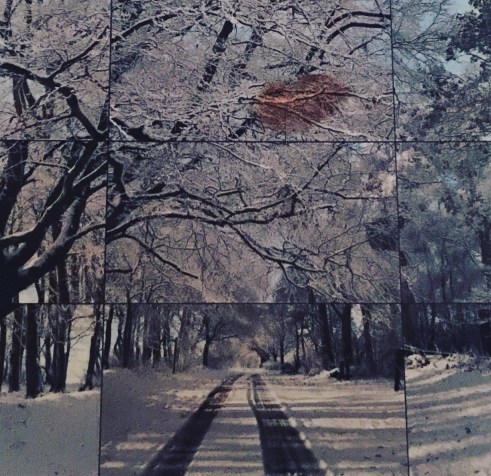
When Hockney returns to the English countryside to capture the seasons, he faces extreme weather and does not photograph the landscape. He forsakes a cosy studio for art of plein-air. Back indoors however he views the photographs of his work and aims to create a cinematic version within a jigsaw. The camera is back. The final twist is that the weather weathered work informs the photograph.

img_5319

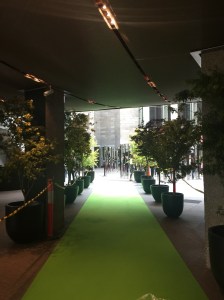
Take the journey and roll out the green carpet for David Hockney at NGV International.

img_5278
NGV International  welcomed the Artist on a green carpet.


The Woman in Black

The Woman in Black is a psychological thriller with a mystery at the heart of it. It takes the audience on an imaginative tour, where their own thoughts interplay with the drama before them.

“they saw things that didn’t happen in the show” Justin Stephens, Director.

Stephens is drawing upon 25 years of theatre experience to present this production with two key actors, Chris McLean and Kieran Tracey, that are ‘on top of their game.’The Woman in Black” is a horror novella written in 1983 by Susan Hill. The play has startled audiences around the world.

Don’t expect to be spoon-fed, its a subtle work with confounding possibilities. Flawless acting, clever direction and trick lighting; engage the minds of the playgoer. The ‘not seeing’ creates the atmospheric conditions of strangeness.

“Creating a vision of actors on a journey” Stephens.

img_4942

Ironically, Stephen’s acting career began in an effort to combat an early speech problem. Many successful artists have grown from adversity into major success stories;such as Warhol,Beethoven, Einstein and Dali, just to name a few.

“The power of theatre and how it can transform” Stephens

The drama explores tragedy, the coping and non-coping elements, of the human experience. All those memories that haunt and prevent us from a full recovery, are confronted in a dire straits situation, where he/we must face our fears.

“Even the most rational minds can play tricks in the dark” from James Watkins 2012 film version.

The Review

img_4929

A menacing and sinister fog welcomes the audience into a Gothic drama that explores the space between life and death.  It’s a well written play,  beautifully executed by the actors with atmospheric effects that conjure an unsettling mood. There is a lavish opulence of poetry and theatrics in thick layers. It is theatre at its best, it is a work of Art.

Australia’s patchy history

1800-1950

It’s fascinating to imagine that female convicts on ships to Australia, were sewing beautiful quilts. They were leaving heavily populated cobble streets and embarking on a tour into the wild unknown.It was a place where currency was rum, women were few and some unthinkable dark terrors took place.The unfree made free and the free made unfree.

img_4140
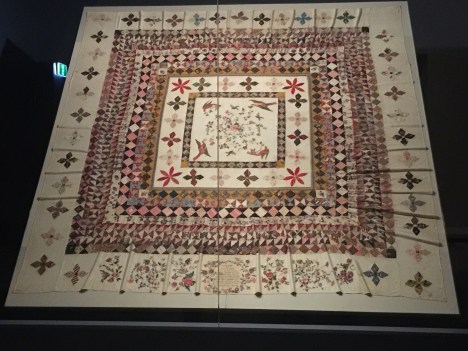
The Rajah Quilt

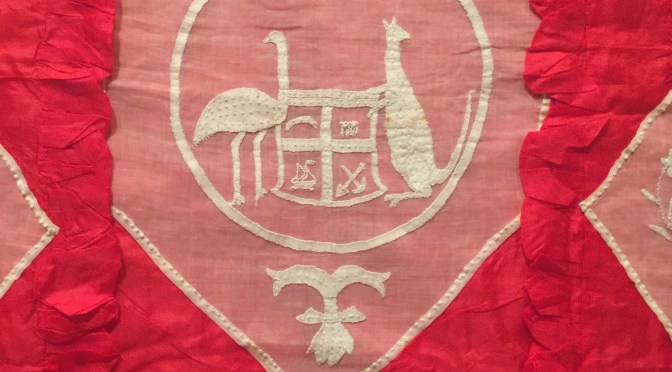
This quilt was created by the women on board the Rajah in 1841, they were taught by  Elizabeth Fry, a Quaker reformer.

‘The Australian quilting tradition developed in response to a unique set of factors that sets it apart from other quilting traditions internationally.’ NGV

There was the odd sailor that picked up a needle and thread and made his own quilt.

img_4609
unknown artist

This example is a work of Art, an intricate geometric design, with a contemporary feel. The beauty of the quilt is that it is also functional. The time poured over the work creates a meditative element that transfers an emotional or spiritual quality to the work.

img_4226
Enter a caption

During WW1 and WW2, ‘quilts were a means of rallying support’.

To this day, some churches still create quilts to place over the unwell. The quilt can also serve as an historical piece, recording the members of a congregation, club or school.

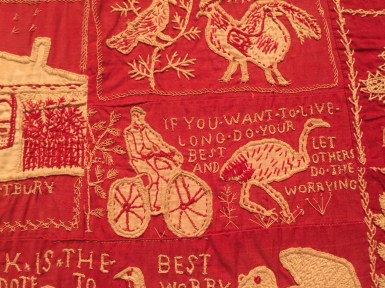
Some stitched a bit of wisdom to guide the next generation.

img_4169
The Westbury Quilt  1900-03

The charming Westbury quilt was created by a Tasmanian family, it was intended to be a raffle prize. Its a mix of British domestic influence and Australiana.

img_4199
Mariann Gibson Crazy Quilt 1891

Others competed to be the ‘craziest’ of the ‘crazy quilt’ fashion, that was the sewing movement at a time, when European Art was shaking off the shackles of the past. The British settlers had no cultural roots in Australia, they could push the boundaries of traditional Arts.

img_4249
The Goodnight Quilt by Mary Jane Hannaford

Some caught the eye of the galleries to be immortalised. Mothers often sewed quilts for their children or were given to them by a loving friend or family member. Mary Jane Hannford’s ‘Goodnight Quilt’ was made for her 11 year old grandson.

‘The subject matter of Hannafords quilt includes patriotism, religious faith, the love of Australian wildlife and the marking of key family events’

img_4247
Nursery Quilt Artist unknown

Some works were sewed roughly, not for beauty or art but for warmth. The gathering of discarded clothes, recycled into a rug. The perfect art for Depression and War when materials are few and patience is limited.

img_4239
Wagga

‘real rag bag waggas, hessian bags or patchwork-covered army blankets, but still rich in the memories embedded in their cloth.’ Annette Gero

It’s a pictoral exploration into our past, through fabric. Mostly, but not exclusively a womens history. Sewing groups were also social and community acts. It’s an engaging exhibition.

img_4695

Captain Australia

Melbourne Fringe 2016

Matt Stewart is ‘DRY’ at the Courthouse.

In the small ‘Attic’ of the Courthouse Hotel, Stewart warms up the crowd with off-beat humour and cultural observations.

He quickly builds a strong rapport with the audience. The jokes are uniquely Australian and as the room laughed loudly throughout the performance; a couple of overseas visitors looked on perplexed. His humour  is based on shared experiences that create a ‘party’ experience, as everybody ‘is in’ on the joke.

Stewart’s ‘lay-back’ demeanour and monotone delivery puts the crowd at ease, as his eyes search out his next sidekick. He opens the floor and allows a degree of improv, exacting sharp timing as he tosses a clever slip of irony back into the fold.

No Aussie performance can ignore the ‘heart of darkness’ of our vast continent and he does touch of some uncomfortable satire which is inserted between playful wit. He is a genuine comic, the type that other comedians would go to watch.

You will laugh so hard that your face will ache.

“I like him in general; his tone, the dryness, the way he comes across…his delivery” Mike Barnes Comedian*

Matt Stewart ; 2014 Raw Comedy Winner            

Contrasts

Rapid urban development cast’s new shadows on the streets of old St Kilda, yet shreds of its artistic culture remain.

106 Barkley Street has been Tamar Dolev’s studio for 8 years, she uses ‘found’ objects to create. Each surface and shape is carefully considered before being morphed into the voice of the quietly spoken Artist.

The works are bursting with wild vitality, shes uses colour like an electric force, there is a vibrant sense of movement and emotion similar to that of Aboriginal Artist HU Wedge.

Dolev also enjoys the effects of shadows.

“Whatever wall it goes on, the piece changes. if it’s a blue or black wall, it adds and evolves by the shadows it makes.”

image
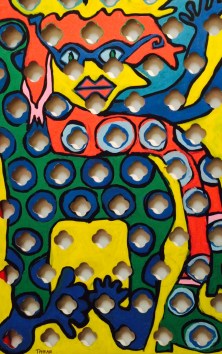
Self Portrait 2015

Self Portrait 2015 is full of holes, it is a chameleon blending into its environment. It is partly her and partly the surroundings, that dictate its nature.

‘Billy’s Adventure’ 2015, is a long narrow work that invites the eye to travel through the composition as a narrative. The concept of an art piece outside the ‘eye of a camera’ explores our natural visage, a technique familiar to Chinese scrolls.

Dolev’s journeys are captured in her haunting silent photography of the place outside.

image

Both of her parents are Architects and her fascination with buildings seeps into her art. She is currently pre-occupied with her sculptures of dwellings made from bay-side spillage.

Paperless Office

“The whole of life is an artwork, we are just going through the stages of it.”  Coleman  

image

Xan Coleman is the Director of a Durational Action Artwork that is currently being held at the Meat Market in North Melbourne.

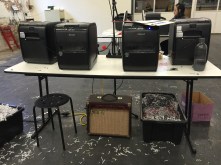
“We are digitizing and destroying the entire company archives of A is for Atlas, as it turns 10 at the end of this week. We are reflecting..” Coleman

When MP arrived Coleman was shredding the play ‘No Exit’ that was staged in 2012.It is a 1944 existentialist French play by Jean-Paul Sartre. It consists of three characters that bring out the worse in each other and are doomed to spend eternity together, this is their hell. Ironically, the play was held in an underground space, next to the Vic Market that has since been entombed under concrete, hindering it without an exit.

Theatre chairs are in place, if you want to grab a coffee and view the work of Yuhui Ng-Rodriguez as she scans, or Coleman as he shreds. Toni Main’s sewing machine creates a ‘musical’ background as Julie Renton creates soft furniture on the floor. The public are invited to participate in the making of soft office toys that will be given away at the end of the week.

image

The mundane in this Happening, becomes the intersection of destruction and transformation,  public are generally invited to such rites of passage. For ‘A is for Atlas’ the cultural past has been kept in storage for a decade. In this installation the past is physically destroyed and sent into a cloud.

Ritual, regardless of its simplicity, marks change and unity. A marriage is more than a couple ‘hooking up’; eating fish on Good Friday or kissing strangers on New Years Eve, marks a profound event or change. The shredding of the emotional and creative achievement’s of this company, is significant.

image
Childs drawing saved from the shredder

Each of the players have rewarding discoveries in the sorting; Coleman saved some children’s drawings and mounted them on the wall, Ng-Rodriguez connected with some architectural drawings of the Powerhouse; Main found it exhilarating to cut into an old animal print costume and Renton, left only with the shreds, creates soft furniture.

image

On Friday night the bar is open, the musicians arrive and the ‘post-it’ party begins to cap off the week.

We cross over Smith Street to the end of the Line

Gertrude Street Projection Festival

One doesn’t need an excuse to head to Fitzroy. Melbourne’s old bohemia and the new swank of money have morphed the district into the cutting edge of style and art. Even Charcoal Lane has had a makeover and looks like a cool Club.

I’m heading up Smith Street to the Gertrude Street Projection Festival. The cafes, restaurants, barbers and bars are a light show, each establishment competing to win ‘the most ambient award’. It’s a feast of visual splendour and I haven’t yet arrived at ‘Gertrude’.

image
Gertrude Hotel

The Builders Arms hotel, on the corner, is awash with Kate Geck’s gay colours and crisp designs of her composition Apeiron, exploring decay’s victory over the force of materialism.It’s the gateway into the creative heartland, flanked over the road is the Gertrude Hotel also vividly lit, with the design Imaginary Atlas by Sean Capone. Within the festival there are a diverse display of styles; the bright, subtle,intriguing and the sublime.

Luzon Adams sensual work Reverie, was utterly captivating, in a liquid dance by underwater videographer Peter Bucknell, she explores the mystery and epic power of the red-haired character. For the viewer it appears as though a woman is emerging, like new life out of the building exterior.

The most charming display was the neon light on the Housing Commission building that read ‘HOME’. In its simplicity it encourages a non threatening view of the estate and reminds us of the sacred spaces where we all live. Its is no longer a block.

Banner Photo: Gloss by Petrina Hicks

Title from the Lyric’s of Charcoal Lane by Archie Roach

Psychosis, the lonely poet

image

Sarah Kane wrote the play 4:48 Psychosis as she plummeted deeper into her despair. This is her final curtain fall, the finale of her creative life. Ironically she digs her lonely days of dirt with words that are crafted with epic beauty.

‘Love keeps me a slave in a cage of tears’

Sylvia Plath’s Bell Jar or Shakespeare’s Othello are fitting comparisons to a raw but majestic construction of words. Kane is a natural poet capable of building a visual palace out off the darkest recesses of her mind.  Director Kendall-Jane Rundle chose a naked space to adorn the language.

Kane is terrified of banality.

‘Don’t shut off my mind’

‘Theres not a drug on Earth that can make this life meaningful’

The drug that Kane aches for is Hope.

‘I am charging toward my death.’

image

Despite the dark subject matter, it is a strong script, tailored direction and an absorbing performance.

image
Kendall-Jane Rundle

The Director and principle Actor Kendall-Jane Rundle responded to the tiredness of Kane by using furniture that was muted rather than white to create the worn-out feel that the writer expresses. She toned down the delivery to create a realistic feel to the drama. On Thursday night an audience that suffered the affliction viewed the performance and claimed that it was an accurate portrayal of the condition.

Jeff Wortman played the Doctor and love interest of Kane’s character. In the performance his professional position kept him aloof from the desperation of his patient, she tries to pull him in and he tries to pull away. As an actor it was just as difficult to ‘turn off’ to the confronting content.

image
Jeff Wortman

Without wanting to take her pain

image
Shane Grant

Shane Grant created the lighting for the episodic depiction of Kane; rather than being a light that shines from above his lights chase her through the darkness and allows the audience to fold into the deeper layers of the script.

Overall it was perfectly complete.

“At the end she was calm” Rundle

Nursing in Uganda

“We arrived in Africa and were instantly overwhelmed by the kindness and friendliness of the local people.”

Melbourne student nurse Laura Garnock stepped up, to be part of a team of 19, to visit and assist a hospital in Kampala, Uganda . The first pilot team for ACU, included students of nursing, midwifery and public health.It was a cultural and medical challenge that reinforced her desire to join ‘Doctors without Borders’ sometime in her career.

image
Laura Garnock

” We didn’t have too much information about the exchange experience before applying, other than we would be working at Mulago hospital and volunteering in various other community programs over the two weeks. That was enough for me; my attention was caught at ‘Uganda.” Garnock

Midwifery and Nursing Lecturer’s, Annette Garvey and Jean Mukasa, enabled the trip after years of relentless organising, planning, risk assessment and convincing.

“We all had the common underlying motivation for applying for the Uganda trip. We wanted to help people and work out if we could actually cope with what we saw, continue to do it afterwards and to make a difference. I think most of us could confidently say that, we achieved all three things.” Garnock

The nurses were split up and rotated between medical emergency, surgical emergency and trauma.

“It was when I was on the surgical rotation that I saw a leg amputated. I have never felt so out of my depth in my life, there are many things that I saw in Mulago hospital that I will carry with me forever.

I learnt the power of support, giving a patient or their family member a hug.. The non-verbal communication that we take for granted in Australia, when talking to each other, meant the world to our patients.” Garnock

The student nurses were faced to overwhelming conditions of overcrowding and limited medical options.

“Out of 191 countries in the world, Uganda’s healthcare is rated 186th. 48% of the population in Uganda is under the age of 15. … On an average day, there is one nurse to 45 patients on the ward, that was how understaffed but incredibly busy this hospital was.

image
Jean Mukasa, Bethany Flemming, Aimee Burns, Tegan Dudley, Brianna Doyle, Sophie Malcolm, Clare Ryan, Georgia Myers & Laura Garnock          photo by  Garnock

The conditions and illnesses that we saw are generally  uncommon in Australia, so it was difficult at first to know where to start, in terms of nursing care.  Cardiac shock due to dehydration, Malaria, AIDS (related conditions), TB, Hepatitis B and C were common medical conditions. The trauma centre (casualty) had a wide range of patients from victims of assault and violence, to those needing resuscitation.

“… A blood pressure machine was non-existent in some of the wards and those that did have one, had to share it between all 45 patients. Doctors had stethoscopes, but it was a rarity to come across other valuable equipment such as a pulse oximeter or a thermometer. Luckily some of the girls on our trip had the foresight to bring a manual BP machine.” Garnock

Part of the trip was to take part in Community active groups aimed at empowering local residents with simple but powerful options.

We did some outreach work on our days off in the local ‘slums’. We worked with Yimba Uganda, a organisation that is a Ugandan NGO devoted to empowering, training and providing new opportunities to Ugandan’s in order to promote sustainability & independence. L.G

THE GOAT PROGRAM

This program has enabled domestic farming that has led to home ownership for some families.

image

“A local family is given (loaned) a goat and told to look after it for a while, breed the goat and take responsibility for it’s welfare. At the end of a few months or a year , the family can make a profit from all their efforts” Garnock

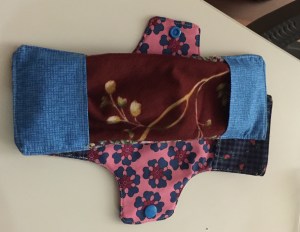
THE WOMENS SANITATION PROGRAM

This program offered girls the convenience of menstrual solutions to enable them to fully participate in activities without physical restrictions. Previously, females had to abandon school and work due to ‘this time of the month’.Western options were not feasible due to the problem of waste.

image
A removable lower layer for washing and replacing.

“Anne-Marie, an ACU graduate, designed and made reusable sanitary products for the local Ugandan girls. The local girls were using pages from textbooks, leaves and foam from their mattresses for protection” Garnock

TEXTILES TRAINING PROGRAM

Boys and Girls were trained in sewing to enable them access to clothing and a means of income.

image
Clothes made in Uganda on sale in Australia

“…to tailor their own clothes and learn more skills in the hope that they can build their own future.”

image
Annette Burns, Emmanuel K Edwin (DJ and Community worker) Anne-Marie Reddan

The students have been active in Local Fund Raisers since their return.For Laura it was a heart warming journey that made her aware of the contrasting medical conditions.

“I think the overwhelming point that I took home from the trip was that people in Australia have no idea how good their healthcare is.  We couldn’t even give our patients water to drink.” Garnock

image

Flag photo by L Garnock of Mulago nurses.

A Suspicious Mind

Class Act theatre updates an ancient play, The Winters Tale, by dressing the actors within a modern context. The audience are informed of the rank and occupation of the players through chiffon gowns,well cut suits and the Louis Vuitton luggage of the privileged class. The Mariner and shepherds are more roughly attired.

Katherine Innes role as Hermoine morphs her lines into this century with an Aussie twang and everyday gestures, which translates the material with natural ease. The strong cast dig into the tragedy, of a leader who has fallen victim to his own mind. The repercussions of his suspicions, spiels  the leading class into the task of damage control.It takes fate to heal the wounds and bring back order.

MP spoke to The Designer, Jaz Wickson and The Director , Stephen Lee before the show.

Jaz Wickson     

image
Jaz Wickson Designer

“The show has wonderful feminist undertones. The three main women are Paulina (Angelique Malcom) the wise woman; Hermione (Katharinne Innes) who is the mother figure and goes through a terrible time,losing her daughter, her son,and then her own life; and there is Perdita (Ivy Latimer). There are many men but the women are stars.”

“With this production we’ve tried to keep it timeless. Think fairytale today, an Australian Fairytale. We have a very Australian Bohemia when we go there, with all of the accents.Design wise,its very ‘man from snowy river’ and the Court are dressed like they’re at a wedding, as this doesn’t change much.

With the set; Northcote Town Hall is an interesting space, its not a black box theatre, it has a hardwood floor so we integrated it.  We used chiffon drapes, that the actors walk in and out of, we’re not hiding the space but rather enhancing it.For the centre piece, it’s a tree, with changes of season.”

How did you get involved with the program? MP

“I’ve been a designer for a few years now, I work with Class Act theatre, they have just moved their base from Perth to Melbourne, I do the costumes and set.”

Is it a traditional Shakespeare script?

“Yes, Our Director Steven Lee has directed over 30 Shakespeare plays.”

Stephen Lee

image
Stephen Lee Director

“This is probably my 35th Shakespeare play”

Where does that passion come from? MP

“When I was 18, I saw my first Shakespeare play and I was so captivated, it was nothing like I had done at school.”

What play was that? MP

“That was King Lear, it was with Donald Sinden, an actor people don’t know anymore. It was such a magical experience and I was transported. That was 40 odd years ago. I’ve probably directed a couple of hundred productions.”

What’s the shape of theatre in Australia? MP

“Theatre around the world is thin, it’s been overtaken by so many other forms of entertainment. Cinema is still hanging in there but television, video and the internet ….”

Why should people go to theatre? MP

“All these other forms of entertainment may be fine, but there is no immediacy like a direct performance for you. …That night is performed just for you and it will never be the same on any other night.

It’s a special one-off thing just for that audience. It’s incredible, you’re  joining with the actors , sharing in a unique experience.”

Tell me about Winters Tale. MP

” It’s about two Kings and one King starts to suspect the other  of having an affair with his wife. It’s totally ungrounded as they have grown up together, since they were kids. Suddenly he believes he is being cheated on.

He tries to bring down the other King, that fails, then he tries to put his wife on trial for adultery… It gets blacker and blacker and blacker and in the second half, the time and place switches into a mood of redemption and reconciliation. It becomes funny, heart-warming and it has one of the most moving endings, of any Shakespeare play.”

How does this relate to modern times? MP

” We wear different clothes and talk slightly differently but we are still driven by the same things and ideas, feeling jealous or insecure, not trusting other people is the same now as it was four Centuries ago.”

Flesh Eating Tiger

Flesh Eating Tiger by Amy Tofte

with brilliant performances by Amy Gubana and Marcus Molneux.

“I hate this f-king play”the actor roars; chaotic in self hate and desire. Its a vicious cycle, a play within a play.

image

“I love you” she pleads, imagining her only reflection is through his eyes.

The stench of sweat and loves final battle breaks out in front of the audience that stare like children, watching the horror of substance fueled passion. Despite the abstract fury of the torn lovers, the play is built on a tight structure and examines the cult of alcoholism.

It is a brutal contemporary play, with a brilliant script and prize acting, the direction has an expanding boundary, webbed together with invisible threads.

Its not serious.

Its just physical.

image

I can end it whenever I want.

WRONG!

“I want out!”

He is addicted to alcohol, and she is addicted to rejection.They want to be abused. They don’t want surface beauty, they want to wrestle the beast beneath.

“I heard about stupid people like this I didn’t know, I would be one.”

Love without a boundary, is life without rest.

This drama explores complex emotional themes that are part of the contemporary fabric of human life. It explores desire and it’s not pretty.

image

The Owl and the Pussycat is the go to place for  serious artistic exploration.

imageThe Director Gabrielle Savrone, explains her involvement with the production.

“Flesh eating tiger is a bit of a beast, it’s an abstract art piece. I’m an Abstract painter so I see the play like that. There’s the words,the actors and the design…the concept is how things bleed between life and art. You create what you live and its a part of who you are.

She’s addicted to him and he’s addicted to alcohol.Its a tangled mess. What we are watching is their relationship, the play that they are creating about their relationship within a play. It’s quite fun.Essentially it’s a love story, a tragedy.”

How did you get involved in the project? MP 

“I met Amy (Tofte)at a conference in Alaska three years ago,we were room buddies. I went to watch her play reading, it was this and I fell in love with it. When I took over the theatre, nearly two years ago,  this was the first play we put on.”Savrone

Actor Braydon Lewtas extends himself to assist in the Direction of the production.
image
Assistant Director Braydon Lewtas

“The Artistic Director, Thomas Doyle cast me in the two previous plays that were shown at the theatre; Paper and Boys Club. I always wanted to be a Director, so I expressed that to the owner of the theatre, Gabrielle”Lewtas

“I’d like to write and direct and put on my own play in the future.”

The small bohemian venue is a hub of creativity, the friendly barman is Doyle, the Artistic Director and struggling play writer. He wrote the script for Paper which took a stab at modern media and corrupt journalists. His play Riot went to The Last Frontier Conference in Alaska.

“I like provocative material, work that provokes people and is also entertaining. I wrote my first play when I was eight. I thought I wanted to be an actor but then I realised that playwriter’s have all the power. ” Doyle

image
Artistic Director Braydon Lewtas

 Amy Tofte Playwriter of Flesh Eating Tiger

Amy was recently recognized by the Academy of Motion Picture Arts and Sciences with a 2015 Nicholl Fellowship in screenwriting. Her plays have been semi-finalists for the nuVoices Festival (Actor’s Theatre of Charlotte), Kitchen Dog Theatre’s New Works Festival, The Source Festival and The Princess Grace Playwriting Fellowship. Flesh Eating Tiger premiered at the Edinburgh Fringe Festival and in Melbourne in 2015. Tiger was remounted at the Hollywood Fringe where it was named “Best of Fringe” and nominated for Best Play. Tofte is a founding member of the play development company Fierce Backbone in LA and is a proud member of The Dramatists Guild.

image

Contemporary plays at

The Owl and the Pussycat

Swan St.  Richmond

Melbourne’s Modern Renaissance

During war years, the Melbourne art scene dragged itself away from the safe bush scenes and began making social comments through expressive art. Urban hardships were the realities of the day, and the war brought home Surreal experiences. The struggle for survival opened up a marginal void, that the new bohemia were ready to fill. Eccentric aristocrats  were the lifeblood of Melbourne Artists during the new Modern Movement. There were two major camps that drew in the cream of new art. The Reeds established a shelter for artists at Heide, in Heidelberg and Meric Boyd’s ‘Open Country’, in Murrumbeena, challenged the status quo.

Both had an open door policy for emerging artists; Meric Boyd built a kiln on the property and encouraged his children to be active in the hub that gathered there. The kiln would eventually fire-up Arthur Boyd and John Perceval’s, emotive and provocative sculptures.

Perceval;  The Acrobat Angel  : Boyd; 30 Pieces of silver

Boyd’s style grew in Open Country but manifested in the South Melbourne paintings. During the dark war years, he suffered from a depression.Like Perceval he saw the depravity of urban life and drew upon motifs that would be symbols to became part of his pictorial dialogue.

image
Arthur Boyd the Ochard 1943

‘the man in wheelchair, the cripple on crutches, the tormented naked lovers, the beast, the chimney stacks and the gargoyles.’ Sasha Grishin

Boyd, Percival and Tucker explored the moral decline brought on by the American troops stationed in Melbourne; the confronting work does not shrink from climate of prostitution in the City. England sent Australian troops to India to guard its riches and the Americans stepped in to protect our land and befriend it’s women.

image

Albert Tucker Victory Girls 1943

The Reeds harboured Sidney Nolan as he avoided military duty and the Kelly series expressed his new outlaw status.Nolan was Sunday’s prize bull, she wanted Europe to embrace him, but the modern world rarely looked our way.

Joy Hester was coaxed and chastised by the wilful Sunday and she would occasionally slip over the river to the Boyd’s camp.  Tucker would have a love/hate relationship with the Heide crew, as his personal involvement with Hester intensified.Their Love Child Sweeny, brought Mike Brown into the brood during the later years.

image
Joy Hester photo by Albert Tucker at Exhibition Gardens

The Reeds were determined for Melbourne to be the capital of figurative art and hoped to expel the growing appeal of the American movement of Abstract Expressionism.The 1959, Antipodean Exhibition drew in artists from other camps who signed and battled over the direction of Melbourne Art. John Brack supported the figurative art stance but withdrew from the show due to the politics. He had avoided the ‘hot-bed of art groups and shared a studio with his life long friend, and fellow artist Fred Williams.

image
We,Us,Them 1983 Bracks comment on human behaviour

During the war years the Paris Art scene was kept in darkness. American Abstract Expressionists stole the limelight, it could have been the Australian figurative movement and for good or bad, it could have led world art into the heart of Melbourne. It was a radical and unique period in art history.

The other major art groups in early Melbourne were Dunmoochin which included Clifton Pugh and John Olsen. Montsalvat was set up by Justus Jorgensen and drew strongly from European influences, particularly in its architecture.The town was relatively young and most of the artists had studied and knew each other through the Gallery Art School.

Mirka Mora arrived in Melbourne, like many immigrants, her family was escaping the persecutions and atrocities of the war. Local artists frequented the Mirka coffee shop and Mora flirted between Heide and Open Country camps.She sewed a dress for Sunday and her children played amongst the Boyd’s kilns. She supported Joy Hester by exhibiting her on the café walls and as her families hospitality businesses grew, so did her presence as an Artist.

image

     Mirka Cafe opening

Charles Blackman was a regular customer at Mora’s cafe, the family had a reputation for supporting and feeding local artists.Despite the energy and personal finances Art Patrons offered, the artists knew that they would have to leave Australia to further their careers. The public enjoyed modern housing,appliances and clothes but they were closed to new ideas and clung onto Colonial Art.

image

Open Country at Murrumbeena

‘In 1963 after having achieved a degree of recognition and financial security, Percival and his family joined the general exodus of artists and left Australia.’ Sasha Grishin

Boyd had already moved his family to England. Open Country was torn down, to make way for a block of flats.

image
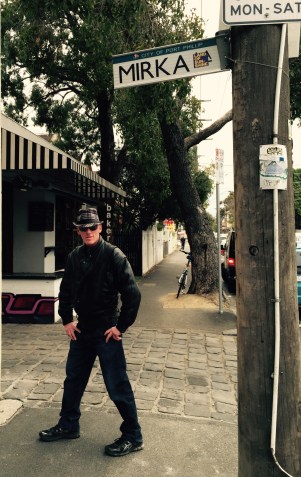
Mirka Lane with St Kilda local

Banner Photo Athur Boyd butterfly Man 1943

John Brack NGV 2009; p156

Australian Surrealism and its Echoes NGV 2015; p70

The Heart Garden Sunday Reed and Heide Janine Burke Vintage 2004

Australian Art A History, Grishan S, The Miegunyah Press,2015; p333-347

I (honestly) love you.

I (honestly) Love You at The National 

REVIEW

Have you ever been on a date from Hell and loved it?

image

There are three members in this relationship, him her and the ‘vicious truth’. The great accident of love has a few battles to get through, before the home run. The first awkward encounter is to meet the parents and then the friends. 

The show digs into the trenches, of love for the long-term, despite its personal cost. 

“She plays netball …I have to go to every F******* game”

image

The play explores the sharp cut of truth in a dishonest world. How can we hold down a relationship or job, if the real shatters our delusions? It’s a clever script that breaks down the comfort zones, with large slaps of humour.

“It was very entertaining, the humour was quite witty and unpredictable….I laughed most of the way through it” John (audience)

“I loved the energy that the actors had, the sound effects, audience involvement and the six part bit.” Gilly (audience)  

“An interesting insight into relationships and how hard we try to make everyone around us happy when in doing so it actually makes everyone, including ourselves unhappy ……interesting.” Alannah (audience)


Interview with Damon Lockwood.

Screen Shot 2016-03-25 at 4.22.01 PM

“I wondered if being able to tell the truth to your partner at all times would be the answer to the perfect relationship, and this play is the result.”

What keeps you honest (honestly)? MP

‘The new app that allows my partner to know where I am at all times, by where my phone is at. Once again, thank you technology.’

Why did you choose this show? What’s the story behind it?

‘I didn’t go to the best of schools as a child, so when I ran into an old school friend and he reminded me of a truly filthy joke we used to tell each other in Grade 4, something about Pinocchio being honest in the toy box, the idea for the play sprang into my head and the script flowed out of me. Crappy education has given me so much…’

What is your main talent? MP

‘I keep striving to make my main talent writing …you can’t polish a turd’… delightful, but so apt when it comes to creating great theatre. So I am saying I would like writing to be my main talent but it really is a life-long path.

Also, I make a seriously good omelette.

What are the ingredients to a great show?

A good script helps a lot, like, a lot. For me, a show that deeply considers the audience’s enjoyment and not just their ‘luck’ at witnessing some supposed brilliance on stage I feel is also important. Great actors don’t hurt either, and did I say a great script I think is really important?’

What impressed you about the Edinburgh Festival?

‘The sheer scale of the thing was redonkulous, but the Perth Fringe Guide is beginning to have eerily similar weight and look to it as the Edinburgh one.

The energy on the back streets is electrifying. The main press event was hilarious, where you line up for an hour and a half to speak to a journalist for three minutes who already has tickets to La Soiree on the one night they might have been able to come to your show.

It’s true, Scottish people truly are waterproof – they can stand in the rain and simply not get wet! Survival mutation born from centuries of damp weather, I guess.

What do you imagine your future to be? MP

Man, that is a heck of a question! Seeing as there are no jobs in the theatre in Perth … then I’m pretty excited about a long career in bus driving. And I’ll always write, I think, I do love the endless bloody tangle with the blank page and those concrete words that sometimes glow.

What keeps you motivated? MP

‘I think the joy I receive creating work that allows audiences to witness other great actors ply their trade is very rewarding. There are so many talented actors out there who through bad timing or sheer dire fate don’t get the opportunities they deserve. At least this way I am able to give them an impressive 11% cut of the door takings’

What are the ingredients for a great relationship?

image

‘… in all extreme  likelihood I will never be a relationships counsellor, I would say… who knows?

Maybe a couple that complement each other perhaps, so that between the two of you there’s a fighting chance you may have all the aspects of this life thing somewhat covered (like I do all the cooking and cleaning and gardening and my partner can answer the door when there’s some delivery guy there that I can’t handle making small talk with)?

And great sex. Oh, and honesty! Of course, yes, honesty, on all things… some things… on some most things… … … sometimes…’

Screen Shot 2016-03-25 at 4.22.01 PM

I (honestly) Love You has played at Edinburgh Fringe and New York Fringe achieving great reviews. The show has Melbourne actors, Jimmy James Eaton and George Gayler in the lead roles with Damon Lockwood is the playwright and director (his show HorseHead was on at La Mama in 2014).

Venue: The National Theatre


History in Fabric

200 years of Fashion at NGV Australia is a fashion warp of cultural remembering. It is commonly acknowledged that written history is told through the eyes of the ‘white man’, Aboriginal history through Art and Womens history through fashion.

The Suitors

This bride isn't shrinking away from a bold statement, there will be 2 suits in this marriage.
This bride isn’t shrinking away from a bold statement, there will be 2 suits in this marriage.

‘…the Colonial taste (which might differ from Melbourne suburb to suburb) was capricious, so different as to be sometimes absurd.’  Margaret Maynard

Revolution

‘Australian fashion from the early twentieth-century broadly emulated international trends and ideas of glamour inherited from Paris and Hollywood, but by the 1960’s, Australian designers were beginning to have there own impact on the world stage with work that no longer followed..’   Nadia Buick

Its political; burn the bra,womens lib,sexual liberation due to the pill & frighten your parents all at once.

Prue Actons ‘Youthquake’ reveals a sheer jumpsuit that sold for $60. David Jones marketed it to mainstream as sexy but for the Flower Power generation; ‘it was a symbol of passive resistance .. anti- war  protests..its changed attitudes and allegiances’   NGV

Meet Mr. John

All this suit needs is a perm,thick moustache, reflecting glasses. Its more trip than hip.

House of Merivale and Mr. John Sydney, introduce the corduroy belted suit for men in 1973.

‘The 1970’s trend towards unisex attire, which saw traditionally ascribed masculine and feminine codes of dress become more androgynous.’    NGV

As the 70’s seep into the 80’s, The Chai Jumpsuit 1978, reveals fashionscapacity as a medium for artistic expression’   Danielle Whitfield.

Doing time with the Pistols

the PUNK period, was no longer passive resistance, it was anarchy. The Melbourne music culture embraced punk, Sex Pistol films were played at Uni. events and the alternative scene was self supporting.

‘As the band reappeared for an encore, Sid showed the audience an obscene gesture and Steve yelled, “You must be mad to want more of us’             Dangerous Minds, Gallagher.

Less is Best for NOW

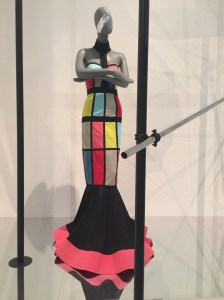
Inspired by Mondrain and conceptual minimalism and Kraftwerk.
Inspired by Mondrain , conceptual minimalism and Kraftwerk.

Tina Salivas studied fashion at Adelaide’s Marston College her 2007 creation draws inspiration from European Artists.

‘the cloth contributes to the overall design of the garment..to fully realise their artistic visions …they must not only develop form, but the textile as well.’    Paola Di Trocchio

extracts from 200 years of Fashion NGV publication.

Top Photo: Kate Durham ‘Sentimenta romantica de l’amour et glamour: Wedding ensemble 1982’ If this was the veil, imagine the reception.

Still Here by Josh Muir, a White Night Sensation

Crowds gathered around NGV International on the crisp cool Saturday night, to enjoy the White Night projections. The mood was relaxed as the audience waited for the remains of the day, to become night.

image

The projection used the entire space of the facade, a perfect blank canvas for award-winning artist Josh Muir. Emma Donovan and James Henry provided the haunting soundscape, it was a  flawless collaboration. Still Here was a visual feast with a political edge.

It began with a bird flying peacefully across the building, followed by an eruption of circular abstract formations, representing creation. The new scene was of Aboriginal men on the beach, with a catch, as the women sat in circles, chatting.

image

On the horizon, crosses that symbolised the coming of a new culture, draw closer and a storm thunders down, closing the curtains on that era.

In the new scene ,the landscape is less sympathetic, however the newly clothed Aboriginal people continue on with family life. A white van drives down a road to a family sitting together. A white man comes out of the van and pulls the child away, the parents fight the intruder but they are over powered. The child is put into the van and  driven off. The mother wails as the father collapses with despair.

There is a shocked murmur in the audience.

image

“They are taking the kids” is voiced throughout the  large gathering.

In the next scene City life has taken over, trams ‘ding’ and cars roar  by. It was a blatant statement. Muir was evoking the viewer through the power of Art. It was stunning.

‘I am a proud Yorta Yorta/ Gunditjmara man, born and living in Ballarat, Victoria. I hold my culture strong to my heart – it gives me a voice and a great sense of my identity. When I look around, I see empires built on aboriginal land. I cannot physically change or shift this, though I can make the most of my culture in a contemporary setting and use my art projects to address current issues of reconciliation.’ WhiteNightMelbourne

If you saw no other projection,  White Night Melbourne was a great success.

Other Aboriginal Artists represented on White Night Melbourne were Reko Reno at Federation Square and Pitch Makin Fellas, a group work at The Exhibition Buildings.

The Dressmaker

Have you seen the Dressmaker?

image

“Yes, it reminded me of Daylesford when we were kids, it gave me the shivers.”

Have you seen the Dressmaker?

“Yes, isn’t Liam Hemsworth gorgeous?”

Have you seen the dressmaker?

“Yes, wasn’t the interaction between Judy Davis and Kate Winset amazing, they must have had heaps of fun.”

Have you seen Dressmaker?

“No, but country towns always have their secrets.”

Have you seen the dressmaker?

“Yes, I Loved it.”

Kate Winset sets fire to the screen, in a cathartic survival movie. The very chic Tilly (Winset) returns to her childhood home in the dead of night, to clean up and overcome her troubled past. Armed with a sewing machine she manifests as the fairy godmother with a cutting edge. The film explores ‘the heart of darkness’ in rural Australia, within a playful drama about frocks.

It’s definitely a film to be enjoyed on the big screen.

Kate Winset
Kate Winset

Costume designer Margot Wilson, runs up a series of ‘show stoppers’ for Winslet to flaunt. Marion Boyce is the ‘muse’ of Tilly’s designs.

“In particular, for this film the costume is everything, most incredible dresses in my career, we start off with a palette of brown, grey and dull…’she’ (Tilly played by Kate Winslet) brings in the wealth of colour”  Boyce

Judy Davies wrings out every essence of her character in her performance, as a tormented shrew.She is brilliant.


What is HDL?

Baker IDI Breakthroughs

image

Baker IDI is a conspicuous building, next to the Alfred hospital in Commercial Rd, Prahran. It has been researching diabetes and heart disease for 90 years. They were the first to distinguish between Type 1  and Type 2 diabetes and proved that healthy food and lifestyle can curtail the disease. An improved diet can prevent the escalation into, the very harmful, Type 2. This is just one of their world renown breakthroughs. They work closely with the Alfred Hospitals, Heart and Lung Transplant team.

Baker IDI, Professor Bronwyn Kingwell, claimed that HDL cholesterol  has an important role in glucose and fat metabolism. HDL is an active player in glucose intolerance of the metabolic syndrome, and is critical to the rising epidemic of diabetes and its dramatic impact on cardiovascular disease. Continuing research will examine whether prolonged HDL elevation produces a sustained benefit on blood glucose control which may translate to a new therapeutic approach in the prevention and treatment of Type 2 diabetes.

7Z9O9674lowres

Good cholesterol helps eliminate these fats from vessels and tissues to prevent blockages in blood vessels.

Kingwell has had a long association with the National Heart Foundation (NHF) of Australia in community heart health advocacy with a special interest in healthy lifestyle.

What is HDL?

It’s important to raise your high-density lipoprotein cholesterol. HDL is a scavenger that removes harmful cholesterol from the bloodstream, High  levels reduce the risk of heart disease.

HDL can be increased by regular exercise and choosing food that aids health such as, fiber, avocado, olive oil, nuts and fatty fish such as salmon.

Although ‘good cholesterol’ is a topical kitchen conversation, its discovery was a local initiative. Extended life is regarded as a financial negative in Australia whereas it should be regarded as a remarkable humane achievement. Major breakthroughs are taking place in our city.

The less we add to food the healthier the food is likely to be, the raw product is most likely the best choice. Labels on food are like warning signs, for example E460’s are generally forms of cellulose. They are used as a food additive to improve physical qualities such as smoothness and creaminess.

E461 – Methyl cellulose E462 – Ethyl cellulose E463 – Hydroxypropyl cellulose E464 – Hydroxypropylmethyl cellulose E465 – Methylethyl cellulose E466 – Carboxymethyl cellulose

Cellulose is a commercially prepared from wood and is a non soluble, that can be fermented in the large intestine. Large concentrations can cause intestinal problems, such as bloating, constipation and diarrhoea. Due to this fact, it can not be used in weaning foods.

One could spend two hours in the supermarket with their smart phone checking labels or we can go directly to the Vege shop. Primary school children are being taught to grow their own food. The aging population are blamed for clogging health care but the real culprit are the major food corporations.


Ref;

Baker IDI,

NCRE-Pad,

Food Info

3 Course Comedy

Three Comics, Michael Shafar,  Sam Taunton and Tim Hewitt fought it out for top laughs, from the high-spirited audience at the Butterfly Club. Their latest serving, 3 Course Comedy, was a solid bill of entertainment.

Sam

image

Gave a stoic monologue of rich comic content that evoked waves of laughter. Like a conjurer with a steady glance, he drew soul out of his poor experiences. With an unshakable confidence, he held the crowd and watched the sets come in.

Michael

image

Poked the audience with the long arm of justice, pointing out the absurd and ridiculous. The crowd shared the intimacy of humanity and laughed in unison. The night was  hotting up.

Tim

image

Hewitt burst forth with frenzied energy, as he bore through the tatters of his desperate existence. He takes the full crowd on an emotional journey and binds tragedy with hysterical farce.

Why I ran for White Ribbon?

image

White Ribbon Ambassadors are men who recognise the importance of taking responsibility and playing a leadership role in preventing men’s violence against women. They are formal representatives  who have the knowledge, skills, attributes and determination to influence Australian men to critically evaluate their attitudes and behaviours toward women.

Brent with his mother Bernie

Brent Howard, a White Ribbon Ambassador, ran the Medibank Melbourne Marathon to raise money and awareness for the prevention of violence towards women. He is a young father and committed to the it’s objectives.

“Eva (his daughter) is why programs like White Ribbon are so important. I for one, don’t want my daughter to grow up in a country where Domestic Violence is a common occurrence. When she grows up I want to be able to look her in the eye and say I didn’t stand by, I did something to make her world a better place.

Howard was the grandson of a caring woman who was a victim of domestic violence.

The person I think of most when I run is my Nan. My Nan was subjected to domestic abuse by the man she married. He died long before she did and with it so did the abuse. But what he left behind was a wife and 6 kids. My Nan was the most determined, caring and courageous woman I’ve known. She earned the nick name Sadie as she worked 3 cleaning jobs to keep a roof over her children’s heads. Growing up my Nan was an avid runner, but I never knew her as a runner. This along with many other things is something you have to give up when left to pay the bills and look after a house full of kids.

I run for White Ribbon, for those like my Nan. – for those who can’t” 

Not Silent
Not Silent

“Men’s violence against women is a serious social issue in Australia and has been for decades. Now this issue has a more focused spotlight, it is a critical opportunity for government and services to better work together, to create real social change”claims Libby Davies, CEO of White Ribbon Australia

Ms. Davies also called on governments to increase support for violence prevention:

“There is evidence that prevention is working. We have data showing that White Ribbon programs are driving the attitudinal and behavioral change needed to stop men’s violence against women.

Brent Howard raised $5,792.32 for the protection of women

image

“I use my love of running to raise awareness and funds for White Ribbon Australia.”

.http://www.whiteribbon.org.au

A Snippet of the Fringe

Three Artists, three stages, 3 fabulous hours

‘Existentialism the uniqueness and isolation of the individual experience in a hostile or indifferent universe, regards human existence as unexplainable, and stresses freedom of choice and responsibility for the consequences of one’s acts.’

THE PERFORMANCE

SAUCE

image

Simon Godfrey’s Dadaistic comedy is a complex ,high energy, minimalist work, marked by the absurd.

“Let us take the rest of Ukraine”

There are over a dozen characters in Simon Godfrey’s ‘Sauce’, each distinctive and brilliantly performed, in his one-man show. He needs nothing more than his imagination to bewitch. Godfrey turns a condiment into a high stakes adventure. He is a force.

 GENDER SPANNER

image

If you can fix a pipe are you an old man or a little girl? Jessica McKerlie ‘throws a spanner’ into gender prejudice. What defines our sexuality, is it our body or our mind? Can a woman who believes she is a man become a transsexual? McKerlie challenges the status quo of being, in a solo show. It’s an exploration into our humanity, told with tricks and slips.

“Don’t confuse my sex with my gender”

Her eyes flash into the souls of the audience as she keeps them tittering on the edge.

“Thank you for letting me label you.”

DEAR DIARY

image

Andi Snelling got a standing applause for her solo performance, as a girl growing through the banal experiences that ‘rocked her world’. The witty script compounded a couple of decades with multi-media and song, whist exploring the philosophy of time and self. Snelling mocked the self-indulgence of the autobiography, that the audience related to, with bursts of laughter.

“Guess what? I found four dollars at Timezone!”

It was a beautifully crafted work, packed with clever charm and brilliant timing.

Standing Ovations

In The Upper Room

Miranda Caney & Tim Harbour, Photograph by Jeff Busby

The Australian Ballet’s 20:21 wowed audiences with a Triple Bill of modern and contemporary dance, that moved the audience to their feet. The costumes and the sets were minimal so the production relied heavily on the skill of the dancers and the talent of the choreographers.

If the dancers felt exposed by their limited artifice, they did not show it, in fact, they embraced it.The dancers were un-caged flying freely though the score and exploring modern motifs. The zeal of the dancers slapped the audience awake as they were witnessing their living time and their Art. It was beyond fable, it was flesh and blood, it embraced our moment.

The third and final ballet of the triple bill was Twyla Tharp’s In The Upper Room, it was reminiscent of ‘The Red Shoes’ but with a twist. Those that dance beyond a dalliance, are not outcasts, doomed to roam alone, but rather the front-runners of fashion. The audience may have been on the bench but they had gone to the party.

Costume designer Norma Kamall has to be congratulated for telling it all, by disclosing less.

Picasso, Stravinsky and Balanchine manufacturing tomorrow with Diaghilev

Amber Scott and Adam Bull

20:21

Symphony in Three Movements

In 1917, Pablo Picasso left (war effected) Paris and moved to Italy to join Serge Diaghilev’s Ballets Russes where he would become close friends with Igor Stravinsky, a brilliant composer. Choreographer George Balanchine joined the company and was also regarded as a leader of his craft. It was a unique collaboration of Masters, each eager to explore  Modern motifs.

The Australian Ballet presented Symphony In Three Movements (1946) in 20:21, at The Art Centre Melbourne, recreating the collaboration between Stravinsky and Balanchine. It’s a ballet wedged between the classical and the contemporary. Eve Lawson has used cotton gloves to protect the integrity of the historic statement and gives the audience an opportunity to witness the Modern Wave in a digital world. Music Director and Chief Conductor Nicolette Fraillon recreates the rhythmic pulse.

Picasso entered Diaghilev’s Ballet a bohemian, a womaniser, and an abstract painter. He was regarded as a Master Artist due to his break-through work Les Demoiselles Davignon and enjoyed the patronage and support of Gertrude Stien.

Les Demoiselles Davignon

He was admired by his avant-garde peers for leading the modern movement. Joining Diaghilev’s Ballet was an unexpected career move that alienated many of his contemporaries.

Diaghilev’s  led the Ballet Russes with brutal force and Picasso’s powerful personality had to submit to the expectations placed on him. He would be seen in suits during this period.

By the time that Picasso had freed himself from Diaghilev’s tyranny he was married, gentrified, a classical figurative artist and his peers were Russian Royalty, that had escaped civil war.

Just as Diaghilev had altered Picasso (temporarily) into a more conservative aspect of himself, Picasso’s presence was also influencing Diaghilev. The Russian Ballet had been marooned in Italy, unable to return home as they were regarded as Imperials, by the communists. The Modern Art movement was sweeping Europe at the time and these new influences inspired Diaghilev to move away from the traditions of ballet. He was also pro-communist.

The employment of the new Modern Masters which included Picasso as set and costume designer, Stravinsky as the score and later Balanchine as Choreographer enabled Diaghilev to create a new vision. It was not an easy transition for him, although he made great strides forward, he was never be able to fully shake off his roots, just as Picasso could never abandon his Bohemian ways.

‘The fact that neither Spain or Russia had undergone a Renaissance made their mutual understanding all the more instinctive’ JR


Stravinsky, by Picasso

Picasso and Stravinsky met and firmly bonded, it was a lifetime friendship. It is through this friendship that we learn more about the influences that drove the musical direction of Stravinsky. He created raw minimal pieces and reframed older compositions. Both of these artists drew from their environment in unexpected ways, Picasso could find character in a fork and Stravinsky found music in a scratching sound.

‘Stravinsky had at a stroke re-established himself as the most chic and brilliant modernist’ JR

Picasso left the ballet and embarked on his first marriage with one of the Russian dancers Olga Khokhlova. Stravinsky remained within the Diaghilev hub and teamed up with Balanchine. Stravinsky and Balanchine shared a vision that the music and the choreography should be equal parts that worked together.

Although Stravinsky had been able to work solidly through  WW1, it was not a safe place for him in WW2 ,so he had to refugee to America. His new country afforded him employment, but not on his terms.

The Stravinsky that had fooled about with Picasso had grown reserved in America. In Italy, he had sourced from popular culture and allowed himself moments of wild abandonment with the cream of Modern Art .

‘Very drunk Stravinsky raided the rooms upstairs and tossed pillows, bolsters and mattresses onto the heads of the guests below.The ensuing pillow fight kept the party going until three in the morning’JR

Despite the numerous set backs and forced immigrations, Stravinsky stayed one step ahead of destruction. In 1946, he was commission by  the Philharmonic Symphony Society of New York to compose Symphony in Three Movements. Balanchine created a ballet that would translate the music.

Balanchine’s Ballet is an eclectic blend of cultural references and popular trends. The 50’s were about to dawn and the Ballet showcases girls with long pony-tails in dancing gangs, exotic Asian influences, soldiers and clocks, all portrayed in leotards with no scene props. It is classically rich, within a sheer minimal exterior.

It is modern art, moving.

Scott and Bull photo by Justin Ridler

The Life of Picasso, The Triumpant Years 1917-1932,John Richardson 2010 Alfred a.Knopf