All posts by www.melbournepress.com

Melbourne News, Arts and Entertainment. Contact for Articles, Reviews, Marketing and Editing. photographs can be purchased on request

Do you fear the Dark?

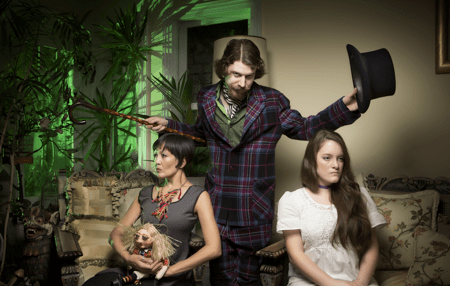
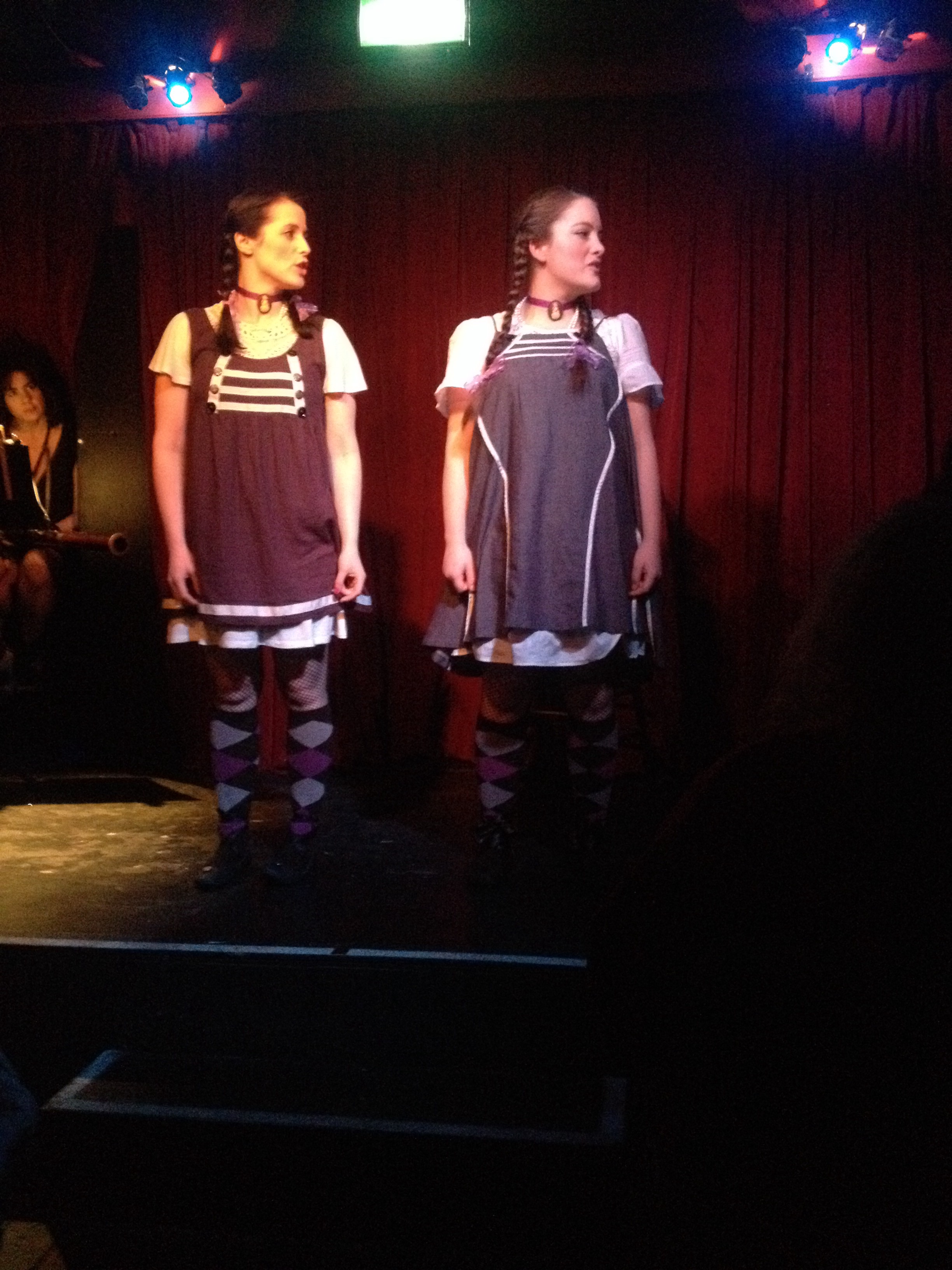
Do You Fear The Dark begins with the poignant short play Perhaps, in which a despairing mother envisages increasingly unnerving and outlandish scenarios for her runaway daughters.

image

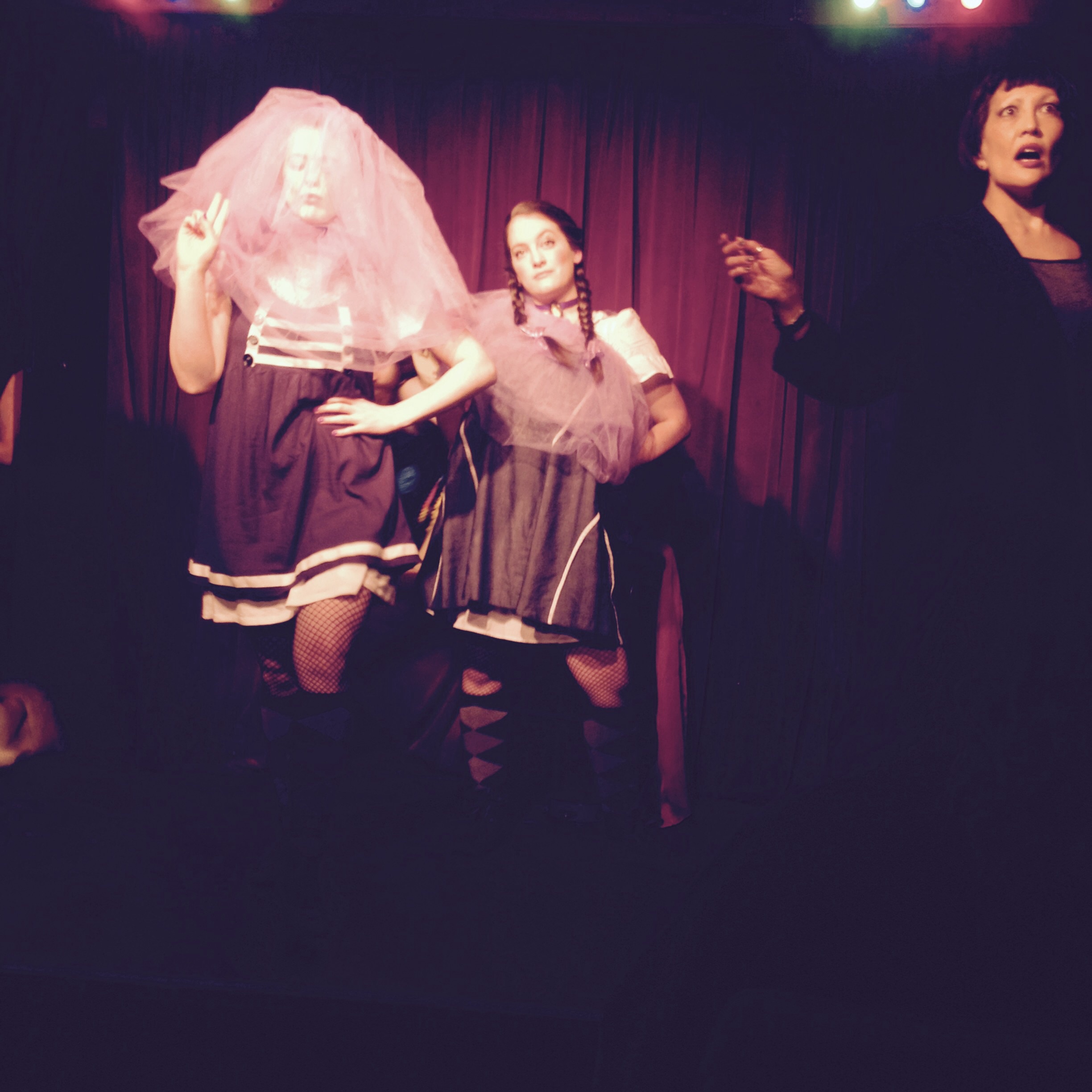
Following a vibrant musical number that links the two plays, we are thrust into the dark heart of fantasy with the chilling and modern ‘fairy tale’ Tom Tat

Award winning Dramatic Pause was initiated by writer Hayley Lawson-Smith and her husband David Lawson-Smith, a director. Together, they have entered various one act play festivals and Short & Sweet competitions. ‘Do You Fear the Dark?’ is their new and exciting venture comprising of two plays, ‘Perhaps’ and ‘Tom Tat’, both of which incorporate music and movement.

‘Perhaps’ was created at Sherbrooke Theatre Company’s Play in a Day event. Written in one night, this fantasy received excellent audience, response after only a day’s rehearsal.

image

‘Tom Tat’, the story of a modern-day Rumpelstiltskin and Pandora was first performed at the annual PlaySix Festival in 2014 as a 20-minute play. Director Natasha Broadstock who had met Hayley earlier that year, when they both acted in the Midsummer Festival. She loved its quirky darkness so much that she requested Hayley explore the script further, with the goal of producing it for a longer season.’Perhaps’ and ‘Tom Tat’, now a far more substantial play of 40 minutes, they complement each other beautifully.

The director and all the performers were part of the ensemble cast of Mockingbird Theatres 2014 production of ‘Quills’. Each brings with them personal talents which highlight the fairy-tale qualities of the production.

The cast includes, Shae O’Reilly who has a singing, dance theatre background, and uses her striking skills beautifully in several scenes; Zak Zavod’s powerful stage presence has created a compelling Tom Tat. His talent with accents has helped created multiple, colourful characters in ‘Perhaps’. Victoria Haslam’s training in dance brings unique physicality (and beautiful costume design) to the production whist Ariel Simone’s experience in live theatre gives her characters remarkable realism. Playing the bassoon and percussion, Natasha has crafted a vivid, live soundscape.

‘Natasha and Hayley share a mystical, slightly dark vision for the production that will spark your imagination.’

REVIEW

Hayley and David Lawson-Smith live up to their claims.

imageBoth plays were rich with dramatic overlaying of primal concepts,with captivating performances. Passion and security are at war with each other in Perhaps, they are co-dependent enemies. Experience and innocence are pulling in opposing directions and are becoming mutually exclusive, much to the delight of the predator. This theme is also explored in Tom Tat.

Universal themes, with historic metaphors, dash across the stage with muted rage. There are always desperate moments in one’s life, when impulsive deals are made and later regretted. The intensity of Tom Tat, bewitched the audience. The narrow theatre of The Butterfly Club, became a lens into a microscopic tragedy, that drew in the inquiring mind and turned it into a world.

Hope is the only thing left, and one has to battle off the demons of doubt. It was a large story, destined for a large stage, with Actors fit for the journey.

Tim Harbours ‘Filigree and Shadow’ is a Turbulent Shrill

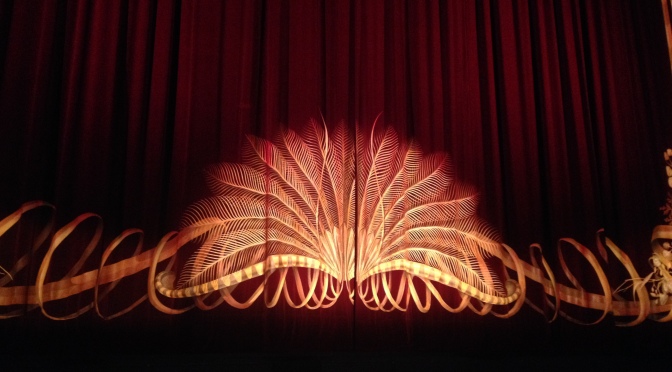
Curtains parted for the opening of 20:21, Melbourne Press attended the dress rehearsal of Filigree and Shadow.

To triumph over fear, when mere mortals run and hide.

A wild festival of sound and performance, ignited by Tim Harbours vision and the troops intuitive expression, creates a dramatic dance, executed with precision whist appearing to be passionate and spontaneous.IMG_4516

The artists burst through the turbulent score with a shrill that showcases their skill. They are in their natural habitat and the forces that challenge them, invigorate them. Harbour’s choreography has lit a fire in the dancers and they are intoxicated in a cult of Art.

Kelvin Ho, the Set Architect, has created a theatre within a theatre.The clean minimal design effortlessly divides the space, allowing shafts of light and a wall for the shadows. It seems as though the audience is spying an event, like a natural phenomena ; birds in a hurricane, steering into its calm eye or dolphins in a storm that are performing tricks on crashing waves.

“I’ve gone to that vicious, angry,frustrated place – what better place to exorcise yourself” Harbour explains.

image

There are no dull moments, it is absorbing and riveting, from beginning to end.

Filigree and Shadow are one of the three performances of 20:21 which also include Symphony In Three Movements (1946) by Choreographer George Balanchine and In The Upper Room (1986) by Twyla Tharp

Bollywood Film & Fashion at Melbourne NGV

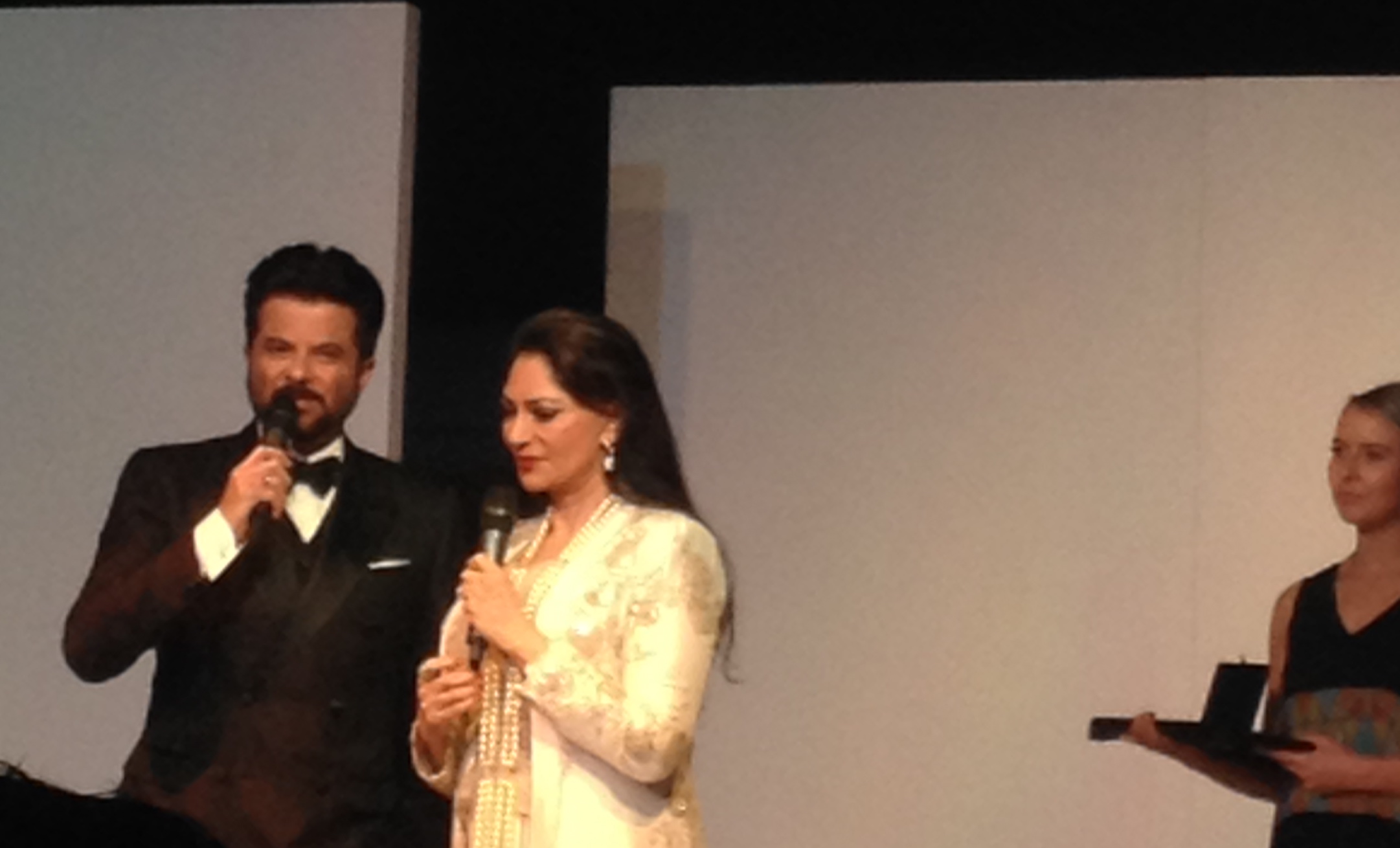
Bollywood Star, Actor and Producer, Anil Kapoor (Slumdog Millionaire), charmed a full audience in the Great Hall of the National Gallery of Victoria, at the Indian Film Festival of Melbourne Awards.

IMG_4343

International designers, famous Indian Actors and Directors with Local Politicians, crowded the stage in a first class presentation of fashion and film, on Indian Independence Day.

It was a night jammed with creative blitz, opening with swirling Bollywood dancing and followed by The Equality Fashion Show, which featured five diverse Fashion Designers and their latest creations. Films and Awards were presented between designers in a tight and full schedule.IMG_4201

Indian Arts are charging into the 21 Century with a voice, ripe and ready to nerve the old guard. Winner of the Western Union Short Film Award went to India Backchod for their production of Rape – It’s your fault.

IMG_4238

Equality and Diversity is the war cry of the Indian Film Festival, featuring stories that address issues of disability, homosexuality, racism and sexism, with a contemporary edge.

Winners on the IFFM awards for 2015 for best film was given to “Piku”, Best Director Award went to Shoojit Sircar and Best Actor award was given to Irrfan Khan for his performance in “Piku” The film is a quirky comedy about the relationship between an ageing father and his young daughter, living in a cosmopolitan city, dealing with each other’s conflicting ideologies while being fully aware that they are each other’s only emotional support

Best Actress went to Bhumi Pednekar in Dum Lagake Haisha and Best Indie Film went to Kaaka Muttai for Crows Eggs. IFFM Excellence in Cinema was awarded to Anil Kapoor and the Telstra People’s Choice Award was for PK.

The film awards show case the depth of talent in Indian Cinema when last years 2014 Film Awards went  Bhaag Milkha Bhaag, a true story based on the life of an Indian athlete Milkha Singh, who ran for India in the Rome,1960 Olympics.

Richard Nylon
Richard Nylon

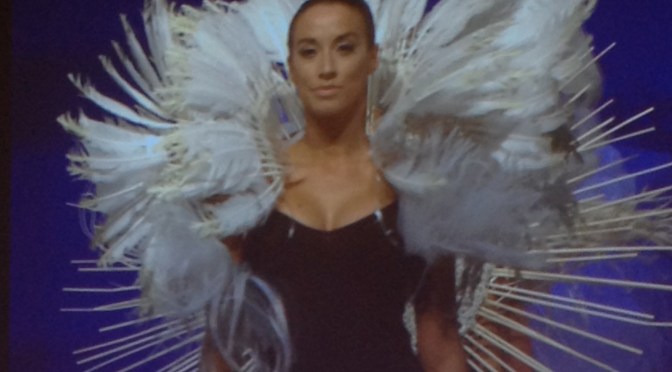
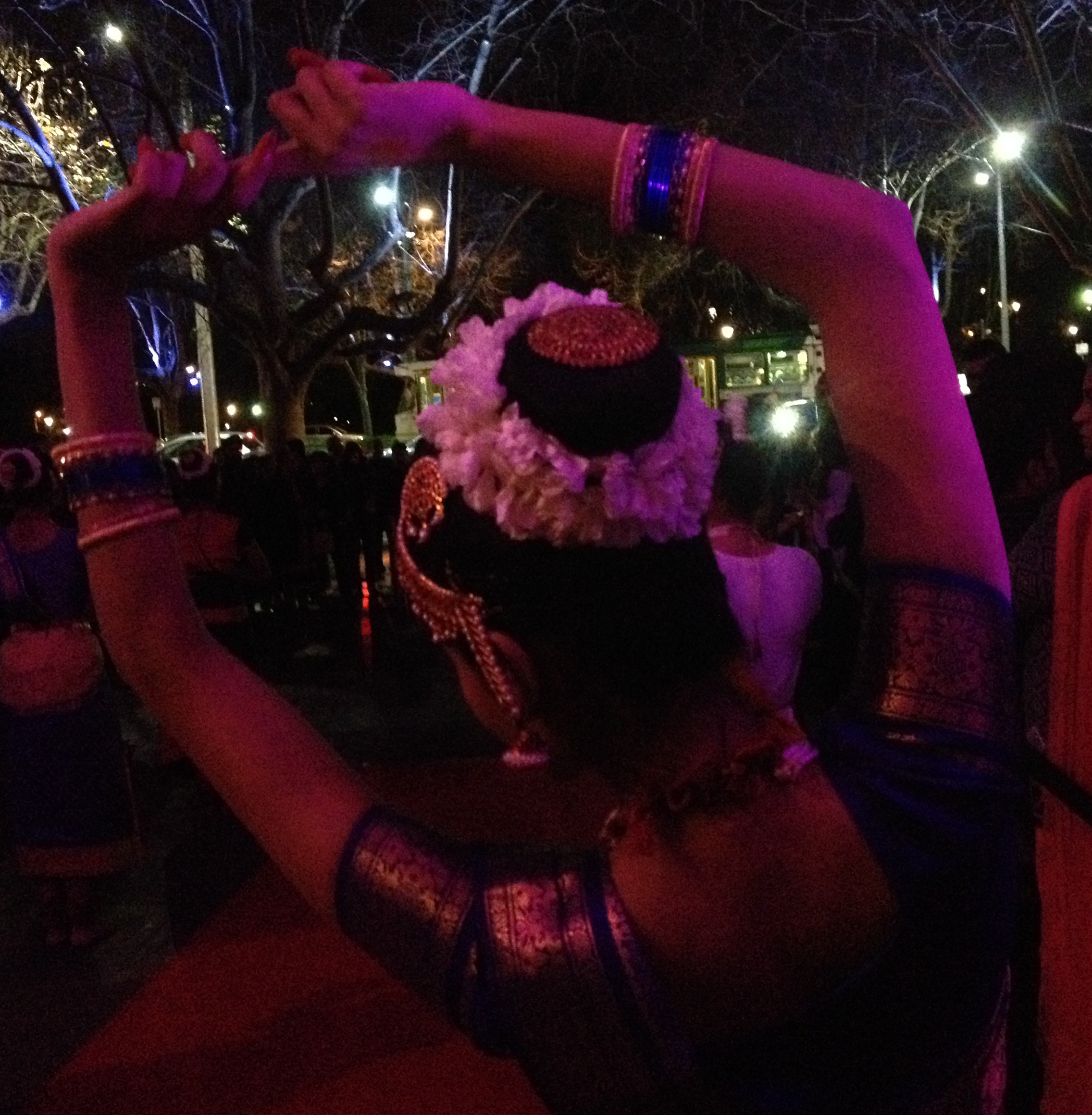
The Fashion show featured the bizarre creations of Richard Nylon’s singular vision of Holy ruptures. Nylon specialises in couture millinery and bridal headpieces, they are literally sculptures in fabric. Winged beauties weighed with attitude, carried off the fantastic objects with ease.

IMG_4223

North Melbourne football player Majek Daw, wowed the ladies as he emerged out of the violet shadows with his sultry looks and bare chest wearing a Roopa Pemmaraju designed wrap, flung around his neck.

Pemmaraju showcased Aboriginal Art in her fabrics and the female models were crowned with indeginous flowers. The Australian context in the music and clothes ignited a sense of pride in a culture that continuously overlooks the remarkable sophistication of its own. The models breezed down the runway in flowing fresh designs, perfect for a hot and languishing summer.

Gaurav Gupta
Gaurav Gupta

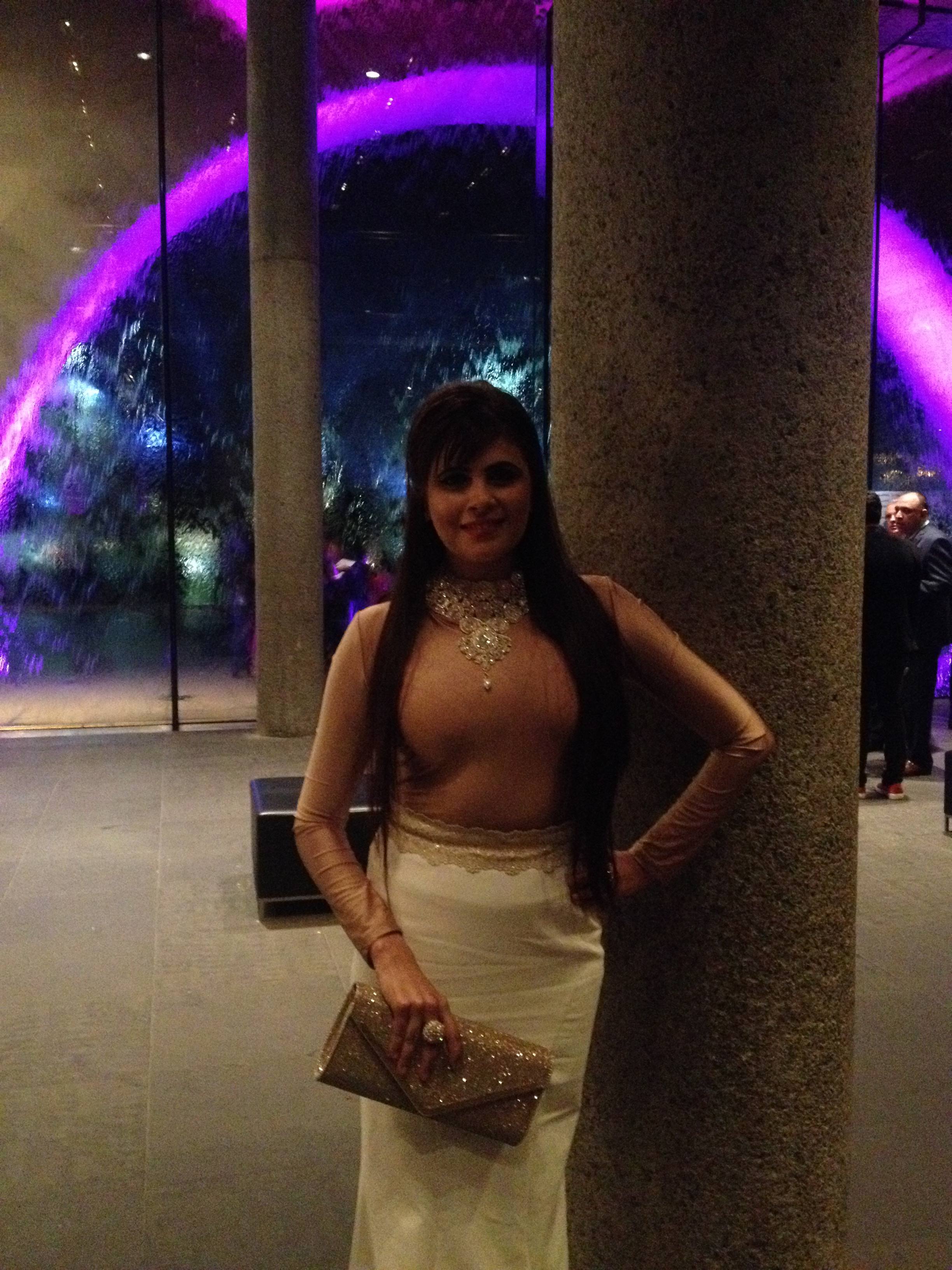
Then came Gaurav Gupta, Indias renowed couturier. He tantalised the male audience with sheer and daring gowns that revealed more, by covering less. Stocking creations with beaded slashes playfully carved a thin line between that which is private and what can be seen in public. His work is dramatically elegant.

Anamika Khanna
Anamika Khanna

Designer for the Bollywood A-listers, Anamika Khanna brings a slice of traditional India to the catwalk. Hers is an edgy interpetation of Eastern fashion meets the West, whist remaining faithful to her regal audience.

MATERIALBYPRODUCT from NGV Collection

Mildura born, fashion designer Susan Dimasi knows local taste, the female audience fully engaged with her very wearable collection of light chic frocks. Dimasi is a designer with an environmental conscience. Partnered with Chantal Kirby in the fashion house MATERIALBYPRODUCT their work is regarded as Art and are held in the NGV collections.

IMG_4138The sari sward crowd was an Indian cocktail of movie star fans, beauty queens, dignitaries and fashion lovers. Melbourne Press spoke to Jaz Shavvir who helped organise Miss World in New Zealand.IMG_4155

“Its good to see the Indian community doing so well” Shavvir remarked.

The event was also a fund raiser for The Royal Childrens Hospital garments were sold to raise money at the end of a long and enjoyable evening.

The journey to recovery

The Heroes Journey

Artwork by Tamar Delov. Struggle , Depth, Empowerment
Artwork by Tamar Delov.
Struggle , Depth, Empowerment

Review 

Directors Natalie Rozen and Paz Loyola-Blanco are strong and inspiring women.

Rozen has worked through undermining conditions and become a captivating person that charges your soul as you speak to her.

It’s a paradox that them that did not destroy you, made you, the powerful one.

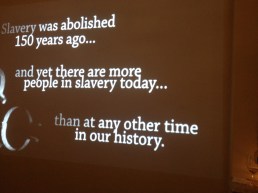
As we look at the alarming rise of slavery, worse than it ever was, we hope that those that survive will become internal warriors, returning home, an asset to themselves and those around them. Not destroyed, although deeply harmed.

IMG_3978

Speakeasy in South Yarra rolled out the red carpet for a glamour night of Art and Theatre by those that have suffered with dignity and pride.

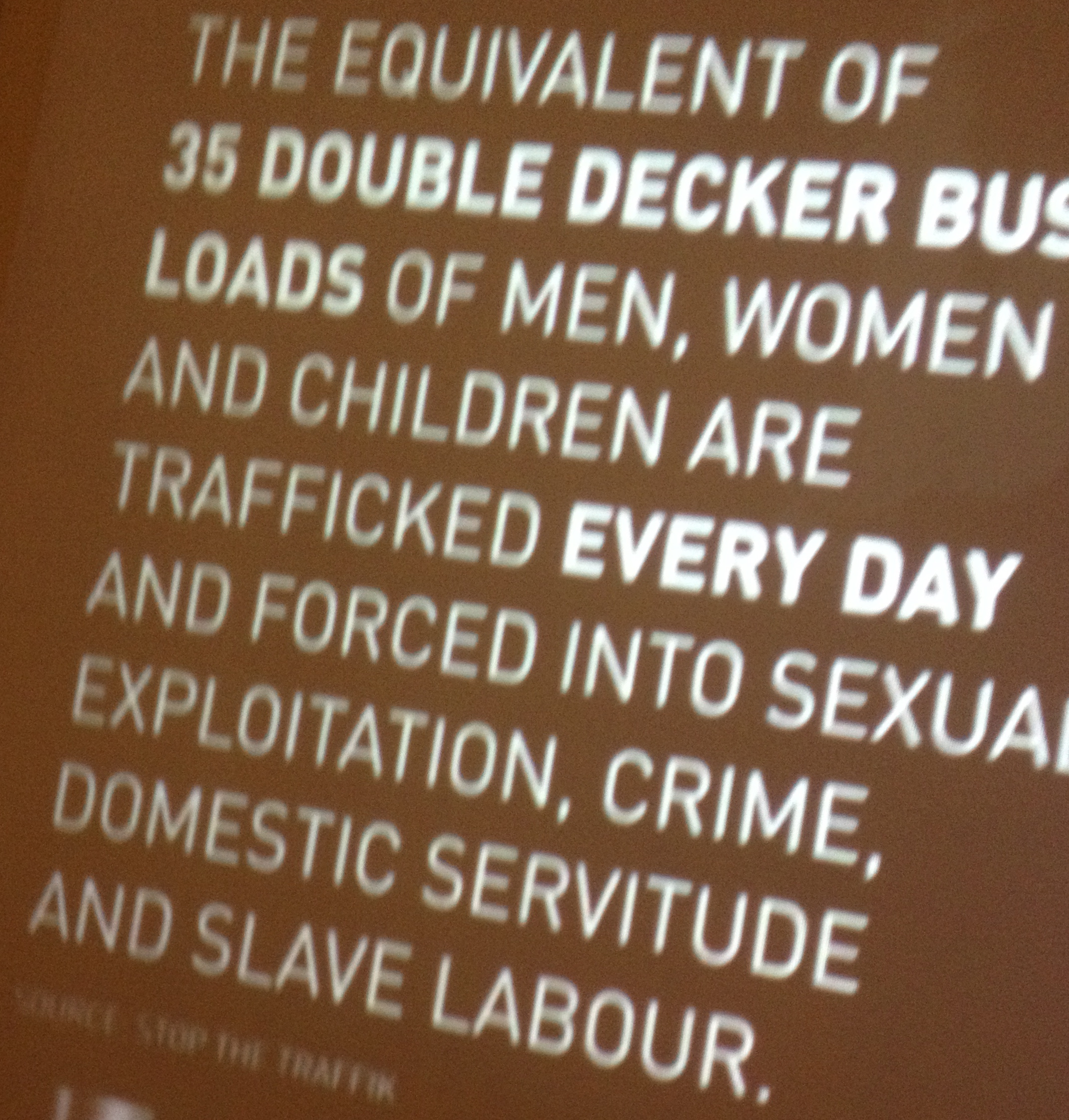
The lovely nibbles and organic wine did not distract one from the important issues. Information about Slavery was projected onto the wall.

The Performers and Artworks were examples of people who have suffered from various issues and made friends with their pain through Art therapy. The money raised goes to helping,educating and empowering very vulnerable people in Nepal that are victims of human trafficking.

You are not a loser, you are not a victim, you are a human being that has met fear and anxiety and recruited it into ones life as a friend, as something that made you strong.

Melbourne Press spoke to the performers Cathrine Pourreau and Svetlana Bykovec, they have been through their own personal journeys and see the cause as universal.

“Something comes from within, that just rises from it” Pourreau claims.

Paz and Natalie with cast

“It’s about where you come from and where you are now and appreciating what you have turned into, if it wasn’t for those hardships .. the world has opened .” Bykovek explains

“When you dare to go there, you are tapping into what it means to be human.”Pourreau adds.

They embrace the dark days, those lonely times and appreciate where they are today.

Its was a performance that the eye and heart enjoyed. It was genuine.

An interview with Natalie Rozen.

Art2Healing Project

Natalie Rozen believes in the healing power of Art Therapy and directs survivors as they empower their spirit and transform the ugly into a quest within ones self.

Atira Tan the founder of Art2Healing and Carla Van Laar the Senior Advisor, have done some incredible work. To me they are Masters of Art Therapy.

In my own experience Art Therapy has been a powerful modality to not only heal psychological wounds, but help me deal with physical ailments as well. The funds we make at the exhibition are going directly to victims (of human trafficking) in Nepal.

Our artists have been taken through an in-depth processes within the last couple of months, prior to the event. They aren’t characters or actors, they are people sharing their diverse real life experiences with the audience. Asking our Artists to step back into a difficult time of their lives is certainly going to be an emotional experience.

The Hero’s Journey is a concept used by many therapists. It is a pattern of narrative identified by the American scholar Joseph Campbell , it appears in drama, storytelling, myth, religious ritual, and psychological development. It describes the typical adventure of the archetype, known as The Hero, who goes out and achieves great deeds on behalf of the tribe.

Our artists are sharing their journey through Art and Moving Sculpture (like a performance). There are three parts of their journey ; the Call, the Initiation and the Return. “The inner strength of the individual serves the greater good of the community on their return.

Paintings by N.Rozen

By raising awareness what do you hope to achieve? MP

It is by going down into the abyss that we recover the treasures of life. Where you stumble, there lies your treasure.” Joseph Campbell 

“If we really explore the underlying causes of our issues, we get a greater understanding of ourselves and don’t need to suffer anymore. We become the hero of our own story.

This is what the Art2Healing Project is about. They are dedicated to assisting and empowering individuals at risk. They provide psychological support , education and growth through  Art Therapy.

After suffering chronic anxiety and some agoraphobia for 20 years I found that the field of Art Therapy is a powerful means of personal transformation for emotional and spiritual healing.

Raising funds is one thing but where it goes is another. Giving people the opportunity to build personal power and prevent future traumas is a blessing.”

IMG_3908

What support (any type) has the production received? MP
“We have had endless support throughout this project. From University lecturers to co – workers who have come on board. We have over 20 sponsors and many volunteers. We couldn’t be more grateful for the help we’ve received in making this production expand to what it’s is now.

It just shows how many heart centred people there are. It has been a Hero’s Journey in itself and next week we will be celebrating The Return, at the exhibition.”

What brought you together? MP
Paz approached me at the start of the year with her vision and asked whether we could Co-Direct for The Hero’s Journey Collective and Exhibition. We both studied counselling together and are qualified psychotherapists, which is originally why I became involved.

We  realised that we had a love for the creative arts and wanted to organise a production by correlating this with psychotherapy. We then interviewed artists that had some connection with the therapeutic field.

We were very clear on safety when bringing in people; we chose those that were able to hold themselves together through the deep internal work. These artists have been incredible and I  look forward to working with each of them in the future, whatever form it may take.

An Important Woman and How a Melbourne Man rescued a slave.

Stop Human trafficking

I will Rise

https://www.youtube.com/watch?v=BKdAuaW-s7Y

Human slavery is an issue that effects the whole world and targets children for a life of living Hell. Learn how to team up with police, schools, workplaces and hospitals to discover and exit the victims.

Educate your family and community and proclaim “I will rise”.

Kathryn Bolkovac’s witness of Human Trafficking within the UN

“Seven young women were huddled together on bare mattresses on the floor. Condoms strung over the garbage can, plastic bags of their street clothes and working clothes, just terrified. Beaten and terrified.

Blow by blow it hurts, it hurts on so many levels and then it hurts again. Every thing is affected when human relationships are punctured by trust.

Young European girls are lured by attractive boys or modelling prospects and then beaten,raped and resold as slaves. They are denied every level of freedom.
IMG_3936

The terrible suffering of parents, brothers and sisters that mourn for them would be shocked to realise the protectors are the facilitator. Young women thrown in dirty cells untill the next United Nations officer pays the brothel, for her service.

Kathryn Bolkovac was a UN officer in Bosnia in the late 1990s. She was a police investigator for ten years and spent two years in Bosnia as a Peace Keeper with the United Nations.

She reported on the white slave trade and was dismissed in a cover-up by the UN, that not only utilised stolen women, they perpetuated the suffering. She discovered that the UN officers were frequenting a bar that used hostaged women as sexual objects and tortured them on stage.

Bolkavac went through the regulatory channels to report and help the young women. She was sacked.

A movie starring Rachel Weisz, ‘The Whistleblower‘ dramatised the main events that  Kathryn Bolkovac witnessed. A book with the same title, names the perpetrators.

This is the account of what happened.in her own words.IMG_3944
. “I want to educate the naive ……. these injustices can only be described as a disease , it destroys the very frame-work that was created to set the example of law and justice.

I witnessed violent acts against women and children in the aftermath of Genocide that facilitated human trafficking

I saw disturbing and inexcusable acts (of UN employees) these included sexual harassment of female employees. Employers were becoming frequent users of  (rape) pornography, frequenting prostitutes and admitting to purchase foreign women to keep at home with them as their ‘girlfriends’.”

I witnessed, experienced and lived the retaliation of those that tried to investigate a report. Reports of UN officers facilitating human trafficking across international borders.I heard deregulatory comments regarding the innocent, being refered to as whores of war.

I was demoted and dismissed.”

Slavery, tragically, is one of the strongest economic ‘industries’ in the modern world. Bolkavac claims that helping the healing process of the victims is a key to the important legal testimony of the crime.

IN AUSTRALIA

IMG_3906

Human Trafficking is a serious human rights violation globally and a crime here in Australia. People from 136 different countries were trafficked into 118 different countries between 2007 and 2010. Australia is one of the destinations where people are being trafficked.

Australian Red Cross has managed the government-funded Support for Trafficked People (STPP) program since 2009. The aim is to meet the health and welfare needs of people who have been trafficked and to help them re-establish their lives.

The program is an integral part of support and advocate for people who have been made vulnerable through the process of migration. Since beginning this work, Red Cross has provided support to more than 130 women and men who have been trafficked to Australia. Our clients come from diverse cultural, ethnic and religious backgrounds, reflecting the global nature of human trafficking.

IMG_3947

Providing this support cannot be done in isolation.The Red Cross works collaboratively with government agencies, NGOs, and service providers to meet the needs of people who have been trafficked. This ensures that they provide comprehensive support as they recover from their experience.

A person in a trafficking situation may not always be kept under lock and key. They may appear to have some freedom, but they may be subject to more subtle forms of control. Depending on the specific type of trafficking, members of the community – co-workers, suppliers, health care workers, social workers, shop owners, in fact anyone in the community – could have contact with a trafficked person.

Unless members of the community know the signs, they may not be able to recognise and report human trafficking. There are a number of signs which could indicate a person has been trafficked. It is important to remember that, on their own, these signs do not automatically mean someone is being exploited or trafficked. They simply tell us that ‘something’ may be happening and that we need to seek advice to find out more information.

Red Flags of Slavery
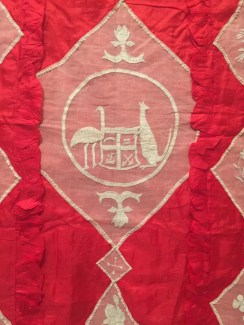
img_4179

• Is deceived about working conditions in Australia.

• Has no control over their place of work or hours of work, or is being confined or isolated in the workplace and only leaves at odd times.

• Is not being paid or appears to be repaying a large debt to their employer or a third party (such as a recruitment service).

• Is subject to, or is threatened with violence in connection with their employment.

• Has personal documents, such as passports, held by a third person and they are not allowed to access these documents when they wish to do so.

• Is subject to different or less favourable working conditions than other employees who are permanent residents or citizens of Australia.

HOW TO SAVE- A Melbourne man on holiday in Hong Kong.

He was wandering through an area in Hong Kong when a woman approached him,

“Help me!” She pleaded quietly, as the Brothel Madam watched on, in the distance.

“Go away” he yelled, as he whispered “I’ll be back”.

He came back and ‘rented her’ to procure her details. She was a educated woman offered a career advancement in Hong Kong, however when she arrived, her passport was taken from her and she was forced into sexual slavery.

He contacted the police and escalated the matter as far as it could go. A sting operation was organised to rescue her and the other victims.

She is now home safe in Thailand and corresponds her gratitude to her Australian Hero.

(for matters of security names are with-held)

IMG_3950

Australian High Court and slavery, the case of Wei Tang:

Wei Tang The High Court has provided judicial guidance on the meaning of slavery in the Criminal Code in its ruling R v Tang (2008) 237 CLR 1 (R v Tang). The accused in this case was Ms Tang, the owner of a licensed brothel in Melbourne. In 2003, she had been arrested and charged for slavery offences allegedly committed against five women, all of whom were Thai nationals.

Ms Tang and her associates had ‘purchased’ each of these women for a fee of $20,000, with Ms Tang taking a 70 percent share in the purchase. Each of the women were considered to be contract workers, who had agreed to repay a debt of around $45,000, which was owed to the syndicate involving Ms Tang. For each client that the women serviced, $50 of the $110 service price would be applied to their debt and the remainder would go to the syndicate.

In other words, the debt could be repaid after the woman had serviced around 900 customers, during which time she effectively earned very little money to keep for herself.

Slavery in a crime, victims owe nobody. Slave owners are criminals and customers are aiders and abettors.

http://www.antislavery.org.au

http://www.redcross.org.au    www.aic.gov.au  Art2Healing Project

Heyman Center for the Humanities

Bob Harrow talks about Immigrant Union

Bob Harrow interview.

“Brent was in town with Matt Hollywood from The Brian Jonestown Massacre, they were here for the release of a movie called DiG. I guess whoever was showing them around, took them to The Cherry Bar. Earlier that day I was flicking through a Rolling Stone and saw a picture of The Dandys (Waholes) and in the pic Brent was wearing a Dylan t-shirt. That night I went to Cherry, when I arrived my mates were like ‘check it, that’s the drummer from the Dandies.’ So I went over and asked him if he was into Dylan.

Brent and I started Immigration Union however weeks after that Gamma (Peter) joined the band on keys and third harmony. The three of us have been in from the start. We were lucky we found Gamma, he is so freakin good and thoughtful about what he plays, he never over plays, his texture is invaluable.

The first solid line up of Union came when we found Dave Mudie, Courtney Barnett and Bones Sloan. I’d been friends with Dave for years and always thought it would be cool to play with him, he is a sick and tight a hell of a drummer. Same deal with Bones, he was actually the first person I called when I got back from the States.

Courtney joined a little after these guys on slide guitar. A few of my mates worked with her at a bar called Blue Tile Lounge, that’s how we met. We became friends and then Brent was like ‘can Court play slide!?’ She never really had at the time I don’t think but she learnt really quickly. She also sang with us too. After Court blew up, we needed to find a new bass player and drummer because Dave and Bones were off playing with her.

I asked Ben Street who I’d known since he was a kid to play bass. He can pretty much play every instrument and he is a trippy dude, exactly the sort of guy we wanted in Union.

I had done a few solo gigs with Paddy McGrath Lester on drums and became mates with him quickly, I really loved his playing so he was an obvious choice to ask to join the band. Ben and Paddy’s first shows with Union were opening up for Black Rebel.

We are really lucky having them in the band, they have helped take our live shows to a whole new level.”

Screen shot 2015-07-24 at 7.13.10 AMWho leads most of the musical direction when you jam and how is the texture added? MP

“Well for a long time it use to be that either Brent or I would have a new song / idea that we would bring to rehearsal and then we would all jam on the tune together until we had a the texture and groove that felt right. This still is the case, however more and more now at rehearsal Ben or Paddy for example will take of playing something out of thin air and then we all fall in and figure out our parts. I record all our rehearsals on my phone, it’s so cool going home after rehearsal and listening back to these ‘jams’ and realising that ‘wholly shit, yes, this is a freakin song.’

We want to play bigger shows and festivals, release more albums and just keep moving. We are currently at the beginning of recording album number 3 and this time we have set up our own studio and we are tracking it ourselves. We are all pretty excited at the prospect of making the album ourselves.”

Which song/songs resonate most deeply with the band? MP

“If you mean our songs, I’m really digging the live outro of ‘I Can’t Return‘ the sounds coming out of Brent’s amp are sick. The groove feels like Meddle by Pink Floyd. If you mean like what songs do we dig, I’m really digging on the whole of Blonde on Blonde at the moment.”

What has been the greatest trial? MP

“Having to find a new bass player and drummer after Bones and Dave. We lucked out big time with Ben and Paddy.”

Who are your major influences? MP

“Jesus, umm, Sun God Replica are sick. Dylan and Neil Young”.

What’s happening at ACMI? MP

“It’s for the Bowie exhibition. Friday nights at ACMI they have live bands and DJs playing for free but you’ll still have to book if you want to see the actual exhibition. It’s going be fun. Brent the lucky bastard actually did a whole tour with the physical David Bowie, opening up for him with the Dandies.”

 What is your tour plan? MP

“Up and down the east coast, over to Adelaide and down to Hobart. I’ve actually never been to Tasmania. We might be announcing some extra dates soon too. I can’t wait for this (August) tour.”

Photographs by Tony Proudfoot

New Album, 'Anyway'
New Album, ‘Anyway’

Chatting with the boys

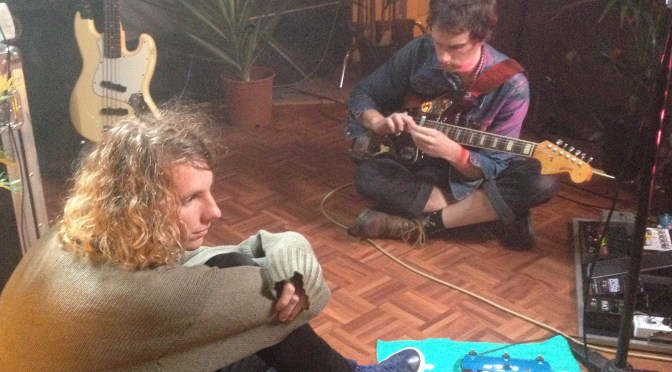
After taking the prerequisite drink from the bar, we sit down to chat to two of the boys from Methyl Ethel, Chris Wright (drums) and Tom Stuart (bass). We are at the Newmarket Studios where they will be playing and filming the latest album ‘Oh Inhuman Spectacle’, that was released in January.

Tom & Jake
Tom & Jake

They are a Perth based band and have a hectic schedule flying constantly between the East and West states for gigs and promotions. Wright and Stuart are self-taught musicians and shy away from any pretensions, they claim that the lead singer Jake Webb is the major creative force. Webb created the compositions and image of the band, allowing the drummer and base player to furnish his vision with their interpretation. Webb has experimented with various line-ups but the strong chemistry of the current trio blend, to create a muted passion that seeps into the music.

We crowd into the studio and enter into the intimate world of Jake. The modesty of Wright and Stuart regarding they’re musical sophistication has been understated. The drums pulse rhythmically and no one can resist the compulsion to move with the music. As one sensual tune blends seamlessly into the next our attention drifts onto the discrete and unassuming persona of Webb. His songs drift through our layers and one wonders how deep the artist will take us. There is a penetrating authenticity to this work.

Insomnia, A play by Natasha Moszenin

The Insomnia Project

The Insomnia Project by composer, writer and director, Natasha Moszenin, is a dramatic piece on the troublesome disorder of insomnia brought to life on the stage.

1 in 3 Australians suffer mild to extreme sleep deprivation and in our 24/7 lives we are increasingly becoming a ‘sleep-sick’ society. Insomnia and up to 70 other diagnosable sleep disorders underlie up to 70% of visits to GPs in Australia.

Natasha has been living with insomnia since she was a teenager. Having tried psychotherapy, herbs, restrictive diets, and meditation, she decided to create a music-theatre work about sleeplessness and the related conditions that surround it; anxiety and depression.

“ When a night can feel like a lifetime”

Review

The play can be best understood by night stalkers that wait for day with both anxiety and relief. Anxiety because sleep deprivation undermines ones ability to function and relief because the long lonely hours are over. 

“However vast the darkness we must supply our own light” Stanley Kubrick

Four actors shared the stage but remained in isolation. In a Kubrick style, the crowd were dragged through the condition and if they didn’t understand what insomniacs go through, they were not paying attention.

The Director and the Writer Natasha Moszenin provided the score, she played the piano as she watched the actors lumber, sleepless through the night. For insomniacs in the full audience it was a bonding into a community, when they thought they were alone.

Brutal Architecture

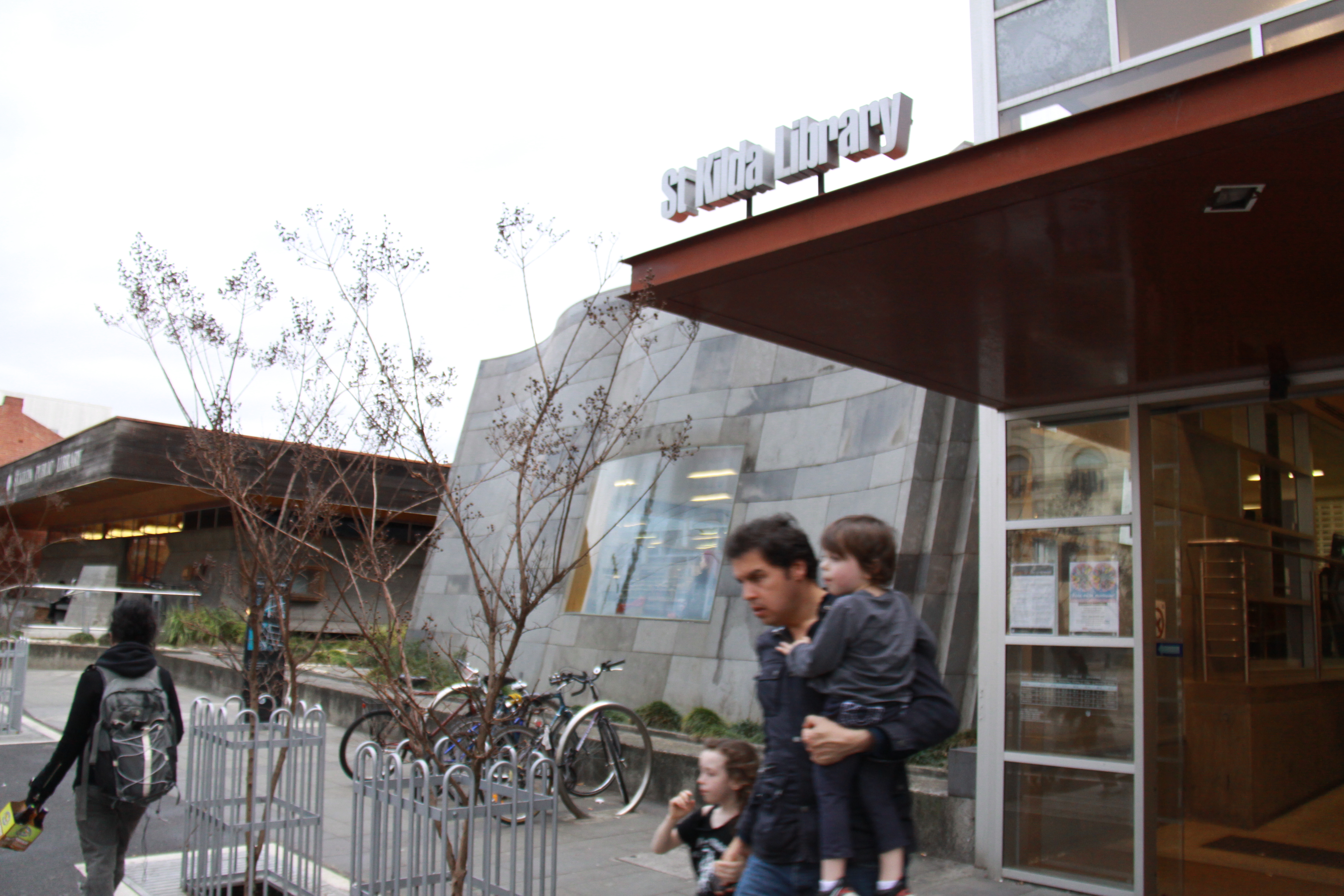
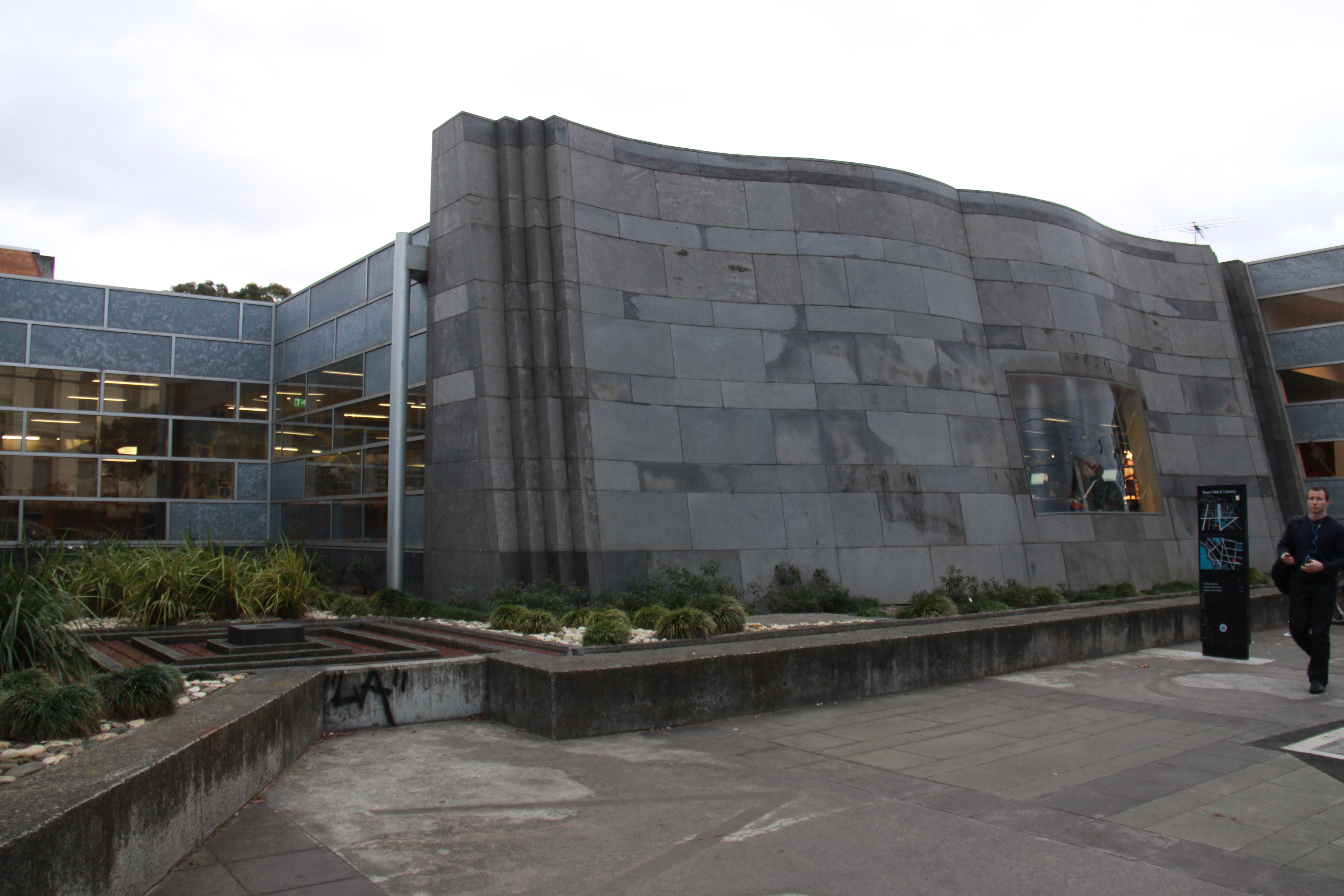
The award-winning Architect, Enrico Taglietti, created his Brutalist building for the St Kilda Library, with the aim of it to be

“a place where people feel more alive’.

The St Kilda Library’s bold and embracing architecture is a place of respite within the busy clutter of Carlisle Street. The building invites its visitors to sit on the ledges, gather in its courtyards and participate in the experience of the creative word.

Italian born, Mr Taglietti is one of the country’s national treasures and winner of Australia’s most prestigious Architectural award, the RAIA Gold Medal in 2007. The St Kilda library is one of his earlier works and was officially opened May 14 1973. The St Kilda library promotion committee was established in 1951 to rally support for its erection. Sheer determination paved the way through episodes that could have derailed the project on several occasions.

In 1954, Twelve Councillors refused to give the city a free library.

‘I rely on you ladies to get the councillors wives on our side’ quoted The Angus in its December issue 1954.

As Mr Taglettis prominence as an important Australian Architect grows, examples of his work become highly valued. Builders, M. Notkin Construction of South Caulfield, were appointed to construct the building which cost $417,000 at the time, the current price of an apartment in the area. The Brutalist design is a contemporary period piece of 1960-70’s architecture and within the interior, a mural by Mirka Mora adds to the artistic collateral of the project.

“Visitors may then be able to relax around coffee tables, admiring or criticizing displays of paintings…Mr Taglietti wrote in his original proposal.

The architect planned for the building to be used as a refuge.The public are sheltered within its thick walls and can linger in its quiet Japanese courtyards. The outside world keeps its noisy distance. Warm timber ceilings contrast the cool grey concrete that is sculptured into a solid earthy structure. The lofty outdoor roof provide shade and shelter as people gather beneath it on the massive trapezoidal walls ledges to chat or access the Wi Fi.

The Australian Library Journal of 1973 claimed that the building was ‘handsome and visually exciting’

IMG_2036

The building has since been renovated to cater for the expanding community, without consultingTagletti, The changes to the building include a side entrance and a new front section. The original counter was situated under an elevated roof with a skylight, in what is now the middle of the building. The new front section is expansive and moulded into the shape of a book. The changes are admired and appreciated by some but not all.

Photo by Ian Paradine

Mr Taglietti was not impressed, he was baffled as to why he was not consulted or at least notified of alterations to the original building. The Architect claimed that the entry was a key aspect. Mr Taglietti was disappointed and hoped plans were being made to return it to its original state.

“They totally disregarded the original’ Mr Tagletti claimed in an exclusive interview.

The entrance courtyard was to be “the nucleus” of the design. This area has since been built over despite the council overlay that regards the building as significant and claimed that the front , including the original air conditioner tower was ‘ integral to the design’.

Mr Tagletti said that “it was a shame’

“There should be protection of my moral right in that building, it should have been recognised by another”. He claimed in a tone of sheer disappointment.

Mr. Tagletti came to Australia to break away from the confines of tradition in Europe and explore vivid modern constructions. He has designed the Dickson Library, the Italian Club, the Apostolic Nunciature, Giralang Primary School and the War Memorial Annexe, in Canberra where he resides.

Humanist Art (The Peace Project)

Nathalia

“To celebrate the works that neighbours have done.”

The evolution of Art is a process that requires, curiosity, appreciation, skill and patronage. Not every person that attempts art will be apt in its curly concepts, many will find that the creative pursuit is an end, in itself. The banal and the grand begin at the same place, which is the opportunity to access it. Many regional art centres throughout Victoria are seeking a cultural voice, the most well known are Castlemaine, the Yarra Valley, Ballarat, Daylesford and Bendigo.

Local artists in Nathalia (Nth Victoria) were working in isolation before the local art centre forged an artistic hub. William Kelly a local artist had suffered violent neighbourhoods in his past and sought to unite the township together through art. It’s a functional non-for profit Art Centre and it has become the focal point of creative energy in the region. They have tried to engage every person in the community and encouraged them to participate in the workshops.

‘I hope you realise what you have achieved

Because it’s fairly plain to me,

Your introducing culture! God forbid, have you no shame!

What was wrong with up the pub, getting full as a boot?

The beer, the blood, the spit on the walls….

…………….the gardens are full of sculpture!’ (Poet, Tammy Muir)

The G.R.A.I.N store gallery and workshop, opens its doors to all in the community who are willing to explore their creativity. They do not discriminate and in this melting pot of Art and Craft, originality can rise to the surface. They invite school children and the elderly to be involved. The early involvement of local children in cultural projects ensures future growth of the Arts in the region. Locals are offered a space to explore their ability in a non-threatening, appreciative environment.

The culture has changed from being sceptical of art and its artists, to becoming active in its progress. The Regional Arts Council claims it has become a model project. Patron of the Arts, Bernie Ryan (4th generation dairy farmer) supports local artists and provides a gallery space. He commissions work from his local art pool and has enhanced the creative strength of the area. He believes that most patrons in Australia over fund sport and neglect the Arts.

Original Artists that have been nourished by the community include Linden Lancaster and Bella Angyal. They have forged a path that leads back to future artists in the area.

Linden Lancaster was applying Nathalia landscape into her quilts, creating visual pieces that few saw until she showed her work in the local G.R.A.I.N.store windows. She is now an international success. She applies 3 layers to produce multi-dimensional and textural work, through material collage. Her landscapes are reminiscent of Hockney’s later work but her palette is fabric and her brush is a needleIMG_3472

Bella Angyal, a self-taught artist, depicted stark realism through sculpture. His statues are erected in the town centre. His war sculpture ‘Mateship’ depicts the trauma of violence; his ‘heroes’ are local lads struggling through travesty. It’s the excessive detail that gives the work its haunting reality.

IMG_3480

All forms of Art, Craft, Music and Poetry, are supported by the Centre. They invite international talent into the town to give talks and workshops that provide a means of access through exposure. The art seed has germinated in Nathalia, it has all the support networks necessary to allow it to develop.

“You do what you think will make the world a better place” Artist Veronica Kelly claims.

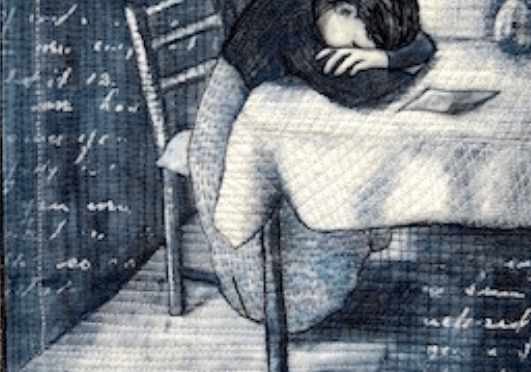
Top image: from AQC 2015 Quilt Show/The Letter by Linden Lancaster

Sunday Reeds contribution to Melbourne Art

When Sunday Baillieu walked out of  Toorak and into the arms of emerging Australian Artists, she forsook society to dwell with bohemia. It’s not easy, to move from one class to another within a single generation. The artists may have regarded her as bourgeois but her old neighbours had labeled her a communist. She was an idealist, a task master, a romantic and art critic. Heide was her home and she welcomed artists to reside there. IMG_3335

Sunday and John Reed championed major artists such as Sidney Nolan, Charles Blackman, Mirka Mora, Joy Hester, John Perceval, Albert Tucker, Moya Dyring, Sam Atyeo and Mike Brown. They founded the Angry Penguins Literary magazine in an effort to evoke a response from the disinterested city.

The Reeds supported and bought emerging Melbourne and Australian art. They were overly possessive of the artists they supported but they took their task seriously. They flew the flag for Australian Art and they paid for it with Baillieu cash.

Today the twisted path Melbourne artists walk is barbed with opportunists and a sleepy audience.

Melbourne’s current Art culture is in crisis. Galleries charge artists to exhibit and the costs are high, few artists can afford to pay the weekly $1000 costs and then the 20-40% commission. For those that can afford to pay ,there is no guarantee of an effective marketing strategy. Most exhibitions draw other artists and few attract genuine patrons. At the end of a two-week exhibition the gallery stands to make profits  even if no purchases were made. The artist is broke.

Australian artists rely on the generous support of  philanthropist, collectors and galleys that do not charge their talent to exhibit.

Albert Tucker talks about his time with Sunday Reed at Hiede.

Ballet Dreaming

Alexei Ratmansky’s

Cinderella

When clothes do matter! Cinderella is the ‘It girl’ of the season. Even without a mother, there is the godmother to provide a night out on the town. The wicked sisters may lack the talent, taste and kindness of their rival sister but their comic timing is perfect.

Halaina Hills & Ingrid Gow. Photography by Jeff Busby

The costumes are a remarkable stroke of insight. They communicate a large hunk of the tale. Ballet has no voice; the palette is made up of dance, drama, costume, score and set. The show is catchy with a surrealistic bite, re-told with a modern edge.

No one has moves like the Prince (Ty King Wall). The magnetic duo are drawn together when Cinderella (Lana Jones) ‘steals the show’ and sets the tone at the ball. The twisted sisters are deliciously offbeat.

There is nothing like a dance story told by a dance company, frock them up and send them to a Ball. This is why you should go! The dancing and Alexei Ratmansky’s choreography  is a visual delight.

Cinderella is an interesting fairytale to re-visit; it carries life lessons in a purse of simple context. Jealousy is unable to suppress the hopeful soul. When humans fail, the stars align to aid her journey and her destiny.

The Dream

IMG_3333

As the full moon hangs heavy over Melbourne skies, another moon and another season, the ‘Midsummer Night’, takes flight in the deep chambers of the Art Centre, on the opening night of The Dream.

Enter into the enchanted forest where mischief casts spells on the unaware and leads them into late night folly, only to awake with a hangover of regret. Does it sound familiar? Of course it does. One can always rely on Shakespeare to understand the human heart.

“How can these things come to pass? O, how mine eyes do loathe his visage now!”

One does not need to read the play, to love The Dream. The magical blend of music and ballet lead the audience through the drama. The audience chuckled spontaneously through the performance, it’s bewitching and it’s funny. They cheered and applauded.

The visual beauty of the set and performance is unworldly; it’s easy for us to be tripped into its spell. The music and the dance are fused into one. The poetry of our slumber awakens to newer world, an alternative, and a deviation from the probable path into a fantastic alternative that leads us safely back, to our destination.

Ballet of this calibre is a sublime experience.

Puck, (Chengwu Guo) the mischievous fairy, is a tad liberal with his love potions, which leads to squabbles and confrontations. His dance is super-imposed with thrill and adventure whereas the ‘labourers’ trod a heavy step. It’s the unique combination of dance that binds multiple styles and creates a visual texture to the play that is echoed by the score. Kevin Jackson is mesmerising as Oberon.

Chief Conductor Nicolette Fraillon leads the orchestra gently into the play with the strings and piano opening the drama, she builds the momentum with the wind instruments that tantalise the audience into a heightened state of expectation.

David Walkers set is magnificent, enriched by the lighting techniques of John B Read. It’s a sensory feast. The evening begins with the abstract dance of Symphonic Variations and Monotones 11, which showcases the talent of Frederick Ashton and the skill and grace of the dancers. This clears the pallet to make way for the rich, full-bodied production of the Dream.

Perfection!

AUSTRALIAN MOVIES (survival)

Lantana

Directed by Ray Lawrence. With Anthony LaPaglia, Geoffrey Rush, Barbara Hershey, Kerry Armstrong.

Australia remains a British Colony and continues to celebrate British occupation anniversaries. There is a deep confusion about the British status in the country. Due to the convict past the police have been demonised and it is uncanny that many Australian movies show police as the villain and not the protector. The Survival motto of ‘every person for themselves’ creates fractured units, fear and frustration that is explored in Lantana

Barbara Hershey’s Character Valerie sums up the plot at her Book Launch;

“We don’t know what to feel anymore, we don’t know what’s right or wrong anymore, were confused, a cry of the modern age. We ask what can we believe in? Politicians? hardly,Our Priests?You’d be amazed at how many clients come to see me because they were once (cough from audience) .. Its not suppose to be that way. What then? Our parents? Inot home, a sanctuary? for the privledged few, its become a battle ground, Its not meant to be like that, but it is. Love? Can we believe in love?Feel safe in it, Loving someone means we have to relinquish power,its mutural surrender,but how can this take place, Trust? Trust! Is as vital to human relationships as breath is to air, and just as elusive.

The drama is based of a play ‘Speaking in tongues.’ by Andrew Bovell

The film won seven AACTA Awards including Best Film and Best Adapted Screenplay.

———————————————————–

Deep Calm

Deep Calm 1988 directed by Phillip Noyce is the story of a husband and wife sailing through calm waters in an effort to recover from the death of their young son. It is quickly established that the film will deal with their trauma. The film escalates to a gothic horror with the arrival of the sinking ship Orpheus and its sole survivor Hughie.

IMG_3273 John (Sam Neill) and Rae (Nicole Kidman) are separated by Hughie (Billy Zane) and must work through their own quests in order to survive and be re-united. The gothic ship becomes a sinister character that challenges John Ingram, just as Hughie becomes the tormentor of Rae.

When John first goes on board the aptly named ship ‘Orpheus’, a hook flies out and nearly kills him, he is trapped on the broken vessel and must employ all of his nautical nous in order to survive. Rae must use her wits against a paranoid killer and navigate her vessel through the vast sea void.

This film explores many aspects of survival. The couple must survive as a unit against the emotional trauma of their lost son and individually against the forces that threaten to destroy them, psychologically and physically. It is a quest journey for both parties; they must survive, or die.

The movie employs the play of opposites; this technique increases the drama and the intensity of the story. The struggle is between good and bad, the rational and the irrational. The Ingram vessel, Saracen represents order and the rational whereas Hughie and his vessel are debauch and confused. The correct order of things has been upset as John is marooned on the wreck of Orpheus and Hughie is causing havoc on the pristine sailing boat.

Hughie is an intruder to the couple and the calm sea whereas John is validated in the surroundings and his marriage. It is the couple’s expertise in the sea and their genuine link that makes their quest triumphant.

Many Australian dramas explore the theme of a floundering intruder in the environment. The desert, like the sea, challenges the individual who strays into it. Landscape movies often challenge the notion of the ‘civilized’ white person and the ‘empty’ space. In their lost state, their boundaries are tested. ——————————————————-

Wake in Fright

IMG_1250

The failure of many Australian movies in our country has been linked to the fact that we do not like to see ourselves reflected back at us. Many of our actors have had to seek work overseas where more funds are available.

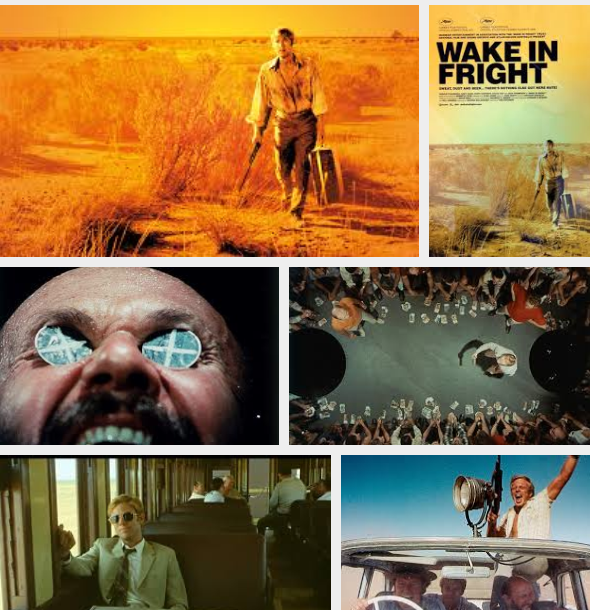
Wake in Fright is a local classic and has been released as a DVD, It still has an occasional screening at Movie Theatres, despite its age. When Wake in Fright was released in 1971, Australian audiences were appalled and the movie failed at the box office. The Cannes audience reaction however was that of awe.

The dark masterpiece was directed by Canadian born, Ted Kotcheff , it was the official Australian entry. The stark realism of the film takes the audience on a disturbing journey of moral decline in the Australian outback.

The realism of the movie is perpetuated through the use of locals rather than actors, no stunt men, dangerous driving, real two-up players and a documented kangaroo shoot. Australian audiences yelled out in the cinema,

“that’s not us.”

Kotcheff shot most of the outback sequences in Broken Hill where men outnumbered women 3 to 1 and the female suicide rate was 5 times the national average. The mateship culture that excluded women and bordered on homoerotic behaviour was present in Broken Hill just as it was portrayed at the Yabba.

An English born teacher, John Grant is lured into a journey to the heart of darkness. As in ‘Apocalypse Now’, the main character is corrupted and stripped of his dignity, as he travels deeper into the debauchery of his own soul. The brutality and larrikin nature of the characters destroys any notion of civilisation as they stumble precariously through a series of misadventures. The landscape, like the characters, is corrosive as the Director soaks each scene in hot colours reminiscent of rust. Sweat and dust texture each scene making the viewer feel hot and thirsty as the characters pour down endless quantities of beer. A feeling of claustrophobia and desperation resonates through out the movie as the landscape traps-in the men of Yabba. Beer is handed from bloke to bloke as a bridging ritual that bonds the man to the group.

Of the three women in the movie, the directors first wife Sylvia Kay is the main female character. Her role is at the fringe of the male cult.The mines of the outback remain a breeding ground for the supremacy of mateship.

The director Ted Kotcheff has made a series of successful movies including First Blood (also known as Rambo: First Blood), Orion, 1982 and Fun with Dick and Jane, Columbia, 1977. The director read the book written by Kenneth Cook (published 1961) and came to Australia to meet the locals. He was confounded by the Australian fight ritual between men and saw it as a desperate need to be touched. “All the little devils are proud of hell”, claims Doc.

The rough culture of this outback movie is able to breed unfettered by law or women. It is a place where sophistication and decency are wrung out in a wash of beer. Aussie audiences hated it. When Bill Collins showed it on Australian TV, he spruiked its merits but relented that he was expecting a lot of hate mail. The film has been released twice at the Cannes movie festival, which is a rare privilege and done only one other time in its history. The movie ran hot in France and stayed in theatres for up to 10 months even though it was in subtitles. According to the director, Martin Scorsese was a big fan.

What is it that the Australian audiences hate about this movie? Is it the actual deaths of kangaroos, the exclusion of women, the glorification of alcoholism, police corruption or the male rape? The French loved it but it’s not about them, it’s about us. The camera takes a deep and penetrating gaze into a bottomless pit of our nature and not a nonchalant glance. The characters in the movie are not Aussie caricatures but rather a raw portrayal of men behaving badly, the two up players are genuine players, real locals line the pubs, real shooters kill animals and the endless wasteland is also a member of the cast.

Wake in Fright was the last movie of Chips Rafferty and the first movie of Jack Thompson. Donald Pleasence’s portrayal of Doc is spellbinding in its sinister mischief-making. It’s been over 40 years since the movie was first released and it has stood the test of time. The movie remains relevant and continues to pickle our notions of ourselves.

The contemporary Australian family

Demographic information allows us to predict future trends so that town development, infrastructure and social needs are available for the next generation. It is also a fascinating peep behind the closed doors of our neighbourhood. Some of the results are surprising, for instance, if both of your parents are from an Anglo Australian background you are 80% more likely to marry into a different ethnic group.

imageAuthors of the text, Family Formation in 21st Century Australia, discuss changes that are taking place within the family format. They a Demographers and Sociologists attempting to interpret this complicated data through statistics. Ten Social Scientists explore separate themes and patterns that emerge from their research. The Editor Dr. Genevieve Heard and three of the authors Dr. Lindon Walker, Dr. Deb Demsey and Dr Kim Johnson talk to a small gathering of colleagues.

“This book tells the story of both continuity and change, it shows that Australians exercise considerable freedom of choice when it comes to forging pathways into creating families, but also that the tradition remains popular” Dr Heard claimed.

The traditional family has remained resilient in the first decade of the 21 Century, divorce rates have declined and many of these families are showing increased stability. Couples are more willing to marry than those of the previous Decade, however there are also the proliferations of new family styles. There is a rise in couples living together without formalising it through marriage. Latch relationships are also becoming more visible in the community; these are couples that live in separate households. These new types of families are co-existing with the traditional style however they are not replacing them. This mix within the community can offer a greater diversity.

IMG_1314

Dr Walkers field of study is inter-ethnic partnering, a study that continues to interest him as it crosses over multiple aspects that include religion, race and educational levels. The study required customised data and narrowing the field of research, as there are many difficulties, such as when are you considered Australian? Despite these complications some of the results are insightful and show that the longer an ethnic group resides in Australia the more likely they are to marry out of their community, as is the case with Italians and Greeks.

Europe 585

Indians and Iranians tend to marry within their own community but future generations may change this trend. Some cross partnering is one sided, such as Asian women and Australian men, the reverse is less popular. The majority of children that are born from two Australian parents will marry into another ethnic group.

Dr Demsey changes the theme as she discusses same-sex families; this group has been forced to win family rights and recognition through activism, firstly for marriage rights and then for children. Demanding access to fertility clinics has been marred by political intervention such as when former Prime Minister Mr Howard defined the family as being made up of a male and a female parent.

“Every Australian child has the right to a mother and a father” former Prime Minister John Howard claimed.

Dr Demsey explains that a lot has changed since 2001 as lesbians have won the right to use sperm banks (male couples often choose surrogacy). Amendments to laws have also enabled single sex couples to live together with legal protection over property issues.

Many same sex couples have to endure aggressive attitudes within the community that puts them under pressure and destabilises the couple. They might be less likely to endure. Friendships often provide the care and support often found in family life. Nuclear family’s are not the norm and couples often live in separate households that they share with housemates. Marriage type relationships that provide monogamy appeal more to younger Gays and less so, to mature couples.

Dr Demsey draws information from studies and surveys conducted by universities. Same sex couple numbers have been increasing however it is uncertain if it is becoming more popular or that people are more comfortable in declaring it. Children that live with male couples are 5%, whereas 20% of women couples have residential children. Ironically most homosexual couples have heterosexual children.

Dr Kim Johnson’s interest was in the family studies of our Aboriginal community. Couple relationships are more common with younger adults. Within these unions, more urban Aboriginals and those with higher educations will partner outside of their community whereas rural couples and those with less education will choose an Aboriginal partner.

IMG_6723

Aboriginal Australians have a higher fertility rate than non-Aboriginals, however it is comparable with other world communities such as what was common during the 1950’s baby boom. The most definitive distinction is that the women are more likely to start their families at a younger age, 40% are under 25. Younger parenting means that the parent is likely to be more energetic and have the support of younger grandparents that will also pass on cultural knowledge. The negative aspect of young parenting is that they might have less access to further education, employment and wealth.

The family network ideally provides a place for people to feel safe and loved, this is even more important when young children are brought into these relationships. The new family is born from a society that is re-inventing itself and exploring alternative options. It is interesting to look at the changes within ones own family, such as having children at a later age, as this is a modern invention.

Surviving Hitler

Rosa’s story

IMG_1469

Young Australian men joined forces and fought for Peace at a time when evil deeds were tools of power. War Stories surface from the battles and are told by the tired ones that survived. Both World Wars brought many refugees who fled Europe to build a life for future generations in Australia.

Rosa was born in Poland, she was 13 years of age when World War 2, broke out on September 1939. Her young life would be thrown into a horror that she would have to endure. What is most remarkable about Rosa’s account of what happened to her and her family was her unrelenting bravery.

Her father had a shop that sold leather goods such as purses, shoes and bags; it was a successful business that provided a comfortable life for Rosa and her family. The war encroached upon them bit by bit, schools were closed and then the shops were off limits to them because they were Jewish. They had to leave their home, possessions and business and move into a ghetto.

Rosa’s 17-year-old sister decided to go to Russia where she could continue her studies in design, or find work. Many Jewish people thought they would be safer in Russia. Meanwhile Rosa’s remaining family that included an older brother and a baby were resettled on a cold and raining day. In the morning was a ‘Selection’.

“We were lucky as we were all selected to go on one side, I don’t know which one was the good one, right or left? But we were allowed to go home. That day I lost my grandparents, aunties and uncles.” Rosa explains.

Many of Rosa’s extended family were sent to the death camps in the town of Auschwitz, they were ignorant of their fate and thought that the re-location was into the township. Life was very dangerous. A near by Synagogue was burnt with men within it and Rosa remembered the dreadful smell.

Her older brother was sent to a work camp. One day he came home with a self- inflicted wound, a friend at the camp had advised him to cut himself so that he could get some leave. It worked but overnight the wound got infected. It was curfew but the mother risked going out and pleaded with a German soldier to send for a doctor. His life was saved as the doctor came and gave him the medication he needed to recover.

Food was scarce and Rosa stood in bread lines from 5am in the morning, but it made no difference as she was denied her share, due to her ethnic background. Her father resorted to the Black Market. Most things were available on the Black Market so her father decided to sell his leather goods on it, to generate an income.

A Jewish man in their neighbourhood was collaborating with the Germans and he found out about the side business. Every Thursday Germans would search Rosa’s home and even though they could not find any evidence they arrested her father. Rosa’s mother paid a ransom to the traitor every week to free her husband and keep him out of jail.

The family were sent orders that Rosa was to go to a work camp even though she was very young and weak. Originally, they hid her at an Aunties’ house but she was discovered and reissued orders. Despite her family’s protests, Rosa decided to go so as to protect them from repercussions. Her father thought that if she were wounded, as her brother had been, she would be able to stay with them. He was wrong. He burnt his daughters arm with acid and that action diverted her from being sent to the work farm but put her in line for Auschwitz

The ‘traitor’ that had been collecting money from Rosa’s family saw that she was on the list to the death camp. He decided to help her due to the payments he had received.

“He could say who was going to live and who was going to die”. Rosa explains.

“Your too young to die” The Traitor told her.

She was saved from the death camp and ended up at a work camp where she was told that she would be making parts for bicycles. She was then told to give up all of her meagre possessions such as watches, photos and jewellery. As her greatest possession were two photographs (that she still has) she hid them behind a brick in the wall. They no longer called her by name but rather by a number, which she resented.

When she was working at the factory she went into a back office looking for an officer. She went into the vacated room and read the German signage on the wall and realised that they weren’t making bicycles. They were making bombs.

“’My God! What are you doing Rosa? Helping to kill your family, your friends? ”

No! I wont do it. Rosa explained her thoughts.

When she was discovered in the forbidden office, she pretended that she couldn’t read German. Secretly she asked God to forgive her lie. When she was returned to the factory she informed her friend of her discovery.

“I’m going to sabotage the bombs” young Rosa declared

“ I made them not to measurement, I made them bigger, they were good for nothing. My boss, he noticed and asked me to concentrate more, he was German so I couldn’t tell him. I broke the needles, I made them bigger and everyday he said, what you are doing is wrong. One day more men came and stood behind my back and watched me working. I break more needles; I make them bigger. They told me to stand up and sent me to a German woman, she was not very nice and she told me that I was to go to Auschwitz.”   Rosa recalled.

That was three months before the war had ended. Everyday Rosa reported to her and everyday she was told that she would go the following day. They couldn’t send her because the Liberation had begun; it was 1945. Suddenly there was no work for the girls and the factory seized operations. Men with guns surrounded the camp and called for the girls to come out but they were too frightened to do so. They yelled out to them that they were free but Rosa and her friends didn’t believe them until from a window, she saw her cousin in the crowd.

“Its not a joke anymore, we are free’ Rosa declared to the girls.

“We laughed, we cried, we kissed. The first thing I did was go a get the pictures,” Rosa explained.

Rosa came to Australia in 1960 with her husband and two children. They settled and made a new home. She is happy here and thinks that it is a beautiful country.

“ I have seven great grandsons. Hitler didn’t survive long enough to kill me too.” Rosa states.

Her final message to the next generation is that ‘we are all the same’ and not to discriminate!’

* Rosa spoke at the Jewish Holocaust Museum, Elsternwick

(Rosa’s older brother and sister survived but her parents and baby sister did not).


Mick Doleman; Survivor & Protector

Men United to protect women

 IMG_1237One woman is murdered, every week in Australia by her spouse. It’s an alarming statistic. The White Ribbon campaign is designed to inform the nation of this serious dilemma. This is a national, male led campaign to end violence against women. Globally, White Ribbon is active in more than sixty countries.

White Ribbon Ambassadors advocate themselves to protect women. They come from all walks of life and include former Prime Minister Kevin Rudd. Within our community men are adding their names to the growing list.

Mick Doleman, Deputy National Secretary of the Maritime Unions, for 43 years, spoke to Melbourne Press in regard to his commitment to this cause.

Mike attributes his moral compass to the early influences of his life. He came from a strong family. At 15, he became a sailor and mixed with a breed of men that he deeply respected. He emulated himself on these early role models. The men were smart in worldly affairs and possessed a great respect for women, aboriginals and other nationalities. They spoke up against racism.

In 1978, Mike was aboard the Blythe Star when it sank, off the east coast of Tasmania. He was 18 years old and spent 11 days with ten men, on a life boat where three died before they were rescued.

“What doesn’t kill you makes you stronger” he claims.

In 1984 he became the Assistant Branch Secretary of the Seamen’s Union of Australia. He was the first person in the Maritime Industry to establish a sexual harassment policy. He has been honored as the White Ribbon Ambassador of the year, for two years.

“Government’s have to put massive resources in place and police need to be trained in how to deal with domestic issues” Mr Doleman states.

Many children are traumatized by domestic violence. By recognizing the seriousness of abusive relationships, lives can be saved through intervention. Through the White Ribbon campaign, men have become united to protect women.

(Artwork ; The Great Leviathon  TJ B-Webb )

Shrigleys Definitive Deployment of Art

David Shrigley’s drawings, sculpture, happenings and films follow the anti-art traditions of Marcel Duchamp and Andy Warhol. ‘This is not art, this is not important’. Then why did the NGV host his work and float his head-less toy swans in the moat.

IMG_0991

The seduction of Art refusing to be Art is like a conquest behaving coy and disinterested. Its chic, its naughty but its mostly irreverent. It’s the cat and mouse game that the art world has been playing with itself since the 1880s when Modern Art decided to challenge the status quo of ‘what is Art?’

Shrigley has a mass appeal. Since 2005 he has produced a weekly cartoon for the UK’s Guardian newspaper. Michael Leunig cartoons, that have appeared weekly in The Age draw similar references, however Shrigleys message, is less emotive and more ‘slap stick’.

The exhibition came wallpapered, with roughly drawn cartoons and captions such as;

“I don’t have a head but still I must go to work”

The exhibition housed an interactive life drawing class where the live model was replaced by a naked cartoon sculpture, like a garden cupid fountain, it too, relieved itself. A motorized head entertained visitors and there were ‘boring’ films. The film of a cartoon figure sleeping ‘A Napping Station’, is a parody to the Andy Warhol film, Sleep.

The NGV website noted a remark by the English art critic Adrian Searle.

‘Shrigley’s work is very wrong and very bad in all sorts of ways. It is also ubiquitous and compelling. There are lots of artists who, furrowing their brows and trying to convince us of their seriousness, aren’t half as profound or compelling.’

The most important thing to have when examining his work is your sense of humor.IMG_0787

Less Fluff more Fun

IMG_1438

Milliners, Kim Fletcher and Kerrie Stanley claim that occasional dressing is part of the fun of going to events like the Melbourne Cup. This is their accessory forecast for racegoers this season. They want to see less fluff on the ends of combs; they want more substance and structure.

“We’ve grown up,” claims Ms. Fletcher

There are more materials available for them to develop their craft and to be more experimental. They are looking for non-traditional millinery items. They would like to see Melbournian women distinguish themselves by being more adventurous in head fashion. Their aim is for our Cup to be a unique fashion statement.

“Using stuff ‘outside the square’ and making them more modern.” Ms. Fletcher adds.

The women agree that Melbourne has some of the best milliners in the world and claims that the industry has stood the test of time due to the Melbourne Cup.

“We have a more casual lifestyle that’s why dressing up for the racers is such a big deal, even some weddings are quite casual in reference to their dress code.” Ms. Fletcher points out.

The primping and priming that Kim and Kerry agree on, is a major incentive for attending the event. The economic flow-on affects a myriad of other industries such as hairdressers, manicurists; make up artists and so forth. We are given a Public Holiday to attend and play our role in its success.
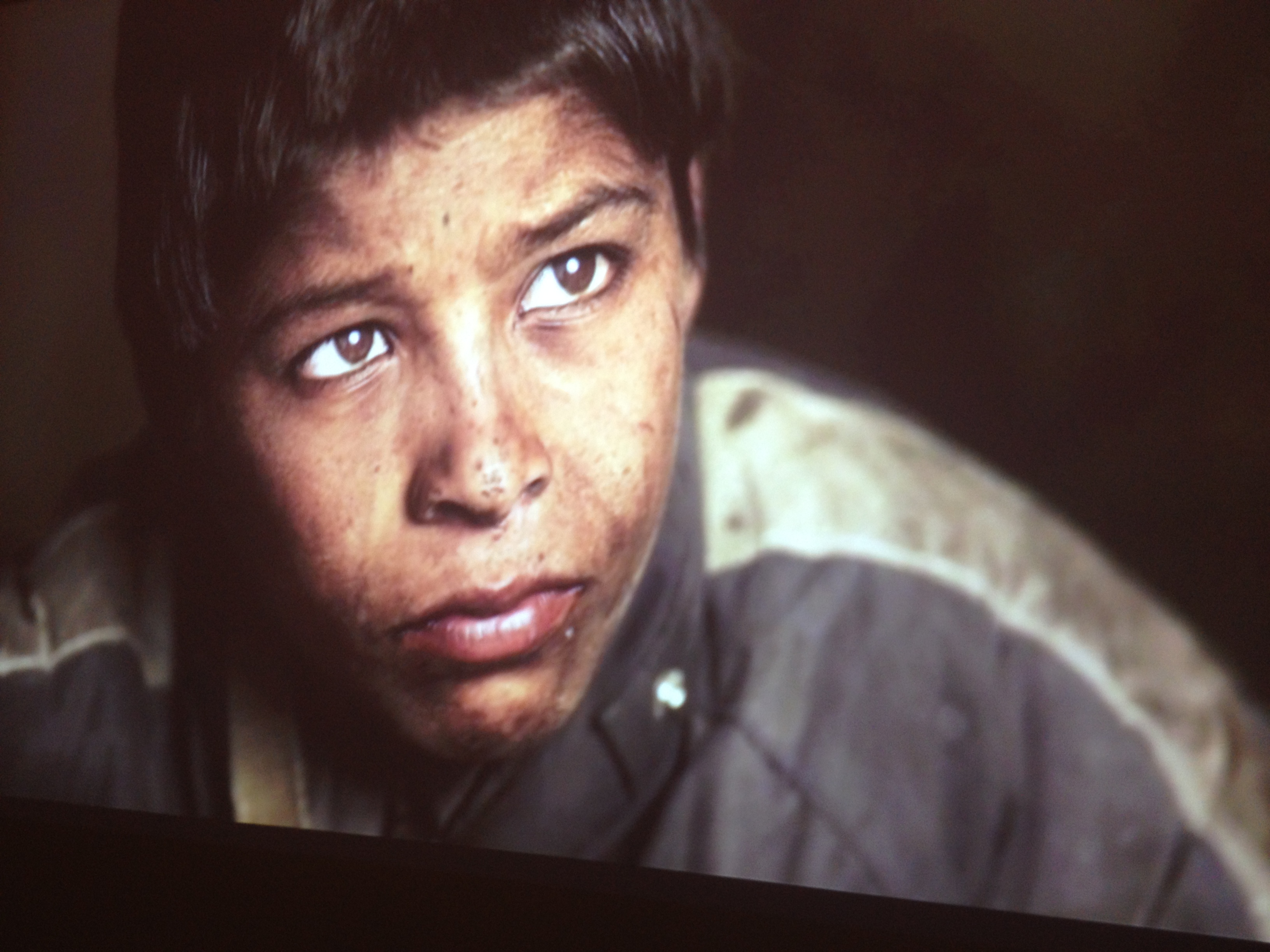
IMG_1431

Kim Fletchers headpiece that she dons sprouts red flowers that move whimsically in the breeze. In contrast Kerrie Stanley wears perky bud ariels reminiscing pixie ears.