“Why were there so many good women artists working in Australia in the 1920’s and 30s, involved more with inventive, rather than imitative art?”
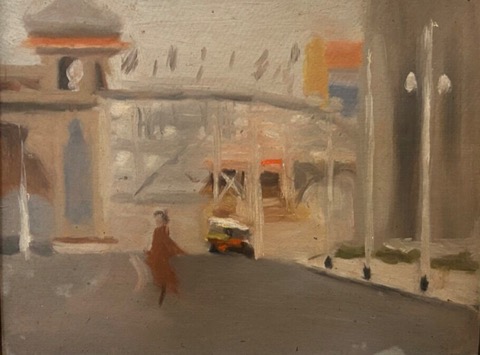
Wet Evening 1927 C Beckett
(Australian Art A History, Sasha Grishin, p219)
It takes a Melbourian to spot another; we feel comfortable with each other, despairing under the heavy grey roof of clouds, moody and cold; sharing the melancholy, the dullness and the empty vacuum of being alone within a cultural and landscape scene, of exciting monotony. Becketts urban scenes may have been painted 100 years ago, but the tone remains the same. We recognise ‘those days’ and ‘those streets’; the sound of wet rain on the road.
Beckett studied under Australian Master Artist, Fredrick McCubbin (1855-1917) in 1914, at the NGV art school when it was housed in the State Library. McCubbin is renown for his idealistic bush scenes of muted realism, although known as an Impressionist, his scenes were uniquely his own interpretation. He didn’t travel to Europe until later in his life and his art grew within the Heilderberg scene. He had studied under Eugene Von Guerard, and was influenced by his romantic storytelling, that made McCubbin a household name.
Shelling Peas 1913 F McCubbin
When Beckett studied under the older artist, he had returned from Europe and had launched into his lesser known period, where detail was abandoned for a blunter European Impressionism. McCubbin’s new focus was less colonial and more urban and this would have enabled Beckett a more local focus for her themes.
Walking Home 1931 C Beckett
Beckett however broke away from the safe confines of her masters instruction and into the edgy new scene of modern Tonists that was led by McCubbin’s rival Max Meldrum (1875-1955), known as an ‘art upstart’. Beckett was Meldrum’s star pupil and member of the exclusive Twenty Melbourne Painters Society, that broke away from the Victorian Art Society, which is an art society limited to 20, that still runs today.
October morning 1927 C Beckett
“Meldrum was in many respects an outsider, rather than an accepted member of the art establishment”
(Australian Art A History, Sasha Grishin)
Meldrum taught his students to use limited palettes, hazy outlines and attention to the breakdown of tones. He regarded he’s study of tone to be scientific and aimed to create compositions that explored light, atmosphere, space and distance. Simplified forms and how they contrasted tensions, created a structure of order, when the artist approached their canvas.
Wet day Brighton 1928 C Beckett
Melbourne’s moody skys and the strong contrast of seasons is the perfect homeland for an artist who lived and focused her work on the eastern bayside villages. Beckett’s work never received the fame she deserved in her lifetime and although she was a prolific artist, most of her work was destroyed in poor storage. A longer life may have solved the issue but harsh Melbourne winters took their toll, on a woman, her trolley and the outdoors.
Princes Bridge, Flinders Street Station and clock tower 1930 C Beckett
This typical Melbourne scene has never been captured so well, a mood many morning commuters are familiar with. Her work evokes an emotional response like a shared memory of an event. She takes us on a urban tour through her art. Her work stikes a deeply personal tone within the viewer, it’s not a story, it’s home.
Waking up on the Summer morning ,sipping coffee as the birds dart in and out of the garden, is bliss, even if the rest of the day will be spent in an office.
For warm weather the best time to come to Melbourne is between November and April. Australia is not built for cold weather, it is a beach culture, we endure July in houses that are poorly insulated. During Winter, the southerly winds off the South Pole shred through thin walls and coats, but in Summer it’s a cool change that swings a scorching heat into an icy gail. Melbournians wear layers because random weather changes are expected.
Summer, long weekends and Easter
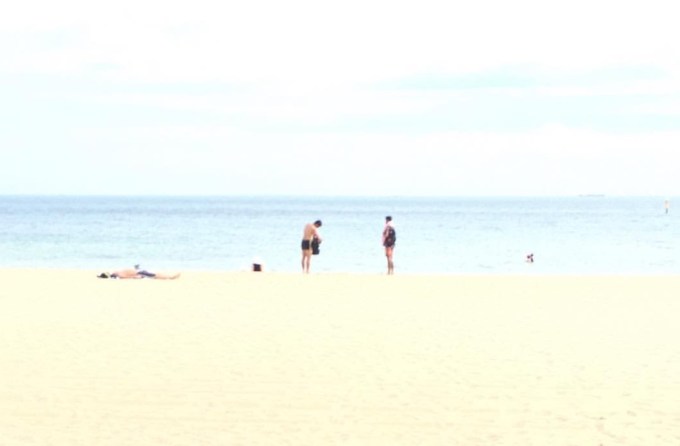
When the sun is out the locals are basking. There is a mass exodus to the coast in January, Easter and Public Holidays, if your planning an Ocean Road tour during these times book early. Bayside beaches fill up and most Tourists head for St Kilda but South Melbourne and Brighton Beaches are more relaxing.
Inner city Melbournians, get up early on Saturdays and have breakfast together in Cafes, the best places fill up quickly. On a hot afternoon, the South Melbourne market has great outdoor seating under a large golden canopy, enjoy Mediterranean cuisine and a glass of wine. Expect to eat dishes from all over the world, each new flood of settlers has brought their food culture with them and each gets its day in the spotlight. Currently everything is ‘infused’ with something Asian.
Market morning
Sth Melb Market
fresh produce
If the weather turns foul, which means the ‘cool’ (freezing) change came early, head to the NGV Gallery at Federation Square and take in some Australian Art. The City is proud of its Artists but Sport is given most sponsorship. The Art is world-class but under promoted.
NGV Australia ; FedSq
Sandra Hill’s; Beyond The Pale 2010 (currently on show at NGV Fed Squ.
John Olsen
The Docklands is a relatively new development with ‘state of the art’ architecture, just behind the Southern Cross Station on Spencer St. It has a futuristic opulence , a skating rink and the Southern Star.
Trains and trams are the main form of transport and very well mapped, it’s easy to follow.The MYKI card works for locals but is not visitor friendly as you have to buy it to get around. Transport inspectors can be a bit intimidating so it’s important to get one. Currently the City has all night transport on Friday and Saturday nights.
Great places for dinner are Smith, Gertrude and Brunswick Streets in Fitzroy. It’s a fabulous block of ambitious ambiance. A historical area where hustlers and artists have had ‘their day’. but currently it is urban cool.
Melbourne has great theatre but if you want to catch a local act for under $30, after dinner there are some quaint venues; The Butterfly Club, La Mama, The Owl and Cat and The Meatworks, (just to name a few) are close to town and have their own character.
Butterfly Club City
Owl & Cat Richmond
Raglan St. Nth Melb
Mechanics Sydney Rd
Bars are numerous and many are tucked into the lane network that are the life beat of the town, most often decorated with great Street Art. Roof top bars are great on hot nights but most places have outdoor heating when it’s not great.
The highlight of Summer is the Australian Open and the best place to watch it is at Federation Square in a sun-chair. Despite Australian pride of designer beer and class wine most public places are dry. On New Years Eve drinking is banned on public Bayside beaches so cancel the beach party.
Melbourne was once called the ‘Garden State’ as we like our trees. When its too hot for the beach there are great Botanical gardens and the Ripponlea Estate offers shade and a cafe. The changeable weather has created a fashion consious culture and there are plenty of shopping strips and malls to cater for discerning tastes or a bargin.
Menz Club
Bridge Road
Mirka Mora @ Gorman
Summer essentials are thongs and light coat. We all talk about the weather; we complain when it’s hot and when it’s cold.
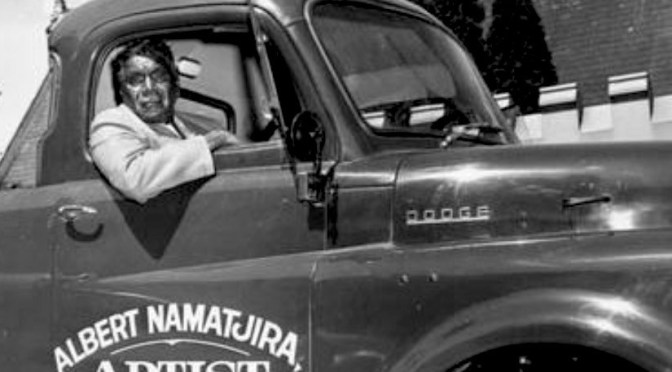
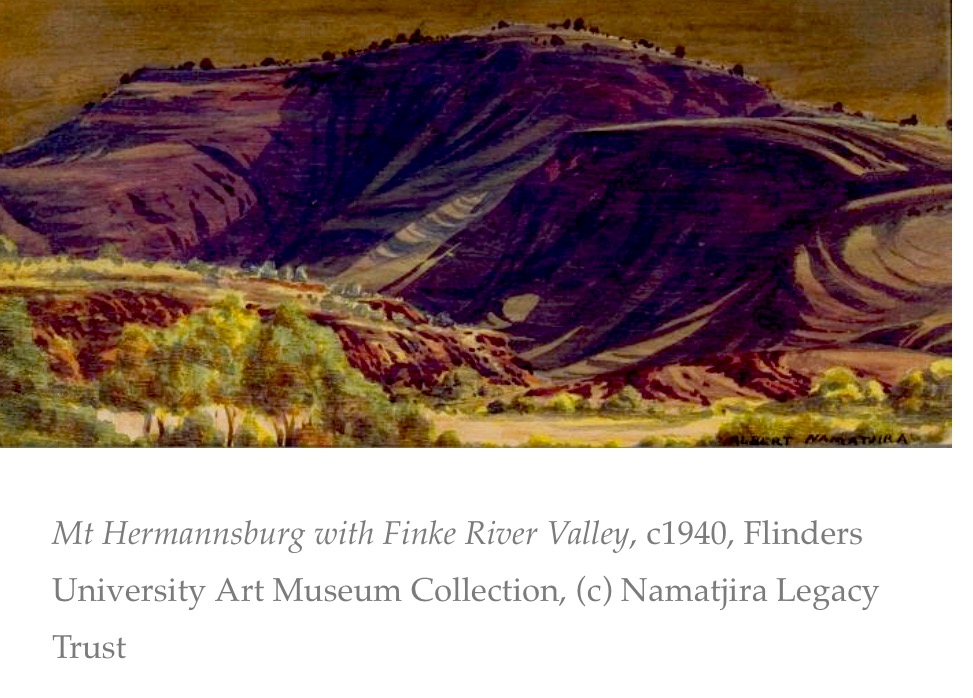
The tale of Aboriginal plunder is a never-ending ballad that sings in the winds of this great country, a land that Elea (Albert) Namatjira painted so lovingly in watercolour. Namatjira’s world-renowned artistic status may have provided him with a thin shield against racism but it was easily shattered, even his greatness, wealth and innocence could not protect him from incarceration.
Namatjira surrounded by family as he painted
The legend begins when Artist , Rex Battarbee took a painting trip into the Outback, after returning from the devastation of War in the 1930’s. He met Namatjira and it was through their collaboration that the 30-year-old Aranda man learnt to paint and exhibit. They went on to become lifetime friends, able to see pass the bigotry of the day.
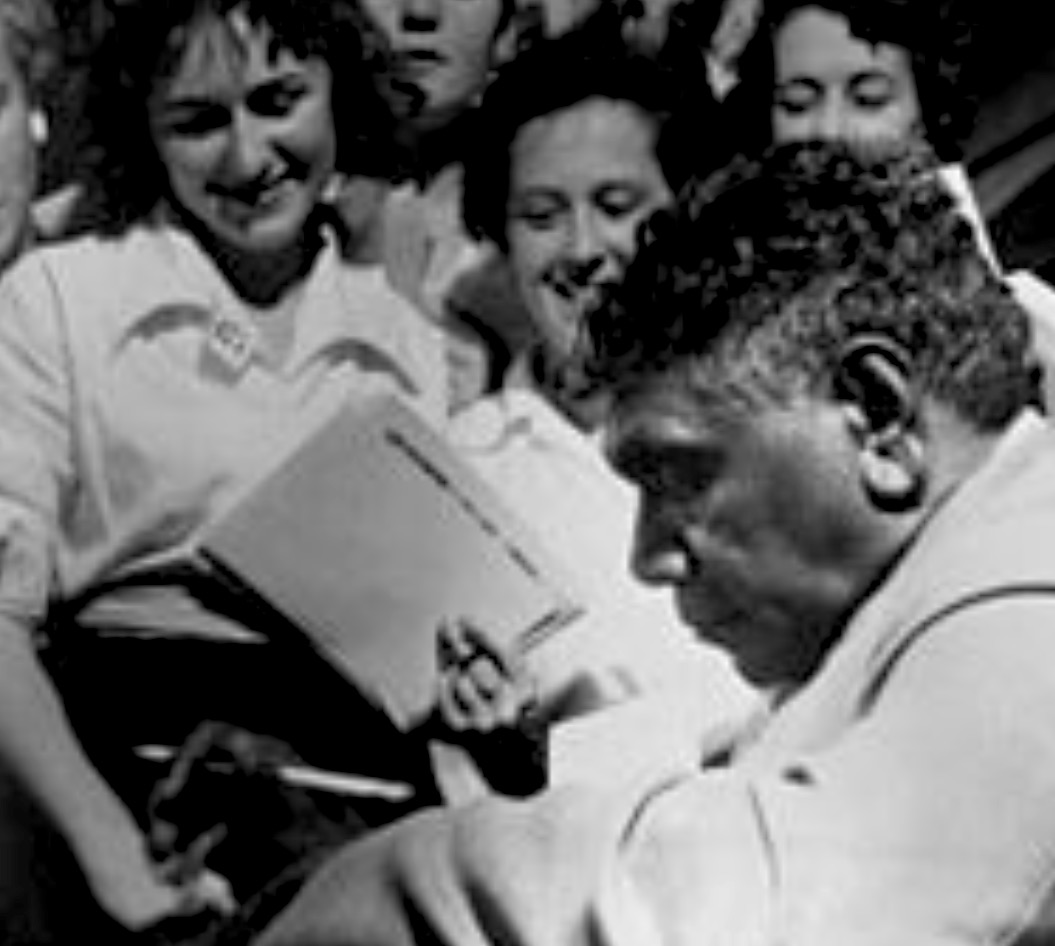
International success took this humble man to great worldly heights, he was awarded the Coronation Medal and was the toast of the town. His exhibitions sold out shortly after they opened and most kitchens had one of his reproductions on a calendar or tea towel.
Before the 1967 Referendum, Australian Aboriginals where denied Human Constitutional Rights and were categorised as part of the wildlife or wards of the state. They were denied most basic human rights and in an insipid twist of irony could not own their land as it had been acquired by the Commonwealth.
Namatjira’s unprecedented rise on the world stage would require him to have a passport and his growing wealth attracted taxes, thus him and his wife Robina were given Australian citizenship in 1957, enabling him to buy a house in Morris Soak .
Unfortunately his children were not granted citizenship and were regarded as ‘Wards of the State’ as all Aboriginal people were. They did not have the right to choose their marriage partner, be legally responsible for their own children,to change location or socialise with non-aboriginals. It also meant that when the Great Artist and his wife died the Legal Will that aimed to financially protect their children was made void as his children belonged to the state. Their financial copyright royalties were ‘acquired’ by the state and sold on.
The Namatjira Project began as an objective to buy back the royalties (which will expire shortly) but has become a legal investigation.
The most moving part of the film is when Namatjira’s homeless grandson gives his artwork to the Queen in her palace and walks away empty-handed. The documentary is a thoughtful journey, full of beautiful archives and an artistic vision, they tip toe over a mine field but I think they have let off a bomb.
*Due to the humane efforts of The Namatjira Project, the Royalties have been returned.
Another victory in justice for the family
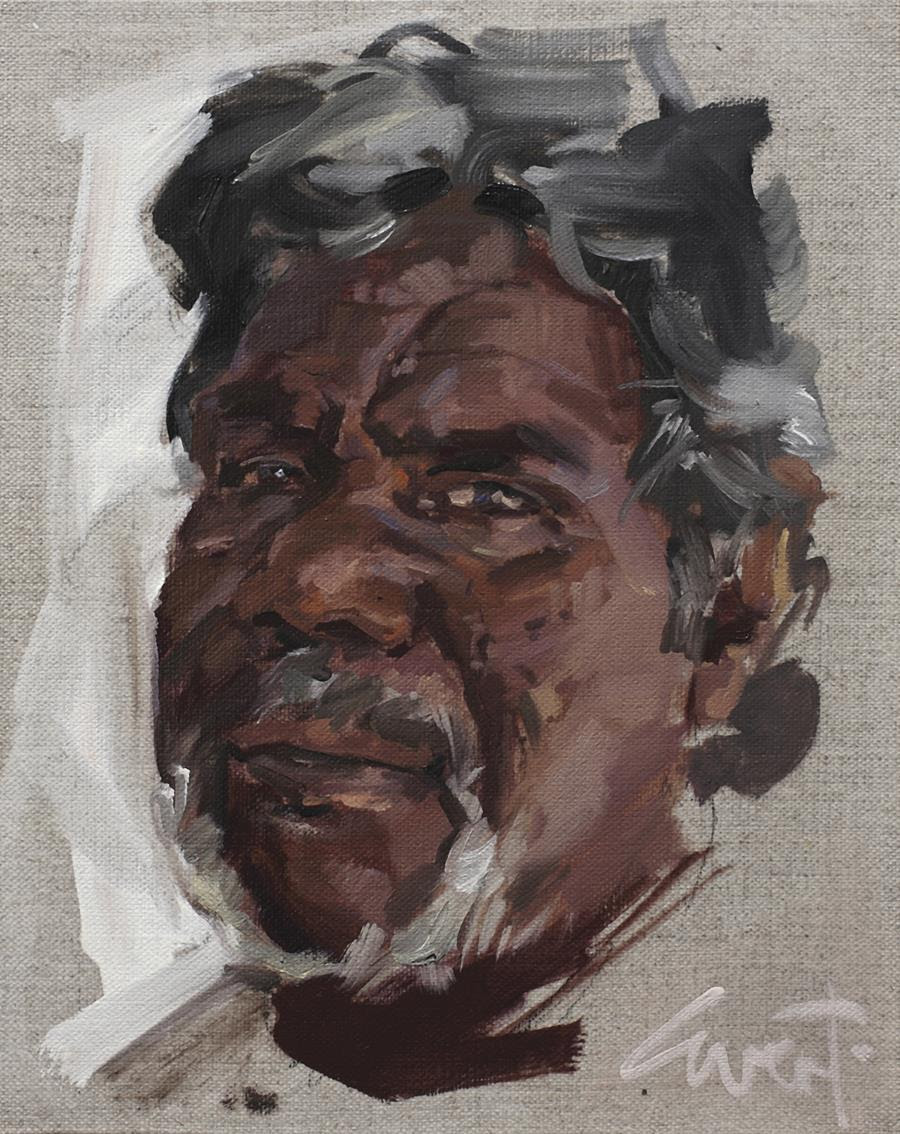
The Namatjira Family continue the water-colour tradition as their cultural inheritance.
A Message from the Family
It is a with a heavy heart that we write to let you know that our dear friend and watercolour artist of true talent, Kumantjai K Namatjira has passed away. On Saturday afternoon 3rd November in Alice Springs Hospital, he bid farewell, surrounded by family. One year after his cousin, Kumantjai L Namatjira, and 5 years after meeting The Queen at Buckingham Palace.
THE NAMATJIRA PROJECT

DIRECTOR & CINEMATOGRAPHER Sera Davies

PRODUCER

Sophia Marinos

EXECUTIVE PRODUCER

Julia Overton

EXECUTIVE PRODUCERS (CULTURAL)
Lenie Namatjira
Gloria Pannka
As the last veil of sunshine and warmth left our streets at the end of June, a shadow fell like doom and cast us into our beds with flu’s. June was invigorating, July is dismal. Fortunately there is the The Tour De France to remind us of a Summer, somewhere.
Sorting through the closet each morning to find something warm to wear is challenging and reduces the rotating option to the point where black is best. There is nothing more unnerving than looking out of the window, before heading out, and seeing the trees twisted over by the wind. For bike riders, it tests endurance.
During Summer people proclaim winter is great as you can rug-up, mmmm, wind and hail are stronger. In the sunny season, they say, it’s cosy in front of a fire, mmmm, who has an open flame? They say it’s easier to get warm than get cool, mmmm, my bedroom is an ice machine.
What to do?
The Clever ones are exploring Central Australia, cruising the Islands or flying North. For those that forgot to book the early-bird airfares there are a few local options.
Option 1. Head to the snow, you can buy bus day-passes at Southern Cross railway station, on your way home from work.
Option 2. Do Christmas in July, make it fun.
Option 3. Book a ticket on the ferry to Tasmania, be fearless.
Of Course, there is football.
On that happy note, be brave, drive carefully and buy orange juice.











 melbourne press