Category Archives: Melbourne People

Equal access to Education

Jerusha Mather is an enduring voice of equality for disabled students seeking access into courses that they are grossly underrepresented in. Her personal journey began in Sri Lanka, where at birth, the doctors told her parents that she would never walk or talk, later she was officially diagnosed with cerebral palsy. In Australia, she received strenuous and heavy therapy and began to see drastic improvements in her physical heath.

“I was able to walk and talk – although it was not perfect, it was something of a miracle to me.”

At school, she joined the advanced maths group and was invited to participate in a statewide maths tournament. She was a Kwong Lee Dow Scholar at Melbourne University and the first to become social justice captain in high school however during her VCE exams, she was not given appropriate support.

“I was not even offered a scribe which made things challenging for me”

Despite the odds, Mather was accepted into a Biomedical Science Degree at Victoria University, a step closer to fulfilling her plan to become a Doctor.

Gender equality that has enabled women to become medical professionals has given female patients access to female doctors that share similar anatomy and conditions. For disabled patients, the opportunity to benefit from a truly empathetic doctor in a similar situation is highly unlikely.

“I believe it is because of, and not in spite, of my disability that I will make an excellent candidate to become a doctor. I have a sense of empathy unmatched by my colleagues, understanding of life with a chronic health condition and remarkable patience.”

Media Shot

As a patient, Mather has experienced the spectrum of health care professionals, the good and bad. She is motivated to be part of a generation of doctors where communication and compassion are paramount tools. Mather drew inspiration from the recognised and notable work of Dr Janice Brunstrom; a paediatric neurologist in the USA who has cerebral palsy.

“My career aspirations are also in neurology, though her dedication to her profession, continuous development, and desire to utilise her disability to her advantage have been a true motivational force for me.” Mather

Disability effects a high proportion of the community yet most have been denied pathways to medical training due to both direct and indirect discrimination by educational authorities. In some instances, disability discrimination is overt and direct; in others, it is founded on lack of knowledge of disability issues and inclusion practices. By law, educational facilities are to make ‘Reasonable Adjustments’ for their disabled students however the definition is vague and broad.

Curriculum adaptation needed; curriculum limited; or curriculum needs not addressed. Components of courses or post-qualification employment not accessible HumanRights.gov.au

Not enough has been done regarding curriculum needs and adaptation for people with disability. Academic courses for general qualifications contain areas that such a student with cannot complete or access. This creates difficulties with enrolment (advice and information issues), with granting qualifications or accreditation, and with post-qualification work or profession.

“There are still quite a few internal barriers for someone like me who wants to become a doctor. One of the major barriers is passing the GAMSAT. Now Section 2 is quite straight forward because I can type that section. Nonetheless, section 1 and 3 requires a fair bit of handwriting which is extremely difficult for me to complete. I think there is an unrealistic expectation for people with a physical disability to do it all in their head, which is merely impossible given the nature and complexity of such a test. I do not think that this is the only concern here, every student must undertake an interview, in which I fear the possibility of discrimination.”

Due to ACER, being an independent organization, students with disability do not get appropriate funded disability support to help them prepare for the required tests.  Students with disability require a levelled playing field, where all get the same chance.

“Although the university was very supportive, we did find it difficult, however, to source appropriate academic support staff. Thus, some of my academic support workers came late to class. Some of them did not write quality notes. Some did not facilitate my independence. Some did not understand what was required of them. Admittedly, it was a bit disappointing to see.

One of the most hurtful experiences I have ever had was when a doctor (with a disability) suggested I should be a ‘grocer’. He was the last person I expected to hear it from. I also had a lot of online trolls saying negative things about me. I was bullied a lot by past mentors and GAMSAT tutors.”

Mather believes that there are various specialties that a person with a disability can display excellent competence in and demonstrate safe clinical practices such as pathology, radiology, rehab medicine and general practice.

“I am completing my honors in biomedical sciences at RMIT University this year and am hoping to do further research, but I hope that one day, I will be serving you as a doctor.”

Please sign my petition here to produce an alternative pathway for prospective medical students with disability:

https://www.change.org/p/australian-medical-schools-alternative-entry-scheme-pathway-for-aspiring-medical-students-with-disabilities

What pain women endure for shoes

I am taking a liberal guess, but I can confidently say that nearly all women have a pair of shoes that they endure with pain and will not throw out.

I went to the streets to test my theory. These are their stories.

Jess from Belgrave

Designer

“I have sitting shoes, I can’t walk anywhere without holding on to my partner’s hand. He props me up until I find a seat, then I can sit down, looking pretty.”

Other women call their un-walkable footware, their dinner shoes

Jan from Burwood

Hairdresser

Jan has 50 pairs of shoes and 12 Boots, which she rotates.

I asked her if she wore uncomfortable shoes.

“Absolutely that’s why I have sore feet. I just grin and bear it, anything for the look. I want to be tall and slim with long legs and when I get home I whinge”

Lizzi Ablmett from St Kilda

Sales Assistant

“I have 8 or 9 shoes that all hurt and I squeeze my feet into them, every night. I come home with blisters and bunyips. I do it because they look great. Even if they’re the wrong size I don’t care. The problem is my feet, not the shoes.”

Simone from Burwood

Sales Manager and Clothes Stylist

Simone has 41 pairs of shoes.

“I rotate my shoes, if I don’t wear them, I give them away. Since having a baby I no longer wear painful shoes, I need to run around and be able to pick up Alice.”

Bernie from Hallam

Sales Manager and Fashion Coordinator

Bernie leaves shoes at work that she changes periodically, during the day, to regulate the pain.

“I’ll wear painful shoes if they go with the outfit”

Sonia from Watirna

IT Specialist

Sonia has knee issues and is forced to wear sensible shoes however she holds onto her ‘unwearables’.

“I look too gorgeous in them, to throw them out.”

Sophie from Elwood

“I am drawn to the statement and collect them like feet ornaments, yet I wear the comfy one’s everyday. My collection waits for me.

IMG_1186

Gemma from Mont Albert

Journalist; L’Oreal

“ I was a ballet dancer for 18years, I’ve put my feet through so much pain, I can handle any shoe now.”

Dorota from Mt Waverley

Legal Intern

“I have an obsession, all of my friends come to borrow my shoes. People tell me I’m crazy. My uncle, who is a builder made me shelves, for half of my wall, for all my shoes.

Tell me about your favourite.

“ I bought a pair in Poland. If I wear them out at night, I can’t walk the next day.”

Vinita from St Kilda

Journalist

“I can’t wear heels or my foot will twist, I can’t balance but I always want them”

Do you buy them?

“Yes, a lot, I’ve got 13 pairs, but I only wear two.”

What does you partner say about your shoes?

“When I go shopping, my husband will say. ‘Why do you want them, you wont wear them? He thinks I’m just collecting the things”.

Kshipra from Hoppers Crossing

Manager

“I have really high heeled white shoes with pretty straps and I just wore them once. I didn’t take public transport, I got my husband to drive me to the door of the restaurant. When we wanted to walk around the city, I changed into other footwear.”

And do you still have them?

“Yes, its been three years since I bought them but I wont throw them out. I always dust them and put them back, I hope to wear them some day. The hope is there.”

What does your partner say about your shoes?

“ He says, why don’t you give off the ones you don’t’ wear, then buy the new ones? I say, no I’ll wear them some day.”

Kshipra adds;

“At Crown, after the party, I walked out and see these women,  the first thing they do is take off their shoes. And there was one girl, no matter what, she did not want to remove her heals. She was holding to her friend, because she couldn’t stand on her own, yet she refused to remove her shoes.

We were watching her from behind and we really thought she would fall.

Based on these stories, I conclude that Cinderella didn’t loose her shoe, she was kicking them off at the end of the Ball.

Nursing in Uganda

“We arrived in Africa and were instantly overwhelmed by the kindness and friendliness of the local people.”

Melbourne student nurse Laura Garnock stepped up, to be part of a team of 19, to visit and assist a hospital in Kampala, Uganda . The first pilot team for ACU, included students of nursing, midwifery and public health.It was a cultural and medical challenge that reinforced her desire to join ‘Doctors without Borders’ sometime in her career.

image
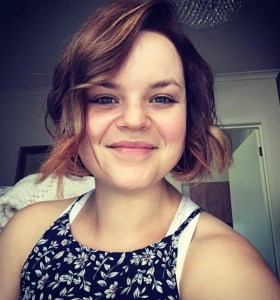
Laura Garnock

” We didn’t have too much information about the exchange experience before applying, other than we would be working at Mulago hospital and volunteering in various other community programs over the two weeks. That was enough for me; my attention was caught at ‘Uganda.” Garnock

Midwifery and Nursing Lecturer’s, Annette Garvey and Jean Mukasa, enabled the trip after years of relentless organising, planning, risk assessment and convincing.

“We all had the common underlying motivation for applying for the Uganda trip. We wanted to help people and work out if we could actually cope with what we saw, continue to do it afterwards and to make a difference. I think most of us could confidently say that, we achieved all three things.” Garnock

The nurses were split up and rotated between medical emergency, surgical emergency and trauma.

“It was when I was on the surgical rotation that I saw a leg amputated. I have never felt so out of my depth in my life, there are many things that I saw in Mulago hospital that I will carry with me forever.

I learnt the power of support, giving a patient or their family member a hug.. The non-verbal communication that we take for granted in Australia, when talking to each other, meant the world to our patients.” Garnock

The student nurses were faced to overwhelming conditions of overcrowding and limited medical options.

“Out of 191 countries in the world, Uganda’s healthcare is rated 186th. 48% of the population in Uganda is under the age of 15. … On an average day, there is one nurse to 45 patients on the ward, that was how understaffed but incredibly busy this hospital was.

image
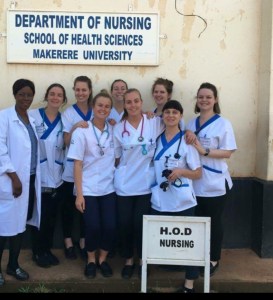
Jean Mukasa, Bethany Flemming, Aimee Burns, Tegan Dudley, Brianna Doyle, Sophie Malcolm, Clare Ryan, Georgia Myers & Laura Garnock          photo by  Garnock

The conditions and illnesses that we saw are generally  uncommon in Australia, so it was difficult at first to know where to start, in terms of nursing care.  Cardiac shock due to dehydration, Malaria, AIDS (related conditions), TB, Hepatitis B and C were common medical conditions. The trauma centre (casualty) had a wide range of patients from victims of assault and violence, to those needing resuscitation.

“… A blood pressure machine was non-existent in some of the wards and those that did have one, had to share it between all 45 patients. Doctors had stethoscopes, but it was a rarity to come across other valuable equipment such as a pulse oximeter or a thermometer. Luckily some of the girls on our trip had the foresight to bring a manual BP machine.” Garnock

Part of the trip was to take part in Community active groups aimed at empowering local residents with simple but powerful options.

We did some outreach work on our days off in the local ‘slums’. We worked with Yimba Uganda, a organisation that is a Ugandan NGO devoted to empowering, training and providing new opportunities to Ugandan’s in order to promote sustainability & independence. L.G

THE GOAT PROGRAM

This program has enabled domestic farming that has led to home ownership for some families.

image

“A local family is given (loaned) a goat and told to look after it for a while, breed the goat and take responsibility for it’s welfare. At the end of a few months or a year , the family can make a profit from all their efforts” Garnock

THE WOMENS SANITATION PROGRAM

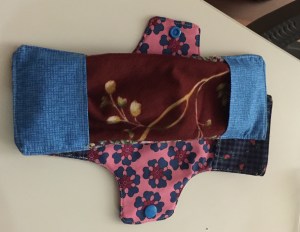
This program offered girls the convenience of menstrual solutions to enable them to fully participate in activities without physical restrictions. Previously, females had to abandon school and work due to ‘this time of the month’.Western options were not feasible due to the problem of waste.

image
A removable lower layer for washing and replacing.

“Anne-Marie, an ACU graduate, designed and made reusable sanitary products for the local Ugandan girls. The local girls were using pages from textbooks, leaves and foam from their mattresses for protection” Garnock

TEXTILES TRAINING PROGRAM

Boys and Girls were trained in sewing to enable them access to clothing and a means of income.

image
Clothes made in Uganda on sale in Australia

“…to tailor their own clothes and learn more skills in the hope that they can build their own future.”

image
Annette Burns, Emmanuel K Edwin (DJ and Community worker) Anne-Marie Reddan

The students have been active in Local Fund Raisers since their return.For Laura it was a heart warming journey that made her aware of the contrasting medical conditions.

“I think the overwhelming point that I took home from the trip was that people in Australia have no idea how good their healthcare is.  We couldn’t even give our patients water to drink.” Garnock

image

Flag photo by L Garnock of Mulago nurses.