
Destiny Deacon 1956-2024
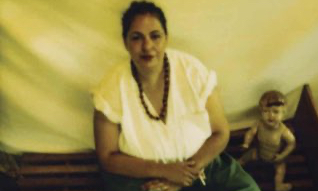
Her urban pilgrimage from Port Melbourne housing commission confinement to an exclusive education at ‘Mac Rob’ and Melbourne Uni and then landing the dream job of working with Charlie Perkins, famous Aboriginal activist and later to be honoured by a retrospective exhibition at the Ian Potter NGV Gallery , for her major role in the Australian Arts. Intelligence, wit and a ‘way of seeing’, enabled Destiny Deacon social mobility and success.
In writing is reads like a Cinderella tale, and yet the ugly sisters racism and sexism left their mark on her perception of self and fuelled her political and artistic roles. Born into a large family with both parents engaged in Aboriginal rights, would have bred a restless spirit in Destiny. Able to throw off the shackles of the housing commission stigma and pass the entrance exam of Mac Robertson high school, would open doors for her future academic role at Melbourne University.
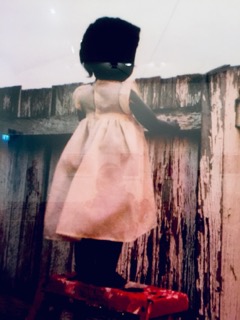
Despite her intellectual achievements Deacon would be ‘looking over the fence’, not fully assimilated. She had access to the very best of what ‘white society’ offered, but being ‘Blak’, she also shared the inner trauma of a ‘mob’, a community that had been denied, deprived, daunted and desecrated. Working with Charle Perkins would have sharpened her political position, it also introduced her to Perkins daughter Hetti, a NSW Art Gallery Curator. Destiny and Hetti would form a friendship and a working relationship where Deacon was represented by the NSW Gallery collection.

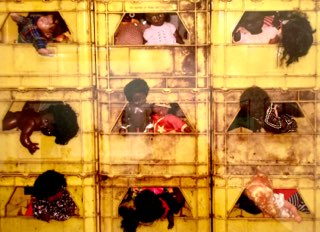
Her art work is thoughtful and provocative, she coined the term ‘Blak’ and used doll avatars to carry her observations and statements. The dolls are a profound choice, to illustrate the innocence and manipulation of Aboriginal communities and their children. Her work strikes the core nerve of the ‘stolen children’ cruelty, where the emotional damage was ignored, as they were treated as pawns.
The Darwinian experiment of taking children to make them white, was sparked by Darwins visit to Australia in 1836. His theories led to social prejudice, with terms such as ‘primitive’ being used to create a social divide that carved Aboriginal policy. The evolution fantasy, perverted the perception of Aboriginal people to the point that they were regarded as ‘fauna’.

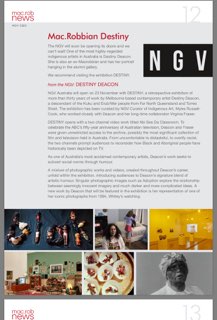
Deacon found her niche in Koorie Kitch and Australiana, as a form of story telling. The exhibition at the NGV Ian Potter Gallery honours her life and her story as an International Artist raised in the streets of Melbourne.


 melbourne press